1559–1564 · 16th century
The Geneva Academy and the death of Calvin
In 1559 the Academy opened in Geneva under Theodor Beza, Calvin's future successor. It drew students from across Europe, who carried Calvinism back to their homelands. That same year the final Latin edition of the "Institutes" appeared, followed by the final French edition in 1560.
Calvin died on 27 May 1564. Guillaume Farel was the last to visit him. By this time the Reformed church had become as institutionalized a body as the Catholic Church. It had communities in the Netherlands, Scotland, Hungary, France and elsewhere.
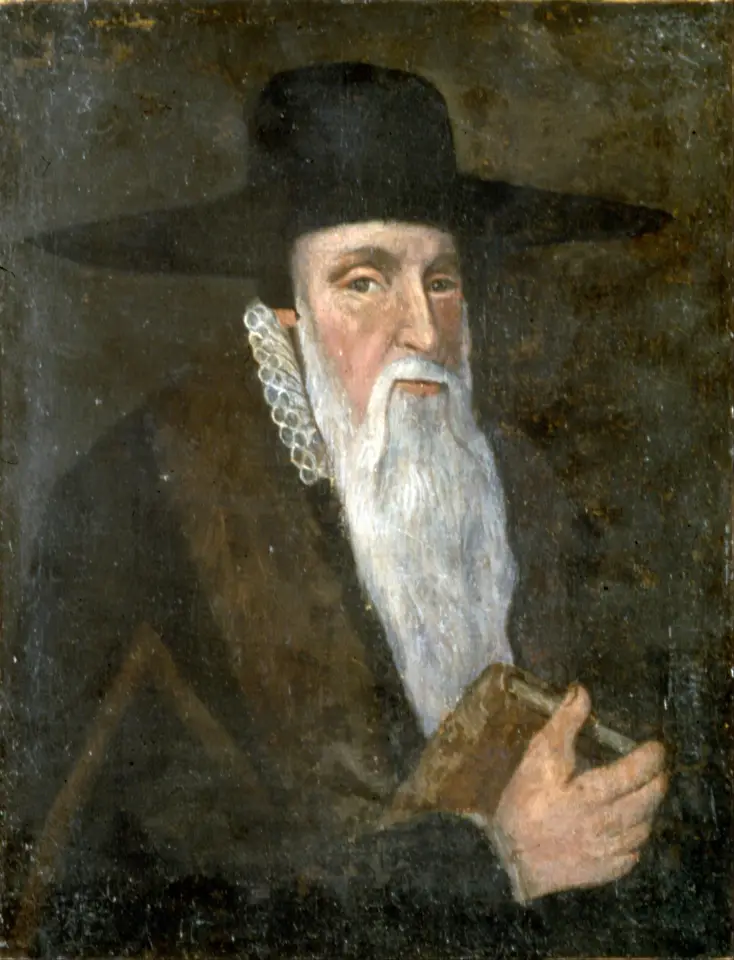
Key points
- Founding of the Geneva Academy (1559) under Theodor Beza
- Final editions of the "Institutes" (1559/1560)
- Calvin's death on 27 May 1564
- Reformed churches had appeared in the Netherlands, Scotland, Hungary and France
- Steinmetz: dying in 1564, Calvin ordered burial in an unmarked grave – partly humility, partly to discourage veneration; he wanted as memorial the living legacy of those he influenced and his sermons, commentaries, catechisms and Institutes editions. Calvin’s influence grew after his death, especially in the English world: Norton’s Institutes went through eleven editions by 1632, the catechism eighteen English editions by 1628; John Wesley confessed he stood within a “hair’s-breadth” of Calvinism
- Shelley: Calvin never confined himself to Geneva: he saw it as refuge for persecuted Protestants, a disciplined society and a centre for training ministers. Students from across Europe came to “the most perfect school of Christ since the apostles” (Knox) and lived under the city’s strict eye; many saw Geneva as God’s bridgehead and planted Calvinism at home. By Calvin’s death (1564) he had followers across Europe and soon in America. In France Calvinists stayed a minority with influential aristocrats; in 1572 Huguenots perished by thousands on St Bartholomew’s Day. In the Netherlands Calvinism inspired resistance to Spanish Catholics, and Calvinist ministers led bands of resistance; William of Orange joined the Reformed Church in 1573 and within ten years helped create the Dutch Republic. In Scotland a country with a single religion arose, ruled by a queen of another faith
People
- John Calvin
- Theodore Beza
- Guillaume Farel
Place
Geneva
Sources
- Justo L. González – The Story of Christianity, vol. II (Russian edition), Part 1, ch. 7
- Alister McGrath – Reformation Thought (Russian edition: «Theological Thought of the Reformation»), p. 223, 277, 305, 380
- The Cambridge Companion to Reformation Theology, ed. David Bagchi, David C. Steinmetz (2004), p. 140, 124
- Bruce L. Shelley – Church History in Plain Language (Russian edition), Ch. 26, sec. «Женева: родина кальвинизма»; Ch. 26, sec. «Всевластие Божье»
More on the doctrine
- Calvin, Institutes of the Christian Religion: From the Catechism of 1536 to the System of 1559 (1536–1559)
Data compiled: 2026-11-09