16th–17th centuries · 15th century
Spiritualists and Quakers: The Freedom of the Spirit, the "Inner Word" and the "Inner Light"
Many sixteenth-century spiritualists held that the inspiration of the Spirit is above Scripture, and some that the written Word should be set aside for the Word that God speaks directly to the human spirit. Caspar Schwenckfeld proposed a "middle way" between Catholicism and Lutheranism: the Holy Spirit is free and bound neither by the church nor by Scripture; the Bible is infallible, but what matters is not study but receiving inspiration, and the sacraments cannot mediate the spiritual through the material. Sebastian Franck carried these views to their logical conclusion, and Juan de Valdés sought communion with God through meditation. In 1646 George Fox discovered the "inner light" – Christ living in the believer – and renounced the outward means of grace, though not Christian fellowship and social justice.
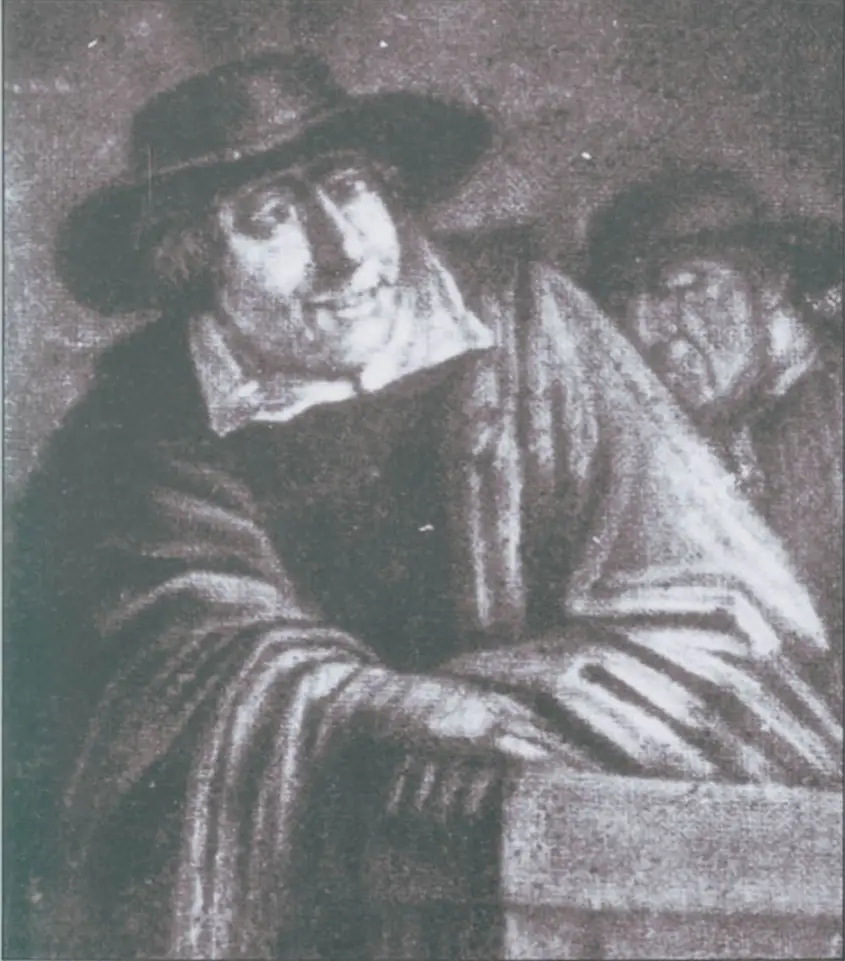
Positions
- Schwenckfeld
- A twofold bread and a twofold breaking: the earthly for the outer man, the heavenly (the incarnate Word) for the inner; temporarily recommended abstaining from material communion
- Sebastian Franck
- The written word of the Bible is a mysterious manifestation of the eternal word, understood only when that word is revealed; in every person there is a divine spark, and everything outward is unnecessary
- George Fox
- Spiritual feeding on the body and blood of Christ means more than eating bread and wine, which can become an obstacle
- Schwenckfeld's opponents
- Accused him of Monophysitism because of his teaching that Christ's flesh was uncreated
Key points
- González: participation in the outer church, according to Schwenckfeld, does not guarantee salvation
- Valdés combined the refinement of Erasmus with the mysticism of the alumbrados; neither Catholics nor Protestants trusted him, and his disciple Ochino turned to anti-Trinitarianism
- Fox's Society of Friends of Truth was called "Quakers" from 1650; it took part in social questions, generally from a pacifist position
- Rempel: following G. Williams, the Radical Reformation – Anabaptists, spiritualists, rationalists; the decisive difference: the Trinity and outward signs.
- McGinn: “Spiritual” radicals (Denck, Karlstadt, Franck, Weigel) prized the Spirit’s inner action over sacraments; their inner religion fed toleration. Boehme (1575–1624) is hard to evaluate: the biblical story sits beside alchemical, kabbalistic and theosophical themes
Outcome
Neither Catholics nor Protestants accepted these movements; the Quaker movement arose from Fox's teaching.
People
- Caspar Schwenckfeld
- Sebastian Franck
- Juan de Valdés
- Bernardino Ochino
- George Fox
Terms
- inner light
- According to Fox, Christ living in the believer.
- inner and outer
- Schwenckfeld's dichotomy of the spiritual and the material: the inner and the outer church do not coincide.
Place
Germany, Naples, England
Sources disagree
González gives only life dates: Schwenckfeld – 1489–1561, Franck – c. 1499 – c. 1542, Valdés – c. 1500–1541, Fox – 1624–1691; the "inner light" – 1646, the name "Quakers" – after 1650.
Sources
- Justo L. González – A History of Christian Thought in One Volume (Abingdon, 2014), p. 308–309
- Justo L. González – A History of Christian Thought, vol. III: From the Protestant Reformation to the Twentieth Century (Abingdon, rev. ed. 1987), p. 100–102
- The Oxford Handbook of Sacramental Theology, ed. Hans Boersma, Matthew Levering (2015), p. 363–364
- The Oxford Handbook of Mystical Theology, ed. Edward Howells, Mark A. McIntosh (2020), Ch. 4, sec. «Protestant Mysticism»
In church history
- Apocalyptic Radicalism in the English Revolution: the Fifth Monarchists, Anna Trapnel and Gerrard Winstanley (1649–1654)
Data compiled: 2026-11-17