1870–1900 · 19th century
Protestant Liberalism: Ritschl's Value Judgments and Harnack's Thesis of "Hellenization"
Classical liberalism, according to Grenz and Olson, took shape in the ideas of Ritschl: revising beliefs in the light of science, freedom to criticize tradition, and the center of Christianity in ethics and the kingdom of God. In The Christian Doctrine of Justification and Reconciliation (1870–1874) Ritschl distinguished scientific knowledge from religious knowledge – a value judgment; theology studies not God as such but his significance for salvation, and metaphysics is inadmissible as its foundation. Harnack in his History of Dogma (1886–1889) argued that the simple religion of Jesus became a religion about Jesus and then dogma: dogma is "a work of the Greek spirit on the soil of the gospel." In What Is Christianity? (1899/1900) he sought the kernel of the gospel beneath its changing forms: the historian must "distinguish kernel and husk" (Lecture 1).
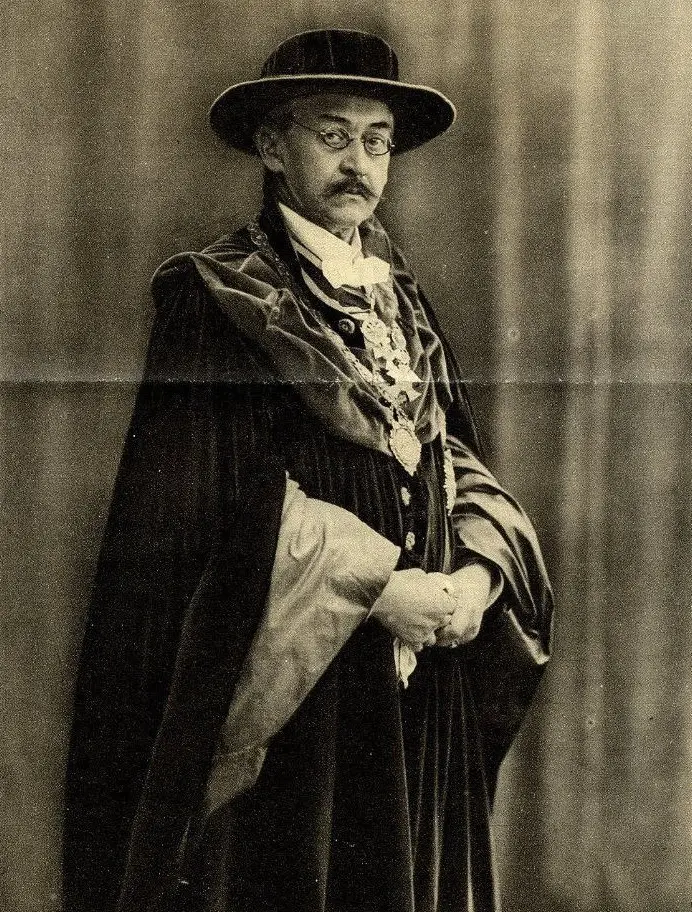
Positions
- Ritschl
- Theological statements are value judgments; salvation is in the community; God is known in his acts, not "in himself"
- Harnack, Hatch
- The Church of the 4th–5th centuries clothed the gospel in Greek philosophy; the corruption began in the 2nd–3rd centuries with the doctrine of the Logos
- Berkhof
- Too narrow a view of dogma, turning its history into one gigantic error
- Pelikan; González
- The thesis is oversimplified: it is more accurate to speak of "de-Hellenization" (Pelikan); the gospel's entry into the Hellenistic world cannot be faulted, but the questions are more complex (González)
Key points
- Lane: Ritschl considered Schleiermacher's approach subjective and "mystical" and turned to history
- Harnack (What Is Christianity?, Lecture 3): three heads of Jesus's teaching – the kingdom of God and its coming; God the Father and the infinite value of the human soul; the higher righteousness and the commandment of love
- Berkhof: the main aim of the Ritschlian school was to remove all metaphysics from theology
- Hall: Newman, Schweitzer and the Catholic modernists offered other ways of understanding the development of dogma
- Liberalism dominated academic theology until the First World War
- Ziegler: Troeltsch argued that the eternal dogmatic Christ of ancient faith is unconnected to the historical Jesus; classical Christology is “obscurantist”. He sees Jesus’s significance socio-psychologically – as the “support, center and symbol” of the community; Christology gives way to “Jesuology”
- Shelley: liberal theology is a suspension bridge: one pier in modern thought, the other in Christian experience; the ground under both piers is unstable, and walkers argue over which side is safer. Per Cauthen, “evangelical liberalism” was serious Christians seeking an ideology for intelligent contemporaries, assured by Christian experience, and “modernistic liberalism” intelligent contemporaries wishing to count as serious Christians, relying more on modern thought. Per Coffin, liberalism is a spirit that honours truth above all; Fosdick wanted a person to be “both an intelligent modern and a serious Christian”. Liberals, yielding to modern reason, pictured the universe as a harmonious mechanism or growing organism – “unity, harmony, coherence”. They refused to accept beliefs on authority alone: faith must stand the tests of reason and experience, and untested faith is not worth holding. Liberal theology erased distinctions between revelation and natural religion, Christianity and other religions, the saved and the lost, Christ and humanity, man and God. Instead of orthodoxy's distant God liberals stressed immanence – God's presence in the world and acts through nature: God worked through natural law over the ages and did not “break through the clouds” to create the world
- Lyman: for Troeltsch no supernatural certainty remained: neither dogma nor essence sufficed; faith and the interpreter’s creative act decided
Outcome
Ritschl became the most influential liberal of the 19th century (Lane); the "Hellenization" thesis became an influential tenet of liberal theology and a matter of dispute among historians of dogma.
People
- Albrecht Ritschl
- Adolf von Harnack
- Edwin Hatch
- Ernst Troeltsch
- Walter Rauschenbusch
Terms
- value judgment
- In Ritschl, religious knowledge as an immediate evaluation of significance for salvation; the divinity of Jesus as the judgment of Christians about the significance of his life for salvation.
- Hellenization
- The transformation of the gospel under the influence of Greek philosophy; in Harnack, the process in which the focus shifted from Jesus' teaching to his person.
- husk and kernel
- The liberals' image: the eternal essence of Christianity is cleansed of cultural accretions.
Place
Göttingen; Berlin
Sources disagree
Ritschl: main work 1870–1874 (Grenz and Olson, Lane); Harnack: History of Dogma 1886–1889, lectures 1899/1900 (Lane); Grenz and Olson: the influence of Ritschlianism 1875–1925; Berkhof gives no date.
Sources
Primary sources
- Harnack – What Is Christianity?, p. 12, 51
Textbooks
- Stuart G. Hall – Doctrine and Practice in the Early Church (Russian edition), p. 156–157
- Jaroslav Pelikan – The Christian Tradition: A History of the Development of Doctrine, vol. 1 (Russian edition), p. 55–56, 66
- Louis Berkhof – History of Christian Doctrines (Russian edition), p. 5–6, 17
- Justo L. González – A History of Christian Thought in One Volume (Abingdon, 2014), p. 164–165, 396
- Tony Lane – Christian Thinkers (Russian edition), p. 233–237
- Stanley Grenz, Roger Olson – 20th-Century Theology: God and the World in a Transitional Age (Russian edition), p. 67–73
- The Oxford Handbook of Christology, ed. Francesca Aran Murphy (2015), p. 408–409
- Bruce L. Shelley – Church History in Plain Language (Russian edition), Ch. 40, sec. «Цели протестантского либерализма»; «Богословский либерализм»; Ch. 40, sec. «Богословский либерализм»
- The Oxford Handbook of Systematic Theology, ed. John Webster, Kathryn Tanner, Iain Torrance (2007), p. 514
Related entries
- Developed in: New forms of millennialism: postmillennialism, premillenarianism, the Social Gospel (17th – early 20th century)
- Develops: Schleiermacher: Religion as Feeling and Theology as the Expression of Religious Self-Consciousness (1799–1830)
- Rejected in: Barth and Dialectical Theology: The Revolt against Immanence (1919–1932)
- Rejected in: Bultmann: Kerygma and the Demythologization of the New Testament (1941)
In church history
- Albrecht Ritschl and liberal Protestant theology (1822–1889)
- Adolf von Harnack and liberal theology ("What is Christianity?") (1886–1900)
Data compiled: 2026-11-17