257–260 · 3rd century
The persecution of Valerian and the martyrdom of Cyprian
The finance minister Macrianus sought to confiscate church property. At his instigation, Emperor Valerian in 257 for the first time banned Christian worship. By an edict of 258 he ordered the execution of those refusing to sacrifice and the confiscation of property from prominent Christians.
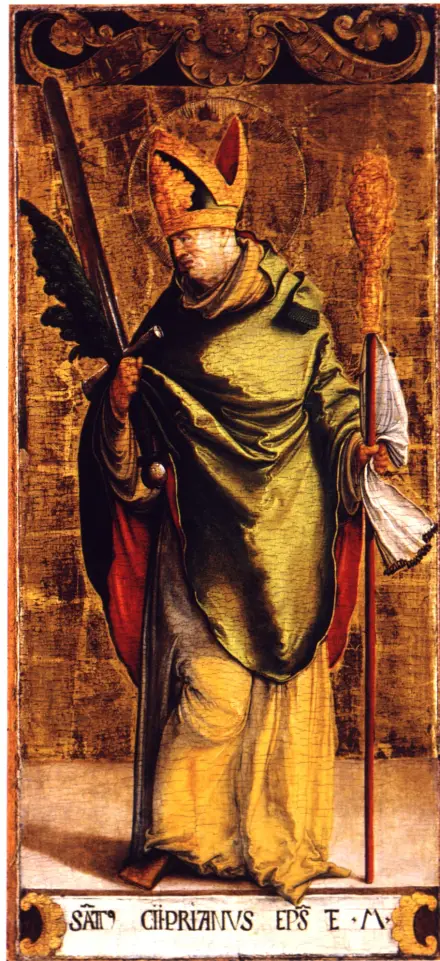
The blow was aimed chiefly at the Church's leadership. In 257 Cyprian of Carthage was seized and exiled, and in 258 executed. His martyrdom lent additional authority to his teaching on the unity of the Church and the episcopate.
In 260 Valerian was captured by the Persians and died in captivity. His son Gallienus restored confiscated property to the churches. This began nearly forty years of peace that lasted until 303. During this time Christians came to form a notable share of the empire's population.
Key points
- The 257 edict for the first time banned Christian worship; the 258 edict ordered execution and property confiscation
- The blow targeted the Church's leadership (bishops, clergy)
- Arrest (257) and execution (258) of Cyprian of Carthage
- Valerian's capture and death among the Persians (260)
- The Peace of Gallienus: restored property and nearly forty years of calm for the Church (until 303)
People
- Valerian
- Macrianus
- Cyprian of Carthage
- Gallienus
Place
Carthage; the Roman Empire
Sources
- Stuart G. Hall – Doctrine and Practice in the Early Church (Russian edition), p. 63, 76
- J. North – A History of the Church (Russian edition), p. 55–57, 76
Data compiled: 2026-11-09