254–258 · 3rd century
The rebaptism controversy (Cyprian and Stephen of Rome)
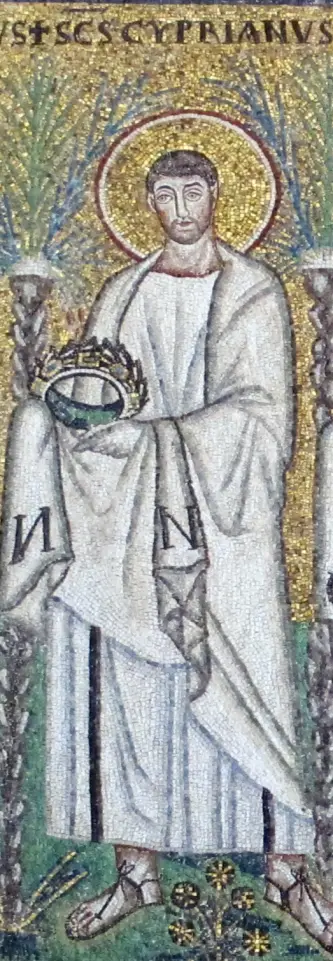
Cyprian of Carthage and Firmilian of Caesarea held valid only baptism performed within the catholic Church. So they rebaptized those coming from heretics and schismatics, including Novatianists. This practice was confirmed by councils at Carthage in 255–256.
Bishop Stephen of Rome demanded that any baptism performed with the correct words and intent be recognized. He also demanded that converts be received only by the laying on of hands as a sign of repentance. He threatened opponents with excommunication.
An exchange of sharp letters nearly broke communion between Rome and Africa. The eastern churches largely supported Cyprian's position.
The dispute was resolved only by Stephen's death and the renewed persecution under Valerian in 257. But it quietly foreshadowed the later Donatist schism in Africa. In the end the practice Rome had championed prevailed.
Key points
- Cyprian and Firmilian of Caesarea: baptism outside the Church is invalid
- Stephen of Rome: recognizes any baptism with the correct formula; reception by the laying on of hands
- Councils of Carthage (255–256) confirmed the rebaptism practice
- The dispute nearly broke communion between Rome and Africa; the East largely backed Cyprian
- Resolved by Stephen's death and Valerian's persecution (257); foreshadowed the Donatist controversy
People
- Cyprian of Carthage
- Stephen of Rome
- Firmilian of Caesarea
Place
Carthage; Rome; Cappadocia
Sources
- J. North – A History of the Church (Russian edition), p. 50–51, 62–63
- Stuart G. Hall – Doctrine and Practice in the Early Church (Russian edition), p. 19, 61–63
- Justo L. González – A History of Christian Thought in One Volume (Abingdon, 2014), p. 105–107
- Tony Lane – Christian Thinkers (Russian edition), p. 33
- Louis Berkhof – History of Christian Doctrines (Russian edition), p. 182–183
More on the doctrine
Data compiled: 2026-11-09