202 · 3rd century
The persecution of Septimius Severus
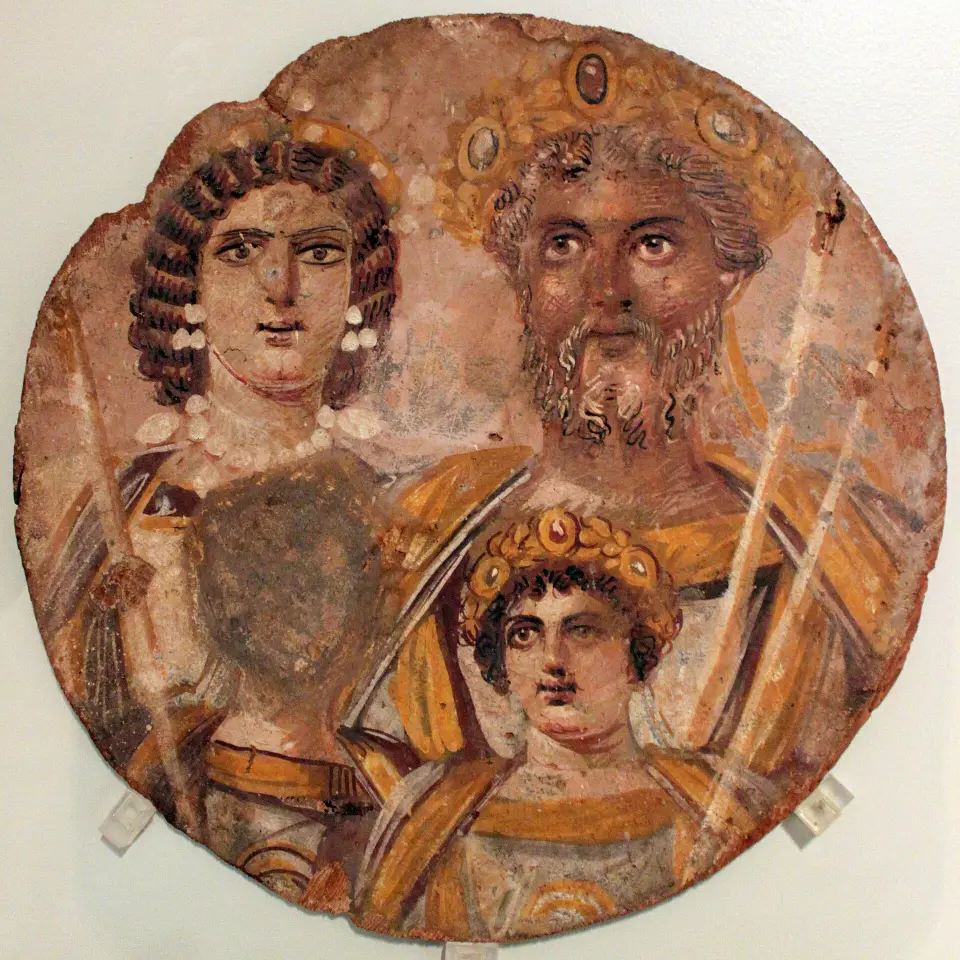
Emperor Septimius Severus sought religious unity around the cult of Sol Invictus. Around 202 he issued an edict forbidding, on pain of death, conversion to Christianity and Judaism. The persecution targeted mainly new converts and their teachers rather than the whole community.
In Alexandria, Leonidas, Origen's father, was killed, and Clement of Alexandria was forced to flee the city. That same year, by tradition, many Christians died at Lyon, possibly including Irenaeus.
At Carthage around 203, the recently converted catechumens Perpetua, Felicitas and their companions were executed. The account of their martyrdom was possibly edited by Tertullian himself. It reflects a Montanist atmosphere of reverence for new prophecies and visions.
The edict soon fell out of enforcement. Under Caracalla persecution briefly resumed, mainly in North Africa. But thereafter there was no major empire-wide persecution for over half a century, until Decius.
Key points
- The edict forbade new conversion to Christianity and Judaism rather than punishing existing believers
- Death of Leonidas, Origen's father; flight of Clement of Alexandria from the city
- Martyrdom of Perpetua, Felicitas and their companions at Carthage (c. 203)
- By tradition, many Christians died at Lyon in 202, possibly including Irenaeus
- After Caracalla, over half a century passed without major empire-wide persecution, until Decius
People
- Septimius Severus
- Leonidas
- Origen
- Clement of Alexandria
- Perpetua
- Felicitas
- Tertullian
- Caracalla
Place
Alexandria; Carthage; Lyon
Sources disagree
One book specifies: "apparently in the year 203."
Sources
- J. North – A History of the Church (Russian edition), p. 47–48
- Justo L. González – A History of Christian Thought in One Volume (Abingdon, 2014), p. 67, 79, 87
- Justo L. González – The Story of Christianity, vol. I (Russian edition), sec. «Гонения при Септимии Севере»
- Jaroslav Pelikan – The Christian Tradition: A History of the Development of Doctrine, vol. 1 (Russian edition), p. 117
Data compiled: 2026-11-09