February 313 · 4th century
The Edict of Milan
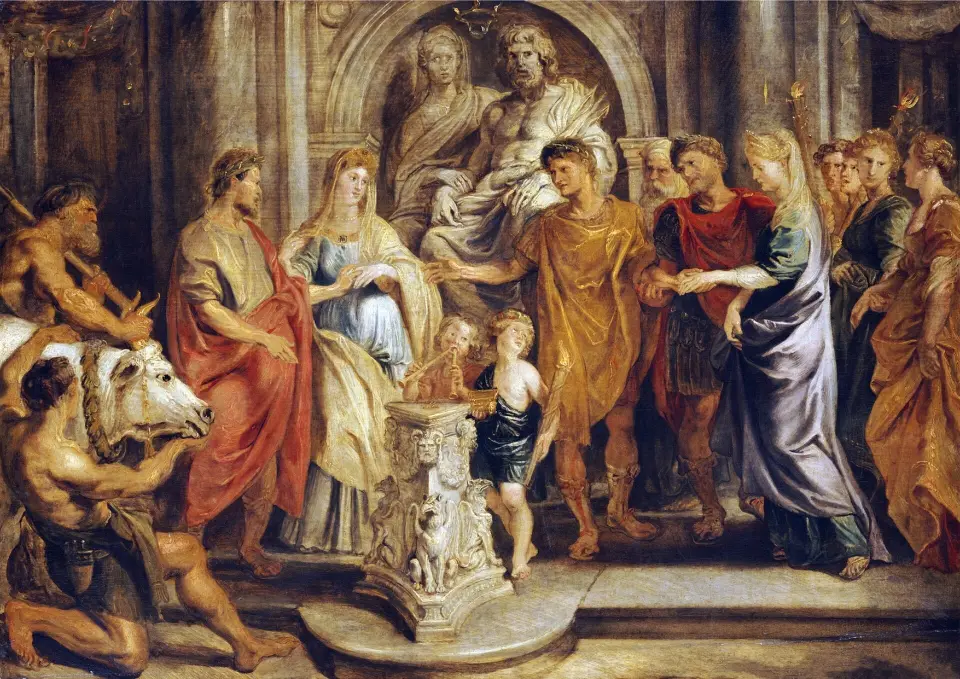
At Milan in February 313, Constantine and Licinius agreed on a policy of toleration. Their alliance was sealed by Licinius's marriage to Constantine's sister Constantia (Lactantius, On the Deaths of the Persecutors 45).
The document was in substance a joint decision rather than an imperial edict. It granted freedom of worship to all religions, with special provisions for Christians. The places of their assemblies and the other property of their society, "that is, to their churches", were returned to Christians (On the Deaths of the Persecutors 48). Constantine began building churches and exempting the clergy from taxes.
One book attributes the document's vague language about the "supreme Divinity" (On the Deaths of the Persecutors 48) to the influence of Licinius, a devotee of the Sun. Persecution finally ended only later, once Constantine became sole ruler.
Key points
- Source: Lactantius, "On the Deaths of the Persecutors" 48 (text of the document)
- A joint agreement of Constantine and Licinius, not a unilateral edict
- Restoration of meeting places and other church property, freedom of worship (On the Deaths of the Persecutors 48)
- Christians singled out alongside freedom for all religions
People
- Constantine the Great
- Licinius
- Maximinus Daia
Place
Milan
Sources disagree
Hall and González (Story of Christianity, vol. I) give no month; North specifies February 313; in Lactantius (On the Deaths of the Persecutors 45, 48) Constantine went to Milan "about the beginning of winter", and Licinius published the document at Nicomedia on the ides of June.
Sources
Primary sources
- Lactantius – On the Deaths of the Persecutors, ch. 45, 48
Textbooks
- Stuart G. Hall – Doctrine and Practice in the Early Church (Russian edition), p. 79
- Justo L. González – The Story of Christianity, vol. I (Russian edition), Ch. 6; pt. 2, ch. 7, sec. 7.1
- J. North – A History of the Church (Russian edition), p. 62–63
Data compiled: 2026-11-09