1347–1350 · 14th century
The Black Death
The bubonic plague began on the Black Sea and spread along trade routes to Italy and Northern Europe. Within three years it killed about a third of the continent's population. Outbreaks then recurred every 10–12 years.
The epidemic undermined the economy and deepened doubts about the world's rational order. It fueled superstition, pilgrimages, and the relic trade, against the prohibitions of the Fourth Lateran Council. It also led to mass killings of Jews accused of "poisoning wells".
Among those who died of the plague were William of Ockham and Thomas Bradwardine. Johannes Tauler devoted himself to nursing the sick. Some popular movements, such as the flagellants, intensified ritual self-scourging, called a "second baptism". This brought subsequent persecution of them by the church.
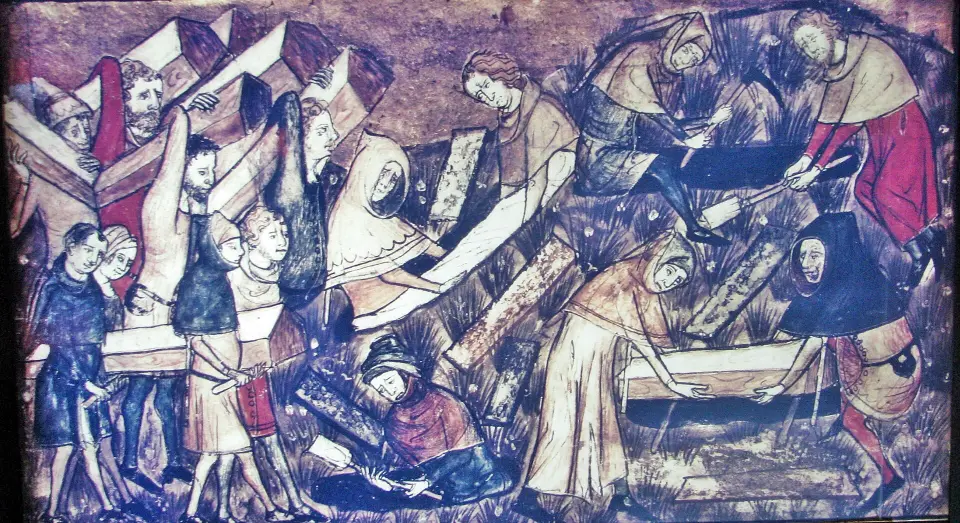
Key points
- The death of about a third of Europe's population within three years
- The deaths of William of Ockham and Thomas Bradwardine from the plague
- Pogroms against Jews accused of 'poisoning wells'
- The growth of the flagellant movement and subsequent persecution of it
People
- William of Ockham
- Thomas Bradwardine
- Johannes Tauler
Place
Europe
Sources
- Justo L. González – The Story of Christianity, vol. I (Russian edition), Ch. 26, sec. 26.1; ch. 27, sec. 27.6
- Tony Lane – Christian Thinkers (Russian edition), p. 132, 134, 136
Data compiled: 2026-11-09