328–373 · 4th century
Athanasius of Alexandria: Episcopate, Exiles, and Defense of the Nicene Faith
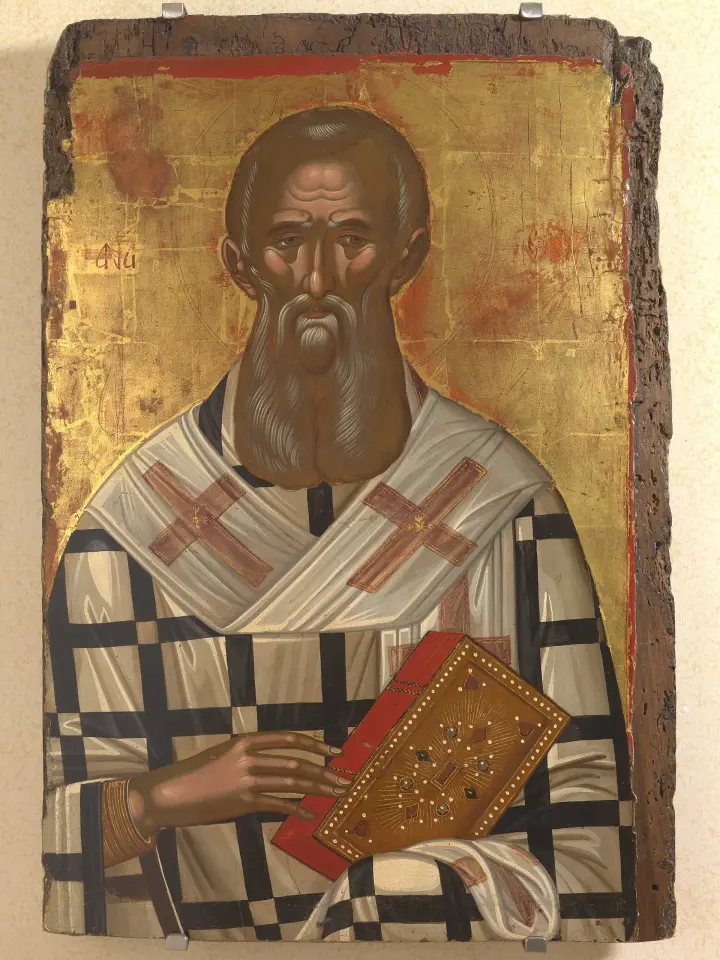
Alexander died in 328. Athanasius, who had already accompanied him to the Council of Nicaea, was elected his successor to the see of Alexandria. He held it until his death in 373, being exiled five times – roughly 17 years in all.
The Meletians accused him of violence against his opponents. After his first exile (from 331 or 339) he found support in the West. There Pope Julius of Rome, at the Council of Rome in 340, vindicated him and Marcellus of Ancyra, provoking the displeasure of eastern bishops.
The chief work of his life remained the defense of Christ's divinity and the Nicene creed against Arianism. He held that the Nicene confession could not be changed in a single letter. His contemporaries called him "the savior of the church from Arianism" and "the pillar of the church".
Key points
- Elected bishop of Alexandria in 328 after Alexander's death
- Five exiles over 45 years as bishop, including time in Rome and the West
- Vindicated at the Council of Rome in 340 under Pope Julius
- "Against the Gentiles" and "On the Incarnation of the Word" written even before the Arian controversy
- Died in 373, eight years before the Council of Constantinople
- Shelley: Athanasius, probably at Nicaea, became bishop of Alexandria at 33; his exiles (at least five) followed changes of emperor. “Athanasius against the world” – he lived to see the Creed prevail and died at 75 in peace at Alexandria
People
- Athanasius the Great
- Alexander of Alexandria
- Julius of Rome
- Marcellus of Ancyra
- Gregory of Cappadocia
- Peter of Alexandria
- Constantine the Great
Place
Alexandria, Rome
Sources disagree
The date of the first exile differs: González (Christian Thought) gives 331, other books give 339.
Sources
- Justo L. González – A History of Christian Thought in One Volume (Abingdon, 2014), p. 119–121
- Justo L. González – The Story of Christianity, vol. I (Russian edition), Ch. 12
- Stuart G. Hall – Doctrine and Practice in the Early Church (Russian edition), p. 91–93
- Jaroslav Pelikan – The Christian Tradition: A History of the Development of Doctrine, vol. 1 (Russian edition), p. 160, 181
- Tony Lane – Christian Thinkers (Russian edition), p. 38–41
- A. P. Lebedev – History of the Ecumenical Councils, part I, p. 41–42, 44, 69
- Bruce L. Shelley – Church History in Plain Language (Russian edition), Ch. 10, sec. «Осмысление тайны» и «Мир, в котором ранняя Церковь развивала свою доктрину»
More on the doctrine
Data compiled: 2026-11-09