342/343–344 · 4th century
The Council of Serdica
At the proposal of Emperor Constans, bishops of East and West gathered at Serdica under the presidency of Hosius of Cordoba. Athanasius, exiled from the East, was received in the West with open arms. The western councils at Rome (341) and Serdica unreservedly confirmed his teaching.
The eastern bishops saw that the excommunicated Athanasius and Marcellus of Ancyra had been given a voice. So they withdrew to Philippopolis. There they deposed their opponents' supporters and adopted a creed directed against Marcellus.
The westerners, remaining at Serdica itself, vindicated Marcellus and Athanasius. They adopted a "rule of faith" speaking of a single hypostasis, and a canon allowing deposed bishops to appeal to Rome. The council split the church into two hostile camps and exposed the rivalry between Rome and Constantinople.
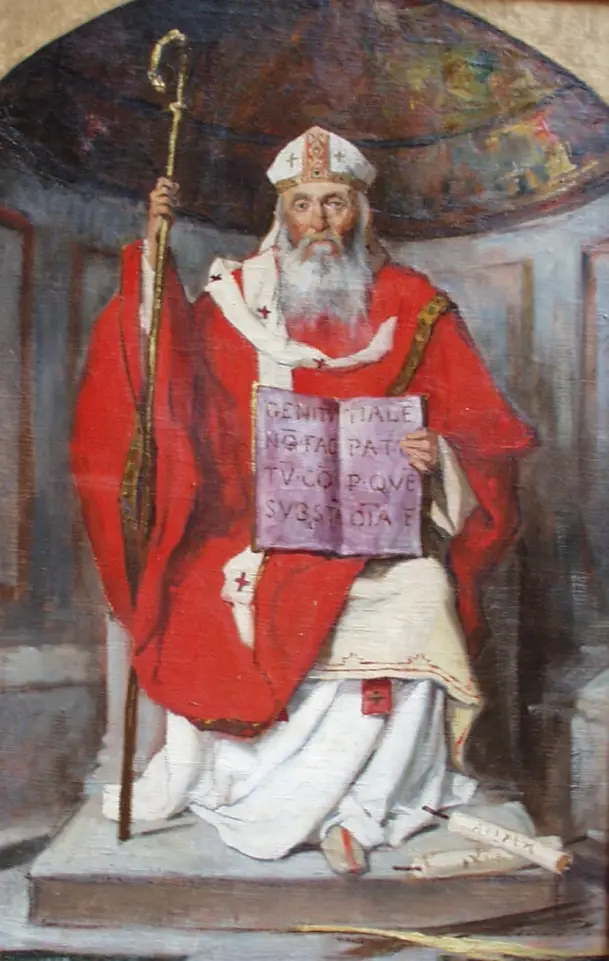
Key points
- The council split in two: a western one at Serdica and an eastern one at Philippopolis
- The western "rule of faith" spoke of a single hypostasis
- A canon granting deposed bishops the right of appeal to Rome
- Marcellus of Ancyra vindicated by the westerners as a "beloved brother"
People
- Constans
- Hosius of Córdoba
- Protogenes of Serdica
- Athanasius the Great
- Marcellus of Ancyra
- Ursacius of Singidunum
- Valens of Mursa
- Basil of Ancyra
Place
Serdica (Sofia), Philippopolis; earlier Rome (341)
Sources disagree
Hall and Berkhof date the council to 341/343, while Lebedev dates it to 344 ("as given in the book").
Sources
- Louis Berkhof – History of Christian Doctrines (Russian edition), p. 59
- Stuart G. Hall – Doctrine and Practice in the Early Church (Russian edition), p. 94–95
- A. P. Lebedev – History of the Ecumenical Councils, part I, p. 43, 69, 73, 95
More on the doctrine
Data compiled: 2026-11-09