1070s–1109 · 11th century
Anselm of Canterbury: the Ontological Argument and the Satisfaction Theory
Anselm was born in Aosta. At 26 he entered the Benedictine monastery of Bec in Normandy, where he succeeded Lanfranc first as prior and, in 1093, as Archbishop of Canterbury. Conflicts with English kings over the church's independence and lay investiture sent him into exile more than once.
He is regarded as the founder of scholasticism. While still at Bec he wrote the "Monologion" and "Proslogion" (1077–1078), and later the treatise "Why God Became Man". The latter shaped the Western understanding of atonement for centuries, though critics raised objections to it. Answering the nominalist Roscelin, Anselm defended the reality of the Trinity against charges of tritheism.
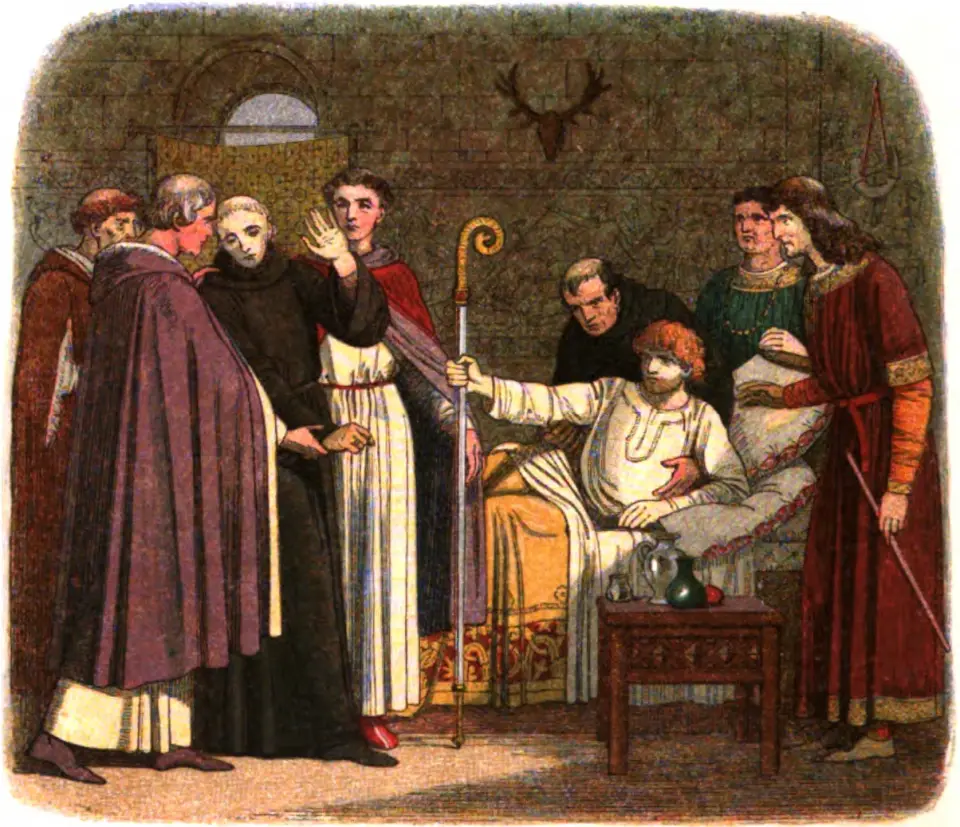
Key points
- Monk of Bec, successor of Lanfranc as prior and as Archbishop of Canterbury (1093)
- Exiles caused by conflicts with English kings over the church's independence and investiture
- Works: "Monologion," "Proslogion" (1077–1078), "Why God Became Man"
- Dispute with Roscelin over charges of tritheism
- Gunton: Anselm, a Platonist, based theology on faith in search of understanding and set out to prove “by necessary reasons” the rationality of the incarnation (Why God Became Man, preface).
People
- Anselm of Canterbury
- Lanfranc
- William the Conqueror
- Roscelin
Place
Bec (Normandy); Canterbury
Sources
Primary sources
- Anselm of Canterbury – Why God Became Man (Cur Deus homo), preface
- Anselm of Canterbury – Proslogion, preface
Textbooks
- Tony Lane – Christian Thinkers (Russian edition), p. 106–111
- J. North – A History of the Church (Russian edition), p. 195–196
- Justo L. González – The Story of Christianity, vol. I (Russian edition), Ch. 25, sec. 25.3
- Justo L. González – A History of Christian Thought in One Volume (Abingdon, 2014), p. 217–219
- Louis Berkhof – History of Christian Doctrines (Russian edition), p. 64, 102–103, 124–126
- The Cambridge Companion to Christian Doctrine, ed. Colin E. Gunton (1997), p. 36–37
More on the doctrine
- Anselm: The Proofs of God's Existence in the Monologion and the Ontological Argument of the Proslogion (1077–1078)
- Anselm, Why God Became Man: satisfaction of God's honor (c. 1097–1100)
- Anselm of Canterbury: "I Believe in Order to Understand" – Faith Seeking Understanding (1077–1078)
Data compiled: 2026-11-09