1077–1078 · 11th century
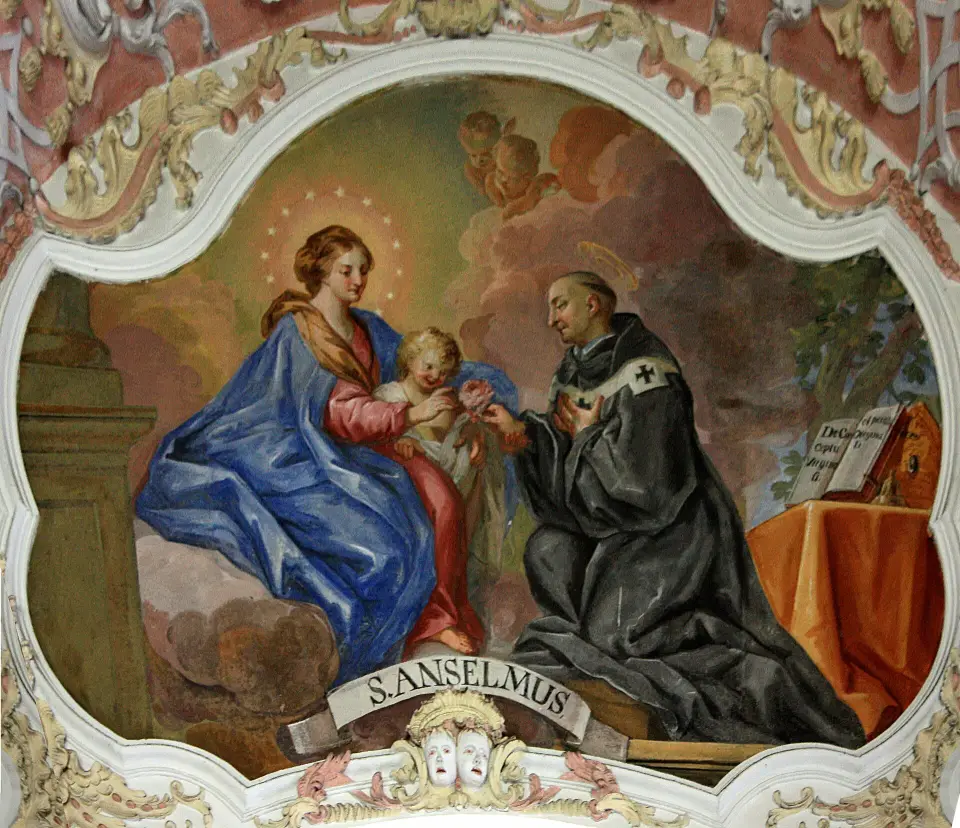
Anselm: The Proofs of God's Existence in the Monologion and the Ontological Argument of the Proslogion
In the Monologion (1077) Anselm proves God's existence from degrees of goodness: since we distinguish degrees of good, there exists an absolute Good, the highest of all beings (Monologion 1); Lane notes the Platonist presupposition and that Augustine had put forward something similar. In the Proslogion (1078), trying to understand why Psalm 13 calls the one who denies God a "fool," Anselm proposed the "ontological proof": everyone has a concept of "the greatest conceivable being"; if it existed only in the mind, one could conceive a greater one existing in reality as well – which is contradictory. "And this being You are, O Lord our God" (Proslogion 2–3). González stipulates that the argument is valid only under certain assumptions.
Positions
- Anselm
- The greatest conceivable being cannot not exist
- Critics (according to Lane)
- Anselm is trying to define God's existence
- Thomas Aquinas (according to González)
- Later rejected the thesis that God's existence is self-evident
Key points
- González: the assumptions – existence is a perfection; perfection can be conceived; the structures of reality correspond to the structures of the mind
- The argument was meant to convince even the "fool" (Ps 13:1)
- Lane: the approach reflects the supreme confidence in the power of reason characteristic of the 11th century
- The Monologion was originally called "An Example of Meditation on the Grounds of Faith" (Proslogion, preface)
Outcome
The argument entered the permanent repertoire of philosophers and theologians; debates about it continue to this day.
People
- Anselm of Canterbury
- Augustine
Terms
- the greatest conceivable being
- That than which nothing greater can be conceived; the concept of the perfect Being.
- the universal
- In Platonist realism the idea is more real than its individual manifestation – the presupposition of the Monologion's argument.
Place
Bec
Sources disagree
Lane: Monologion 1077, Proslogion the following year; González does not date the Proslogion (before 1093).
Sources
Primary sources
- Anselm of Canterbury – Monologion, ch. 1
- Anselm of Canterbury – Proslogion, preface; ch. 2–3
Textbooks
- Justo L. González – A History of Christian Thought in One Volume (Abingdon, 2014), p. 218
- Tony Lane – Christian Thinkers (Russian edition), p. 106–109
Related entries
- Develops: Anselm of Canterbury: "I Believe in Order to Understand" – Faith Seeking Understanding (1077–1078)
- Rejected in: Thomas Aquinas: The Five Ways and the Doctrine of Analogy (1264–1274)
- Developed in: Descartes: Method, the "Cogito" and Cartesianism in Theology (1637–1641)
In church history
Data compiled: 2026-11-17