2nd–6th centuries · 1st century
The Latin Fathers: from Tertullian's legal terms to the synthesis of Gregory the Great
Tertullian, according to Berkhof, stressed the central significance of Christ's death on the cross and introduced legal terms – guilt, satisfaction, merit – though he applied them not to Christ's sacrifice but to penance and good works after baptism. Hilary of Poitiers regarded Christ's death as satisfaction to God, grounded, as in Athanasius, in God's veracity; Ambrose repeated Origen on the ransom to Satan but stressed the sacrifice to God as satisfaction of the death sentence. Augustine, summing up what went before, departed from Greek theology in the main: his principal ideas are original sin, justification by grace, and reconciliation through Christ's sacrifice appeasing God's wrath; but he did not work out a complete theory. Gregory the Great gave "the fullest synthesis of Latin theology on the atonement": only a sacrifice can blot out sin, but an animal cannot, and there is no sinless man, so the Son of God became incarnate and, being sinless, became a sacrifice for us.
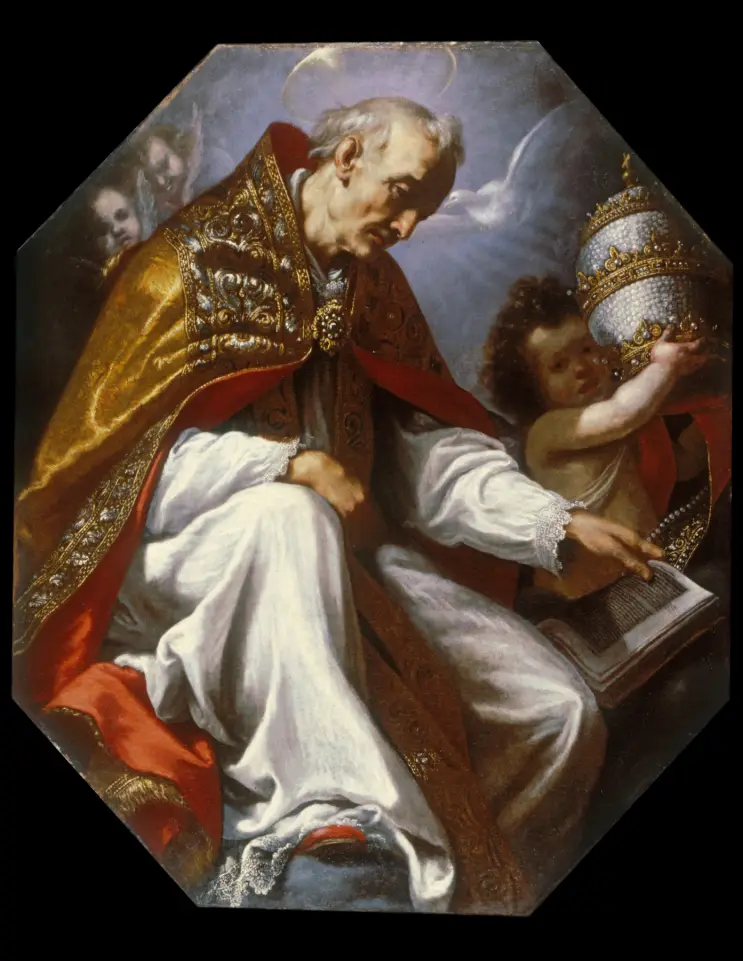
Positions
- Tertullian
- Legal terms (guilt, satisfaction, merit) applied to penance
- Augustine
- Reconciliation through a sacrifice appeasing God's wrath; the atonement is only relatively necessary – God could have saved otherwise
- Gregory the Great
- The sacrifice must be human and sinless; the Son of God paid the debt of a death he did not deserve
Key points
- Berkhof: Tertullian laid the foundation for the doctrine of penance in the Roman Church; Augustine does not sharply distinguish the juridical and renewing aspects, and justification is often grounded in the sanctifying influence of the Spirit; Gregory's synthesis is a notable advance
Outcome
A Latin type of the doctrine of the atonement took shape, centered on sacrifice and satisfaction, but still without a complete theory.
People
- Tertullian
- Hilary of Poitiers
- Ambrose of Milan
- Augustine
- Gregory the Great
Terms
- satisfaction
- A legal term introduced by Tertullian: making amends for guilt through penance, later the basis of the doctrine of penance in the Roman Church. In Anselm, reparation to God's violated honor beyond what is owed – the gift of the God-man.
Place
the West
Sources disagree
Berkhof does not date the Latin Fathers separately (2nd–4th and 4th–5th centuries); Gregory the Great was elected Pope in 590.
Sources
- Louis Berkhof – History of Christian Doctrines (Russian edition), p. 121–122
Data compiled: 2026-11-17