1871–1983 · 19th century
The Infallibility of Scripture: The Princeton School, Fundamentalism and the Evangelical Debate on Inerrancy
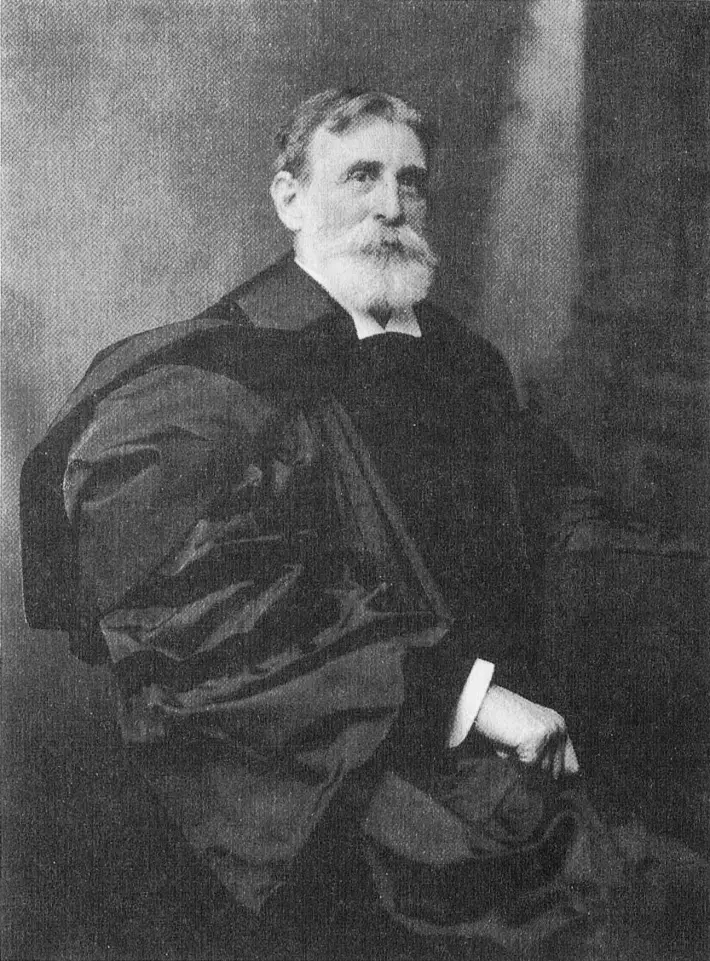
The Princeton theologians (Hodge, Warfield) defended the infallibility of the Bible against its critics. Warfield taught dual authorship: the Bible is wholly the Word of God and wholly the word of man, hence the "verbal inspiration" of every word, but not dictation. The five "fundamentals" proclaimed at Niagara Falls (1895) and the twelve volumes of The Fundamentals (1910–1915) made inspiration and infallibility the measure of orthodoxy for the conservative evangelical coalition. In the 1970s American evangelicals debated whether the Bible is also true in matters of science and geography; the Chicago Statement (1978, Article XI) affirmed that Scripture is "true and reliable in all the matters it addresses." Carl Henry understood revelation as rational and propositional, while Bernard Ramm and G. C. Berkouwer shifted the emphasis to Christ and to the purpose of Scripture.
Positions
- Warfield
- Verbal inspiration without dictation; faith rests not on one text but on a mass of biblical evidence (an "avalanche")
- A minority of evangelicals (according to Lane)
- The Bible teaches matters of faith and ethics, but only "touches on" questions of science and geography and is not necessarily accurate there
- Carl Henry
- Revelation is objective, conceptual and propositional; inspiration leads to inerrancy, but inerrancy is not the sole mark of evangelical orthodoxy (against Lindsell)
- Bernard Ramm
- The supreme authority is revelation (Jesus Christ), to which the Bible bears witness; the fundamentalists became absorbed in inspiration and separated Scripture from the Spirit
- G. C. Berkouwer
- The reliability of Scripture is judged by its purpose (2 Tim. 3:16–17); the Word of God comes through human words
Key points
- González: the five fundamentals (1895) – the inerrancy of Scripture, the virgin birth, substitutionary death, bodily resurrection and the imminent return of Christ; fundamentalism grew out of revivalism, not out of neo-confessionalism
- Lane: one must not ascribe to the text greater precision than the author intended ("about five thousand" in Matthew and "five thousand" in Mark 6:44). In 1929 Princeton Seminary began to move in a liberal direction, and Machen helped found Westminster Seminary
- Henry: "the doctrine of the Bible determines all other aspects of doctrine"; revelation is the source of truth, reason apprehends it, Scripture verifies it, logic tests it
- Larsen: the World Evangelical Fellowship’s 1951 creed calls Scripture ‘infallible’; the British Alliance revised its Scripture article in 1846, 1970, 2005. Over the last century many evangelicals adopted ‘inerrancy’; others avoid it as unhistoric, but all affirm Scripture’s inspiration and authority.
- Holmes: Louis Gaussen (Theopneustia, 1841) taught that all the Bible is equally inspired; such views became common in Victorian evangelicalism. Yet ‘inerrancy’ plays almost no role in British evangelicalism, which speaks of inspiration, authority and trustworthiness – a trace of Romanticism.
- George: Pinnock defended inerrancy militantly in Biblical Revelation (1971), but in The Scripture Principle (1984) offered a much more nuanced view; Erickson affirms the inspiration and inerrancy of Scripture but pays close attention to its phenomenological language.
Outcome
The inspiration and infallibility of Scripture became the unifying doctrine of the conservative evangelical movement, but the debate on inerrancy remained open.
People
- Charles Hodge
- Benjamin B. Warfield
- James Orr
- J. Gresham Machen
- Carl Henry
- Harold Lindsell
- Bernard Ramm
- G. C. Berkouwer
Terms
- verbal inspiration
- The inspiration of every word of the text, as opposed to the view that God imparted only ideas.
- inerrancy
- Scripture's freedom from falsehood, fraud and deceit in all the matters it addresses.
- propositional revelation
- Revelation in the form of meaningful statements conveying information.
Place
Princeton, United States
Sources disagree
Hodge's Systematic Theology – 1871–1873; Warfield was professor at Princeton from 1887 until his death in 1921 (Lane); the Niagara Falls conference – 1895 (González); The Fundamentals – 1910–1915; Ramm – 1957–1961; Berkouwer – 1966; the Chicago Statement – 1978 (so the text itself; Lane does not date it, speaking of the debate of the 1970s); Henry's work – 1976–1983.
Sources
Primary sources
- Chicago Statement on Biblical Inerrancy, preface; art. XI–XII
Textbooks
- Justo L. González – A History of Christian Thought, vol. III: From the Protestant Reformation to the Twentieth Century (Abingdon, rev. ed. 1987), p. 391
- Tony Lane – Christian Thinkers (Russian edition), p. 243–249
- Stanley Grenz, Roger Olson – 20th-Century Theology: God and the World in a Transitional Age (Russian edition), p. 442–447, 465–468
- The Cambridge Companion to Evangelical Theology, ed. Timothy Larsen and Daniel J. Treier (2007), p. 25–26, 25, 260, 267, 299, 301
In church history
- The Fundamentalist–Modernist controversy in the US; the Niagara Bible Conference (turn of the 20th century (1890s–1930s))
Data compiled: 2026-11-17