18th–19th centuries (Strauss – 1835) · 18th century
The Historical Criticism of the Bible: From Reimarus and Lessing to the Tübingen School and Strauss
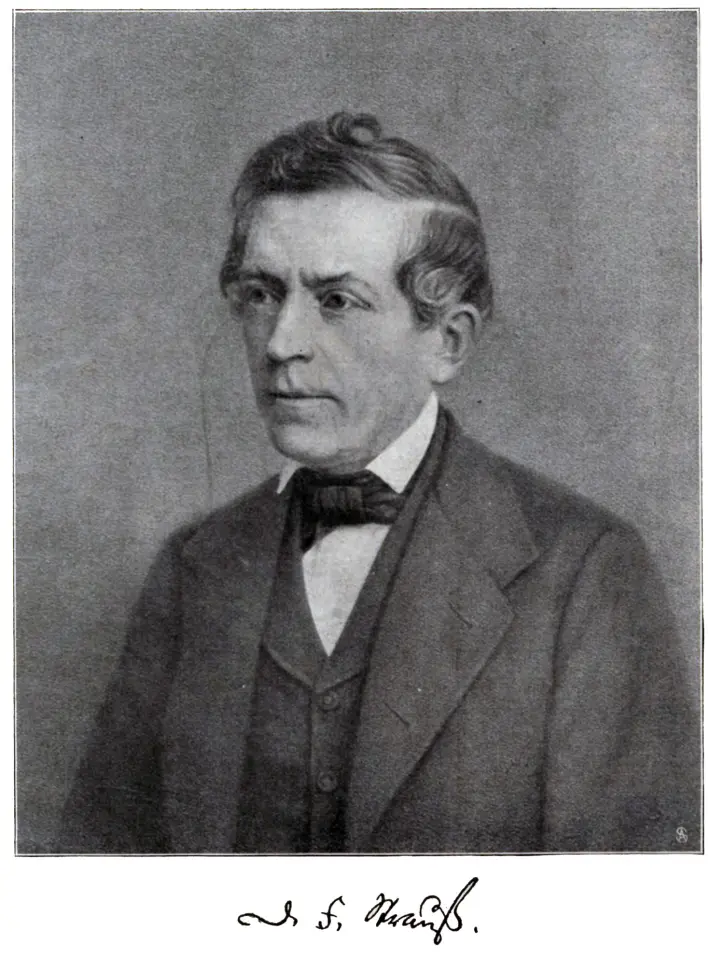
Already in the 18th century the deists raised the question of the historicity of the biblical narratives, especially the miracles. The posthumous publication of fragments by Reimarus spurred biblical scholars to the critical study of Scripture; Semler became one of the founders of the critical-historical method, and Lessing saw in the teachings of Scripture and the creeds only a stage in the education of the human race. F. C. Baur applied Hegelian methods to the New Testament, contrasting "Petrine" and "Pauline" theology, and D. F. Strauss in his Life of Jesus (1835) called the Gospel narratives "myths" expressing a truth of a higher order. According to Lane, nineteenth-century historical criticism came to regard the Bible not as an authority but as a source to be criticized.
Positions
- Lessing
- The teachings of Scripture and the creeds are a stage in the education of humanity, not an absolute; only the principle behind them, accessible to reason, can be made absolute (Education of the Human Race 4, 76: revelation gives nothing "which the human reason left to itself might not attain", and revealed truths were "revealed in order to become" truths of reason)
- Strauss
- Both those who take the miracles literally and those who reject them as fiction are wrong (Life of Jesus, preface): the New Testament is a testimony of faith, not a chronicle
- The Tübingen school (Baur)
- An opposition between Petrine and Pauline theology resolved in a synthesis; the canon itself is part of the synthesis
- Lane
- For theology, skepticism toward authority is "tantamount to death," since religion must be based on authority
Key points
- González: Ernesti concentrated on grammar and philology. In 1906 Albert Schweitzer, in The Quest of the Historical Jesus, showed that portraits of Jesus reflected the values and interests of their authors. Historical research called much of traditional orthodoxy into question but brought theology back to its historical sources
- P. Schaff and the "Mercersburg school" applied the Tübingen principles to church history: Catholicism is the principle of Peter, Protestantism that of Paul
- Lane: at the root of the challenges of modernity lies the denial of authority, and even the idea of revelation came to be doubted by theologians of the mainline churches
- Ziegler: Strauss's Life of Jesus (1835) forswore both supernaturalist and rationalist defences of the Gospel events' historicity (in the preface, "the antiquated systems of supranaturalism and naturalism"). Strauss proposed a mythical reading: “myth” is not conscious fabulation but the product of “unconscious folk poeticizing”, expressing the consciousness of a whole religious culture; most Gospel texts are not sources on Jesus but proof of how strong the impression of his messiahship was. In the concluding dissertation, drawing on Hegel, Strauss tried to salvage the Christological idea by referring it to the human race (§ 151: "Humanity is the union of the two natures"); he later abandoned this: critical study of Jesus' life is “the test of the dogma of Christ's person,” which traditional Christology fails
- Shelley: liberals welcomed “higher” criticism and no longer wished to defend the Bible as infallible word or the God who commanded killing enemies; for them “God revealed himself through a process of evolution,” and this evolutionary revelation was embodied in Jesus Christ, in whom God is portrayed as the loving Father of all people
Outcome
Historical criticism became the central method of nineteenth-century theology; the question of what submission to authoritative revelation means, according to Lane, divides modern theologians.
People
- Hermann Samuel Reimarus
- Johann Salomo Semler
- Johann August Ernesti
- Gotthold Ephraim Lessing
- F. C. Baur
- D. F. Strauss
- Albert Schweitzer
- Philip Schaff
Terms
- myth
- For Strauss, not simply a falsehood but the expression of a truth of a higher order.
- historical criticism
- An approach in which the sources are subjected to doubt and testing.
Place
Germany, Tübingen
Sources disagree
González does not date the works of Reimarus, Semler and Lessing (18th century); Strauss's Life of Jesus – 1835, Schweitzer's work – 1906. Lane speaks of the 19th–20th centuries in general.
Sources
Primary sources
- Lessing – The Education of the Human Race, para. 4, 76
- Strauss – The Life of Jesus, Critically Examined, preface; para. 151
Textbooks
- Justo L. González – A History of Christian Thought in One Volume (Abingdon, 2014), p. 395–396
- Justo L. González – A History of Christian Thought, vol. III: From the Protestant Reformation to the Twentieth Century (Abingdon, rev. ed. 1987), p. 371, 384–386
- Tony Lane – Christian Thinkers (Russian edition), p. 227–229
- The Oxford Handbook of Christology, ed. Francesca Aran Murphy (2015), p. 404–406
- Bruce L. Shelley – Church History in Plain Language (Russian edition), Ch. 40, sec. «Влияние библейского критицизма»
Related entries
- Develops: Deism and the Enlightenment: Natural Religion against Revealed Religion (17th–18th centuries)
- Develops: Hegel: Spirit, Dialectic and Christianity as the Absolute Religion (1770–1831 (Hegel's lifespan))
- Developed in: Liberal christology and the quest of the historical Jesus: Ritschl, Harnack, Schweitzer, Bultmann (1870–1921)
- Answered by: Bultmann: Kerygma and the Demythologization of the New Testament (1941)
In church history
- The Beginnings of Historical Criticism of the Bible: Reimarus, Semler, and Lessing (18th c. (publications 1760–1781))
- Historical criticism and the "quest for the historical Jesus": from Strauss to Schweitzer (1835–1906)
Data compiled: 2026-11-17