17th–18th centuries · 16th century
Deism and the Enlightenment: Natural Religion against Revealed Religion
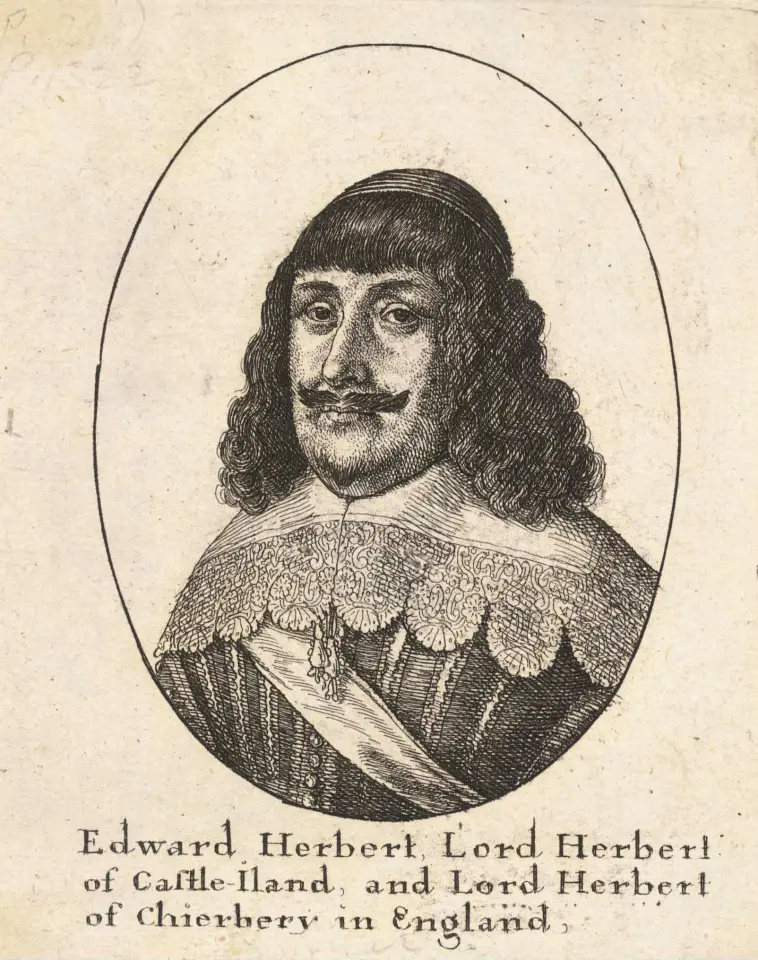
The Enlightenment, according to Grenz and Olson, put human beings and their reason at the center: revelation came to be judged by reason, and Anselm's formula "I believe in order to understand" acquired the opposite sense – "I believe what I can understand." "Natural religion" (the existence of God and moral laws accessible to the reason of all peoples) was given the status of true religion, while "revealed religion" came under attack. Lord Herbert of Cherbury identified five points common to all religions, Toland in Christianity Not Mysterious argued that revelation is unnecessary, and Tindal saw the Gospel merely as a display of the universal natural law. Locke considered Christianity purged of scholasticism the most reasonable religion, and revelation a kind of experience.
Positions
- Deists (Toland, Tindal and others)
- All religions must conform to the religion of reason; adding special revelation is superstition, and the mysteries were borrowed from paganism or invented by the clergy
- Tillotson, Locke, Clarke
- Revealed religion is needed as a supplement to the religion of reason
- Butler
- There are difficulties both in the idea of revelation and in the idea of an ordered universe; in both cases one must be guided by probability (Analogy of Religion, introduction: "to us, probability is the very guide of life")
- Paley
- The complexity of creation points to the Creator, as a watch to a watchmaker
Key points
- González: Herbert of Cherbury’s five common points – God’s existence, duty of worship, its moral character, need for repentance, reward after death. Butler's and Paley's arguments quickly became popular but were discarded by intellectuals who grasped the significance of Kant
- The deists criticized the main pillars of apologetics – fulfilled prophecies and miracles (Grenz and Olson)
- Lane: until the 18th century the truth of the Gospel was practically not disputed; deism for the first time called into question the truth of Christianity itself
- By the end of the 18th century many had turned to skepticism (Hume) or religious relativism (Lessing); nineteenth-century theologians sought a "third way" (Grenz and Olson)
- Shelley: the deists’ God was called a “clockmaker”: he made and wound the world, and deists rejected miracles and the Bible’s special revelation; they held their religion the original one, others corrupted by priests. Deism was especially popular in the English-speaking world; many English writers opposed it, and Bishop Joseph Butler (1692–1752) became famous, his Analogy of Religion in effect ended the debate. Butler did not try to prove God's existence or reject reason as natural light, but challenged the sovereignty of reason: reason gives no complete system of knowledge, only probabilities; nature is full of darkness and riddles, so it is no surprise to meet such difficulties in religion (Butler, Analogy of Religion, introduction, after Origen), and one can act on probability in religion too. Deism collapsed through its own weaknesses: false optimism and inability to explain life's troubles; asked why people do not see truth in nature, the deist could only answer that priests lie. Yet after Deism culture did not return to Christianity: society sought a religiously neutral civilization, faith moved into the private sphere. The central modern question: may Christian citizens seek Christian moral standards from the state, and how, without coercion
Outcome
Reason became the measure of religious claims, and the religion of reason replaced most of the dogmas of the Middle Ages and the Reformation; by the end of the 18th century religion, in the quotation given by Grenz and Olson, "was in a deep crisis."
People
- Herbert of Cherbury
- John Toland
- Matthew Tindal
- John Locke
- Joseph Butler
- William Paley
- David Hume
Terms
- deism
- The attempt to reduce religion to its basic, universal and rational elements.
- rational supernaturalism
- The attempt to prove by reason that reason compels acceptance of the supernatural: creation, revelation, miracles.
Place
England
Sources disagree
The books date deism to the 17th–18th centuries; Grenz and Olson give dates: Herbert – 1663, Hume – 1748. González's book has an obvious misprint in Herbert's dates; Locke's Essay – 1690.
Sources
Primary sources
- Butler – The Analogy of Religion, introduction
Textbooks
- Justo L. González – A History of Christian Thought, vol. III: From the Protestant Reformation to the Twentieth Century (Abingdon, rev. ed. 1987), p. 341–345
- Tony Lane – Christian Thinkers (Russian edition), p. 227
- Stanley Grenz, Roger Olson – 20th-Century Theology: God and the World in a Transitional Age (Russian edition), p. 13–17, 24–28
- Bruce L. Shelley – Church History in Plain Language (Russian edition), Ch. 32, sec. «Расцвет радикализма»; Ch. 32, sec. «Тщетность пустой уверенности»
Related entries
- Developed in: The Historical Criticism of the Bible: From Reimarus and Lessing to the Tübingen School and Strauss (18th–19th centuries (Strauss – 1835))
- Rejected in: Kant: The Critique of Pure Reason, the Limits of Knowledge and the Religion of Practical Reason (1781–1788)
In church history
Data compiled: 2026-11-17