18th c. (publications 1760–1781) · 18th century
The Beginnings of Historical Criticism of the Bible: Reimarus, Semler, and Lessing
Germany was shaken by the posthumous publication of parts of Hermann Samuel Reimarus's (1694–1767) Apology for the Rational Worshippers of God. The work questioned the historicity of the gospel miracles and spurred biblical scholars toward critical study of Scripture. Deists had raised this question earlier.
Johann Salomo Semler of Halle became one of the pioneers of the historical-critical method. Johann August Ernesti worked on the grammatical and philological side of interpretation. Gotthold Ephraim Lessing came out with The Education of the Human Race.
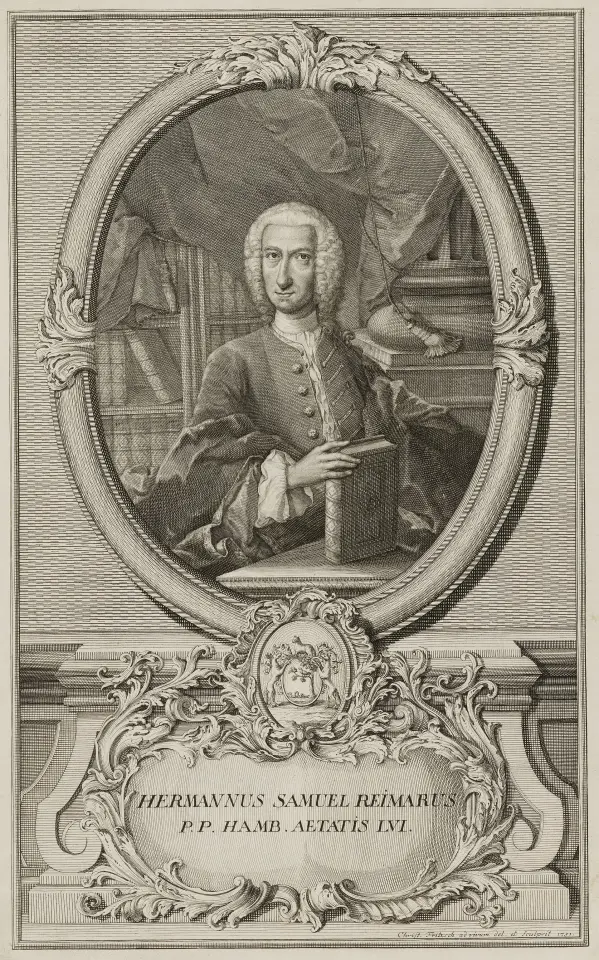
Key points
- The posthumous publication of Reimarus's fragments shook Germany
- Semler – one of the pioneers of the historical-critical method
- Ernesti and Lessing: The Education of the Human Race
- Deists had raised the question of the historicity of miracles earlier
People
- Hermann Samuel Reimarus
- Johann Salomo Semler
- Johann August Ernesti
- Gotthold Ephraim Lessing
Place
Germany
Sources disagree
The source gives no single event date; the ranges noted are the authors' lifespans (Reimarus 1694–1767, Semler 1725–1791, Ernesti 1707–1781, Lessing 1729–1781).
Sources
- Justo L. González – A History of Christian Thought, vol. III: From the Protestant Reformation to the Twentieth Century (Abingdon, rev. ed. 1987), p. 384–385
More on the doctrine
- The Historical Criticism of the Bible: From Reimarus and Lessing to the Tübingen School and Strauss (18th–19th centuries (Strauss – 1835))
Data compiled: 2026-11-09