c. 318 or 335–337 · 4th century
Athanasius, On the Incarnation of the Word, and the Greek doctrine of salvation as deification
Berkhof calls Athanasius's On the Incarnation the first systematic treatise on the work of redemption. Salvation, for Athanasius, continues creation: sin is not merely an error or a debt but an element of decay that can be expelled only by a new creative act, so only the Creator can save. Only he by whom the world was made can restore it (On the Incarnation 7); Christ offered a sacrifice for all, dying "in the stead of all" (ch. 9), and death and corruption were destroyed by the Word united with a body: the Word became man "that we might be made God" (ch. 54). According to Berkhof, the necessity of satisfaction in Athanasius rests on God's veracity rather than on his justice, and the price was not paid to Satan. The Greek doctrine, which reached its summation in John of Damascus, saw salvation both as a direct result of the incarnation and as a result of objective conditions – a sacrifice to God, satisfaction of justice, ransom to Satan.
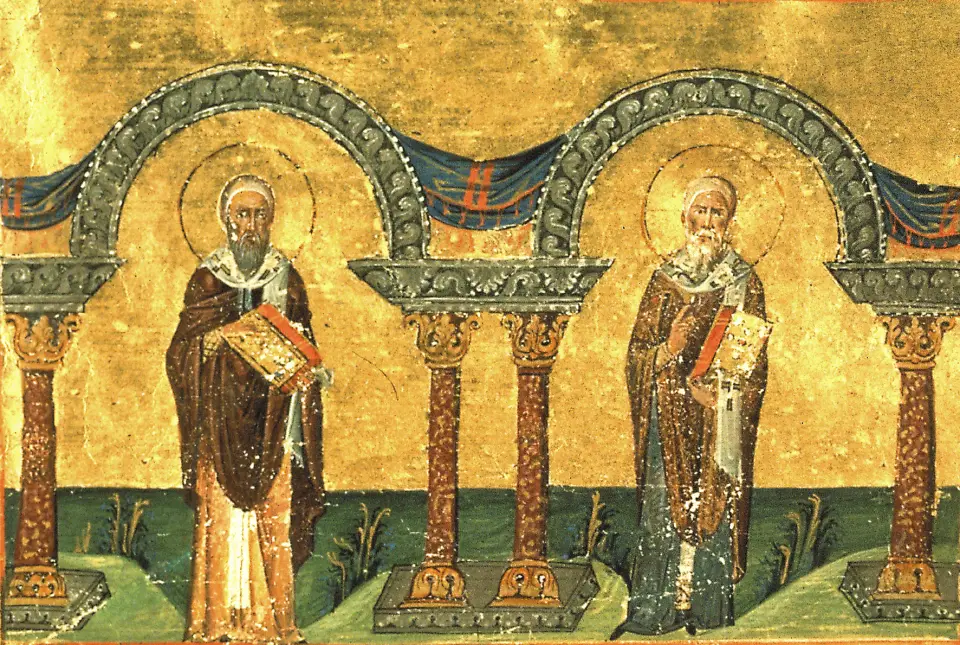
Positions
- Athanasius
- Sin is an element of decay; salvation is a new creation and deification; the Savior must be God
- Jews and pagans (according to Lane)
- The incarnation and crucifixion are degrading
Key points
- González: by On the Incarnation 4, man is mortal by nature but at creation received the gift of immortality as long as he reflected the Image
- Berkhof: in Athanasius the incarnation is more directly connected with death and resurrection than in Irenaeus, and the ethical rather than the physical element is stressed; Mackintosh calls the ransom to the devil the "exoteric" and recapitulation the "esoteric" doctrine of the Greeks
- Lane: for Ephrem the Syrian (Homily on Our Lord 4), Christ made his cross "a bridge over Sheol"; through the tree mankind fell into Sheol, upon the tree it passed over into the dwelling of life
- Pelikan: in the liturgies of Basil and Chrysostom the resurrection is included in the atonement itself, and the victory over Satan was won not by deception but "in judgment and righteousness"
Outcome
The argument from salvation became central in the defense of Christ's divinity against Arianism (Lane, González); Greek theology, according to Berkhof, did not develop a single theory of the atonement.
People
- Athanasius the Great
- Ephrem the Syrian
- John of Damascus
- H. R. Mackintosh
Terms
- deification
- The essence and final goal of salvation for the Greek Fathers: participation in the divine nature through union with Christ, becoming like God. "The Word became man so that we might be made divine."
Place
Alexandria, Edessa
Sources disagree
Discrepancy: González – early 4th century, before the Arian controversy; Lane – traditionally c. 318, but in his view the evidence favors 335–337 (the time of the first exile); Berkhof – 4th century without a date. Ephrem – 363–373 (Lane); John of Damascus – 8th century (Berkhof).
Sources
Primary sources
- Athanasius – On the Incarnation of the Word, ch. 4, 7, 9, 54
- Ephrem the Syrian – Homily on Our Lord, ch. 4
Textbooks
- Jaroslav Pelikan – The Christian Tradition, vol. 2: The Spirit of Eastern Christendom (600–1700) (Russian edition), p. 256–258
- Louis Berkhof – History of Christian Doctrines (Russian edition), p. 120–121
- Justo L. González – A History of Christian Thought in One Volume (Abingdon, 2014), p. 131–132
- Tony Lane – Christian Thinkers (Russian edition), p. 39–42
Related entries
- Develops: Irenaeus: recapitulation – Christ as the new Adam (c. 180)
- Developed in: Athanasius and Nicene christology: only the Creator can save (328–373)
Data compiled: 2026-11-17