120–200 · 2nd century
Second-century apologists (Aristides, Tatian, Athenagoras, Theophilus of Antioch, Melito of Sardis)
Besides Justin, a whole series of apologists defended the faith (c. 120–200). They answered rumors of incest and cannibalism and the criticism of educated pagans (Celsus, Cornelius Fronto).
Aristides of Athens addressed the oldest surviving apology to Emperor Hadrian. Tatian, a pupil of Justin, wrote the Address to the Greeks, began Syrian Encratism and compiled the Diatessaron – a harmony of the four Gospels that remained in use in Eastern Syria for three centuries. Athenagoras of Athens in his Plea for the Christians (3, 31–35) rejected the charges of immorality and wrote a separate treatise on the resurrection of bodies. Theophilus of Antioch in his Three Books to Autolycus was the first to use the word "Trinity" (To Autolycus 2.15: the three days before the luminaries "are types of the Trinity, of God, and His Word, and His wisdom"). Melito of Sardis compiled one of the early lists of the books of the Old Testament and left a Paschal homily.
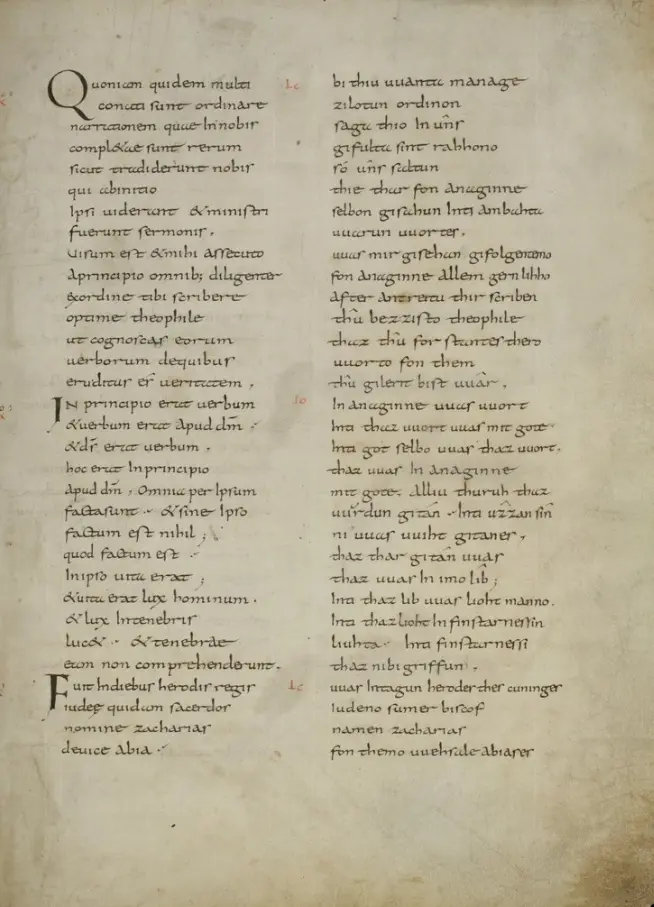
Key points
- Aristides of Athens: the oldest surviving apology (to Emperor Hadrian)
- Tatian: the Diatessaron, which remained in use in Syria for centuries
- Athenagoras: Plea for the Christians and a treatise on the resurrection of the dead
- Theophilus of Antioch was the first to use the word "Trinity" (To Autolycus 2.15)
- Melito of Sardis compiled a list of the books of the Old Testament
- Shelley: in the 1st–2nd centuries Christians saw the Spirit’s power not in an institution but in the moral force of believers’ lives (“the fruit of the Spirit is love, joy, peace…”, Gal 5:22–23). Justin devoted large parts of his Apology to Christianity’s moral principles and to proving that Christians keep them; Athenagoras (Plea 11): uneducated persons, artisans and old women cannot prove the teaching’s benefit in words but demonstrate it by deeds. Even opponents attested Christians’ exemplary life – Pliny found nothing criminal, and martyrs’ courage converted onlookers. In the early 3rd century the Church’s moral backbone weakened; by 220 the churches had changed (“Montanus was right in some respects”)
- Roetzel: Justin has only faint echoes of Paul's letters, never naming him; Theophilus of Antioch draws on Romans 13 without mentioning Paul.
People
- Aristides
- Tatian
- Athenagoras
- Theophilus of Antioch
- Melito of Sardis
- Celsus
- Quadratus
Place
Athens; Antioch; Sardis; Syria
Sources disagree
Dates vary between books: Aristides' apology from "before 138" to "140"; Athenagoras' apologies to 170, 176 or 177; Theophilus and Tatian to "c. 180."
Sources
Primary sources
- Athenagoras – A Plea for the Christians, ch. 3, 11, 31–35
- Theophilus of Antioch – To Autolycus, bk. II, ch. 15
Textbooks
- Justo L. González – A History of Christian Thought in One Volume (Abingdon, 2014), p. 42–48
- Stuart G. Hall – Doctrine and Practice in the Early Church (Russian edition), p. 13–14, 17, 33, 36–37
- Justo L. González – The Story of Christianity, vol. I (Russian edition), sec. «Защита веры»
- Louis Berkhof – History of Christian Doctrines (Russian edition), p. 35–39
- J. North – A History of the Church (Russian edition), p. 31–34
- Jaroslav Pelikan – The Christian Tradition: A History of the Development of Doctrine, vol. 1 (Russian edition), p. 62–63, 72
- Tony Lane – Christian Thinkers (Russian edition), p. 27
- Bruce L. Shelley – Church History in Plain Language (Russian edition), Ch. 7, sec. «Как расценить епископов?»
- The Cambridge Companion to St Paul, ed. James D. G. Dunn (2003), p. 241
More on the doctrine
- The Apologists: the Logos as mediator and "another God", threefold worship and the first use of "Trinity" (2nd century)
- The resurrection of the body and the immortality of the soul: Tatian, Athenagoras and the dispute over the nature of the risen body (second half of the 2nd century)
Data compiled: 2026-11-09