161–180 (Lyon and Vienne – 177) · 2nd century
Persecution under Marcus Aurelius; the martyrs of Lyon and Vienne
The Stoic emperor Marcus Aurelius saw in the empire's calamities – invasions and plagues – the gods' anger at obstinate Christians. Under him persecution intensified throughout the empire. It touched Greece (the martyrdom of bishop Publius of Athens), Rome (the execution of Justin Martyr), and Gaul.
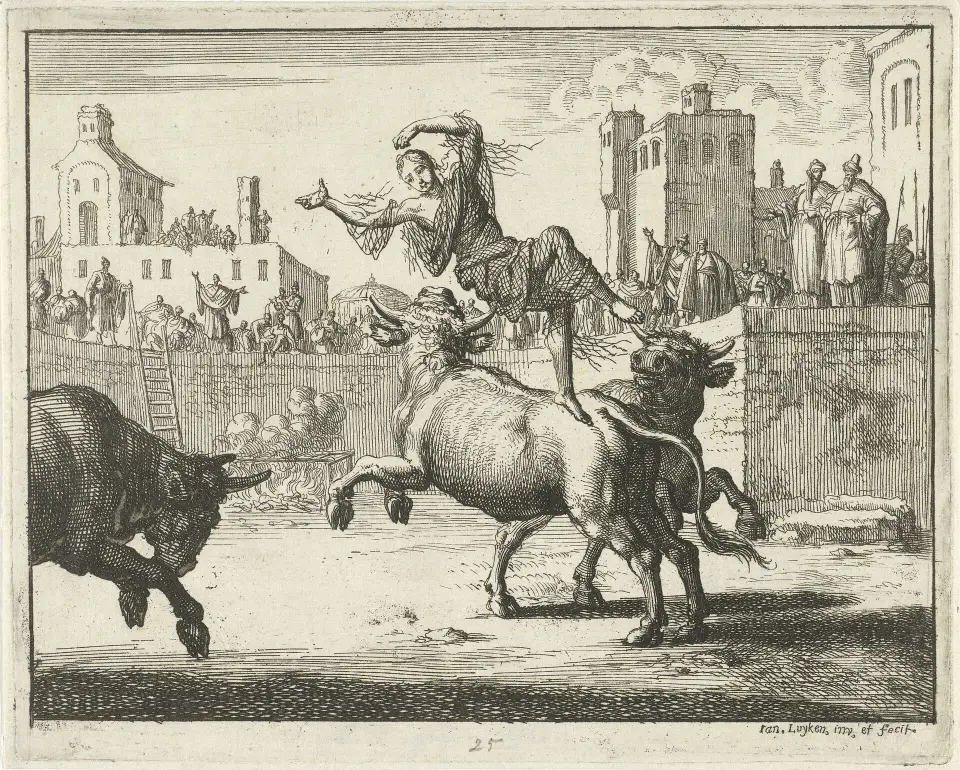
In 177 the churches of Lyon and Vienne described a savage persecution in a letter to "the brethren in Asia and Phrygia." Christians were accused of incest and cannibalism. Some recanted, but then almost all confessed the faith again. More than forty died, including the ninety-year-old bishop Pothinus and the slave girl Blandina.
The martyrs interceded from prison for the readmission of penitent Montanist schismatics. Irenaeus succeeded Pothinus as bishop of Lyon. After Marcus Aurelius' death in 180, under Commodus the persecution subsided for a time.
Key points
- Martyrdom of bishop Publius of Athens; letters of Dionysius of Corinth to the churches of Greece
- Letter of the churches of Lyon and Vienne to "the brethren in Asia and Phrygia" (preserved by Eusebius)
- Deaths of bishop Pothinus and the slave girl Blandina; more than 40 victims
- Confessors interceded for reconciliation with Montanist schismatics
- Irenaeus became bishop of Lyon after Pothinus' death
People
- Marcus Aurelius
- Pothinus of Lyon
- Blandina
- Irenaeus of Lyons
- Justin Martyr
- Publius of Athens
- Dionysius of Corinth
Place
Lyon and Vienne (Gaul); Athens; Rome
Sources disagree
The date of the martyrdoms at Lyon and Vienne is consistent across the books (177); the broader persecution under Marcus Aurelius is framed as 161–180.
Sources
- Stuart G. Hall – Doctrine and Practice in the Early Church (Russian edition), p. 40–41, 50–51, 58
- Justo L. González – The Story of Christianity, vol. I (Russian edition), sec. «Гонения при Марке Аврелии»
- J. North – A History of the Church (Russian edition), p. 35–36
- Justo L. González – A History of Christian Thought in One Volume (Abingdon, 2014), p. 66–67
Data compiled: 2026-11-09