1629–1672 · 17th century
Confessions of Faith in the Orthodox East: Lucaris, Mogila, and Dositheus
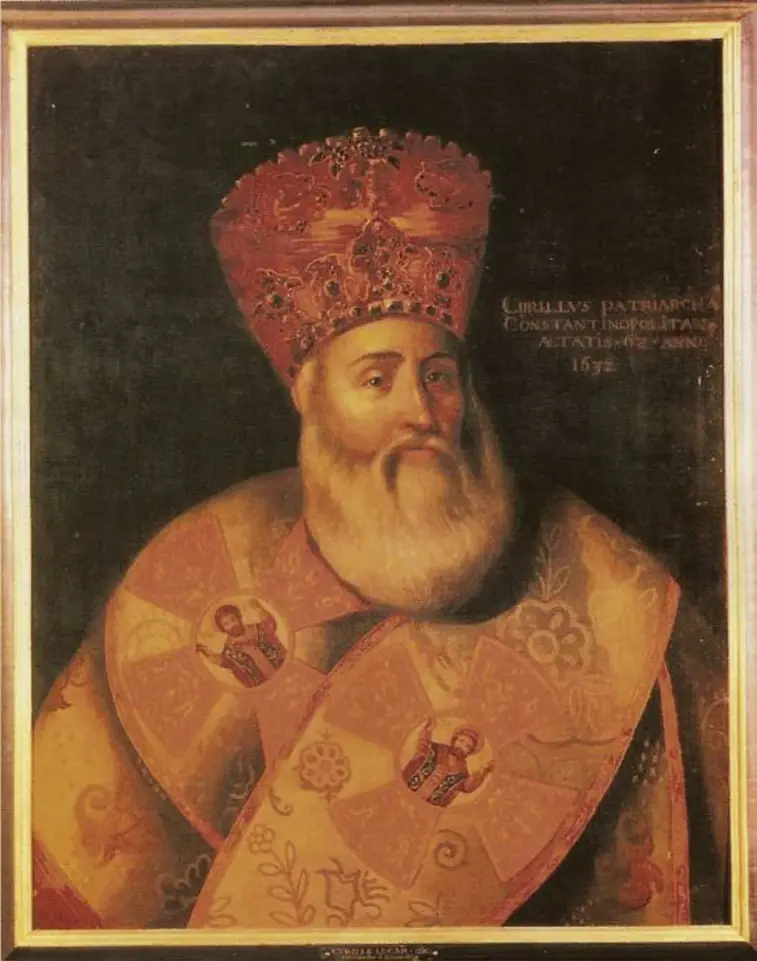
Patriarch Cyril Lucaris of Constantinople had previously been accused of Calvinism in Poland. Against Catholic influence he relied on English and Dutch diplomacy. In 1629 he issued his "Eastern Confession of the Christian Faith." Deposed seven times, Lucaris was murdered in 1638. That same year a Constantinople council anathematized him as a "new iconoclast." The Synod of Iași (1643) condemned his confession for its "attachment to Calvinist heresy."
Meanwhile Peter Mogila, who became Metropolitan of Kyiv in 1633, composed an "Orthodox Confession." It was accepted by the patriarchs of Constantinople, Jerusalem, Alexandria and Antioch. The confession showed strong Latin influence. A similar private confession was also written by Metrophanes Kritopoulos.
In response to Lucaris, Patriarch Dositheus of Jerusalem prepared eighteen articles. They were approved by the councils of Jerusalem and Constantinople in 1672. It was the first time in centuries the East had formally defined its biblical canon and doctrine of the seven sacraments.
Key points
- Lucaris's confession (1629) and his murder (1638)
- Condemnation of Lucaris at Constantinople (1638) and Iași (1643)
- Peter Mogila's "Orthodox Confession" (1633), approved by four patriarchs
- Dositheus's confession and the 1672 councils – an eighteen-point response to Lucaris
- Butcher: for Moghila (1638/42) a sacrament needs matter, a priest, a formula and intention; chrismation may be repeated for apostates. Moghila personally located consecration in the words of institution, while the Synod of Jassy kept the epiclesis; his 1639 Sluzhebnik is Latinized. By Moghila’s Trebnik (1646), at the Presanctified Liturgy the blood is not drunk – only wine, to purify the mouth. Moghila’s books brought first-person absolution and Western marriage vows; his Confession stresses consent in marriage.
People
- Cyril Lucaris
- Meletius Pigas
- Peter Mogila
- Metrophanes Kritopoulos
- Dositheus of Jerusalem
Place
Constantinople; Alexandria; Kyiv; Iași; Jerusalem
Sources disagree
The dates (1629, 1633, 1638, 1643, 1672) agree across Pelikan, González and Lane.
Sources
- Jaroslav Pelikan – The Christian Tradition, vol. 2: The Spirit of Eastern Christendom (600–1700) (Russian edition), p. 423–425, 432–448
- Justo L. González – A History of Christian Thought, vol. III: From the Protestant Reformation to the Twentieth Century (Abingdon, rev. ed. 1987), p. 423–425, 432–433
- Justo L. González – A History of Christian Thought in One Volume (Abingdon, 2014), p. 406
- Tony Lane – Christian Thinkers (Russian edition), p. 87–88
- The Oxford Handbook of Sacramental Theology, ed. Hans Boersma, Matthew Levering (2015), p. 406–407, 407–408, 408, 408–409
More on the doctrine
Data compiled: 2026-11-09