late 2nd c. – 272 · 2nd century
Monarchianism: dynamic and modalist (Noetus, Sabellius, Paul of Samosata)
Some theologians defended the unity of God against the Gnostic aeons and Marcion's two gods; Tertullian called the path they took "Monarchianism." It is divided into dynamic (Theodotus the Tanner, excommunicated by Victor of Rome, later Theodotus the Banker and Artemon) and modalist, or Patripassianism (Noetus of Smyrna, Praxeas, and in the East Sabellianism). In the West, Hippolytus and Tertullian opposed Modalism.
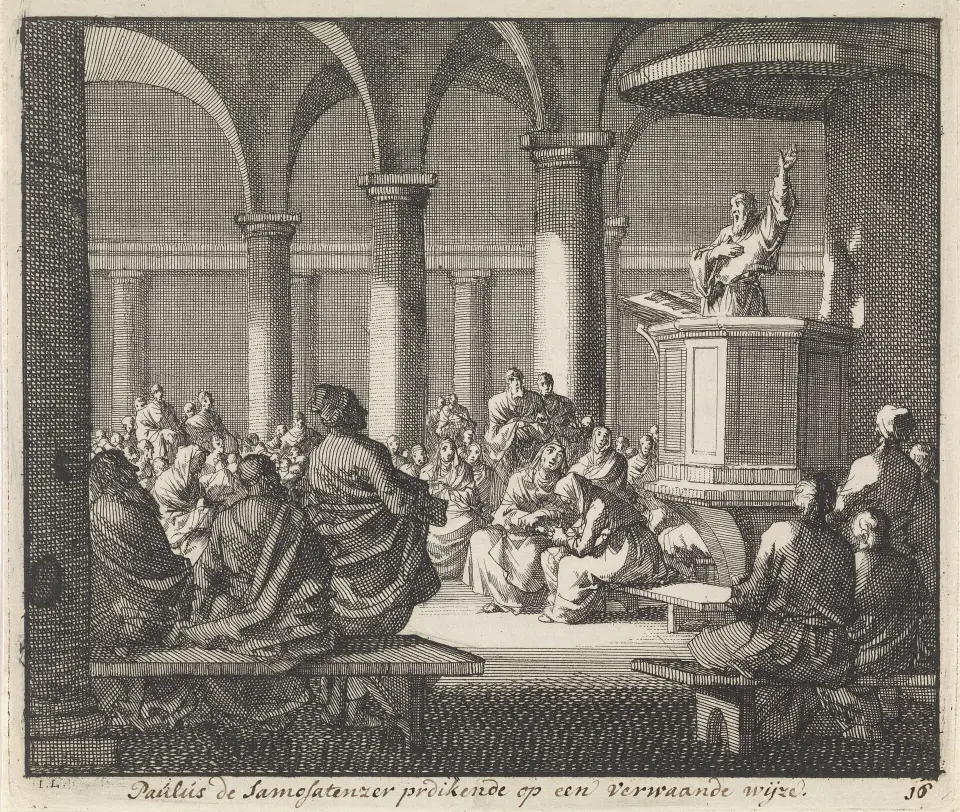
The most prominent representative of dynamic Monarchianism was Paul of Samosata, bishop of Antioch. A synod in 268 condemned him, but under the protection of Queen Zenobia of Palmyra he kept his see until 272, when Emperor Aurelian expelled him.
A related episode was the dispute between the two Dionysii – of Alexandria and of Rome – over the interpretation of Proverbs 8:22. In it the bishop of Alexandria, fighting Sabellianism, made the first notable use of the term "homoousios" (of one essence).
Key points
- Dynamic Monarchianism: Theodotus the Tanner (excommunicated by Victor of Rome), Theodotus the Banker, Artemon
- Modalist Monarchianism: Noetus, Praxeas, Sabellius; in the West opposed by Hippolytus and Tertullian
- Paul of Samosata condemned by the synod of 268 and expelled from Antioch by Aurelian in 272
- The dispute of the two Dionysii anticipated the Arian controversy
People
- Theodotus the Cobbler
- Noetus of Smyrna
- Praxeas
- Sabellius
- Paul of Samosata
- Dionysius of Alexandria
- Dionysius of Rome
- Tertullian
- Hippolytus of Rome
Place
Rome; Smyrna; Antioch; Alexandria
Sources disagree
The books give almost no dates for individual monarchians; the synod against Paul of Samosata is dated to 268, his expulsion to 272 (after Aurelian's defeat of Zenobia).
Sources
- Jaroslav Pelikan – The Christian Tradition: A History of the Development of Doctrine, vol. 1 (Russian edition), p. 184–191, 202–204
- Justo L. González – A History of Christian Thought in One Volume (Abingdon, 2014), p. 60–61, 111–112
- Louis Berkhof – History of Christian Doctrines (Russian edition), p. 52–55
- Stuart G. Hall – Doctrine and Practice in the Early Church (Russian edition), p. 52–53, 58, 60, 63, 75–76, 80
More on the doctrine
- Modalistic Monarchianism: Noetus, Praxeas, Sabellius and the response of Hippolytus (late 2nd – early 3rd century)
- Dynamic monarchianism (adoptionism): Theodotus and Paul of Samosata (c. 190–272)
- The two Dionysii: "right-wing" and "left-wing" Origenism and the first discussion of consubstantiality (260s)
Data compiled: 2026-11-09