1871–1878 · 19th century
The Kulturkampf in Germany
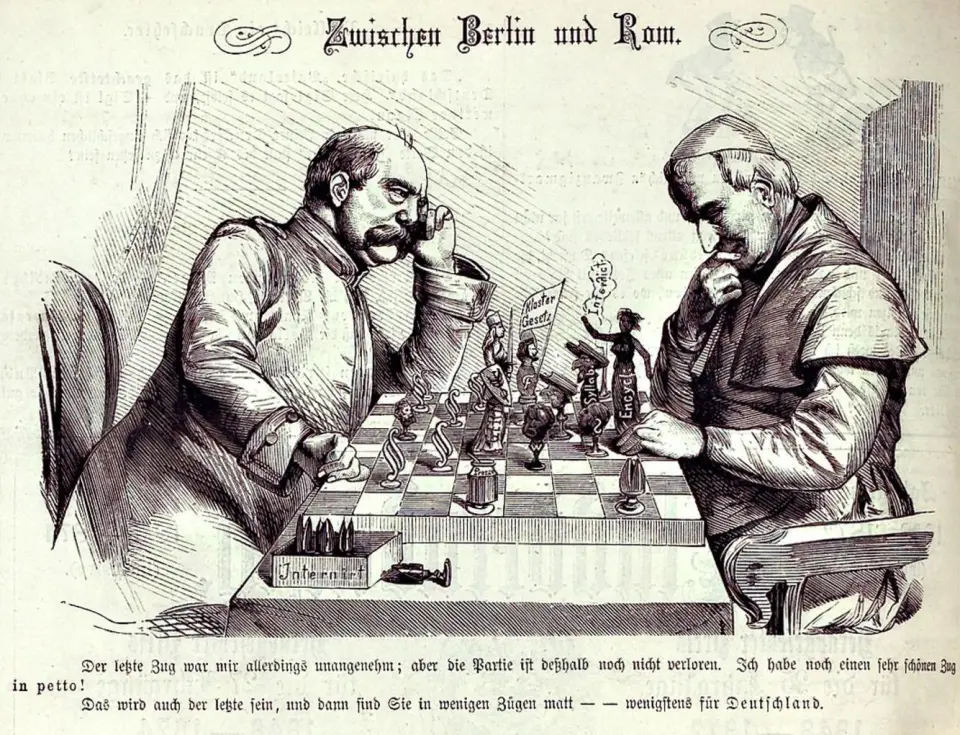
After German unification, Chancellor Otto von Bismarck launched a campaign against Catholic Church influence. He himself called it the "Kulturkampf" ("culture struggle").
The "May Laws" restricted clerical rights and church education. They also put the appointment of priests under state control. The Jesuits were expelled from the country.
Determined Catholic resistance led to a gradual softening and eventual winding-down of the campaign.
Key points
- Bismarck sought to weaken the Catholic Church's political influence in the new German Empire
- The "May Laws": restrictions on clerical rights and church education
- Expulsion of the Jesuits
- Catholic resistance led to the campaign's winding-down
People
- Otto von Bismarck
Place
Germany
Sources
- J. North – A History of the Church (Russian edition), p. 1–2
Data compiled: 2026-11-09