324–330 · 4th century
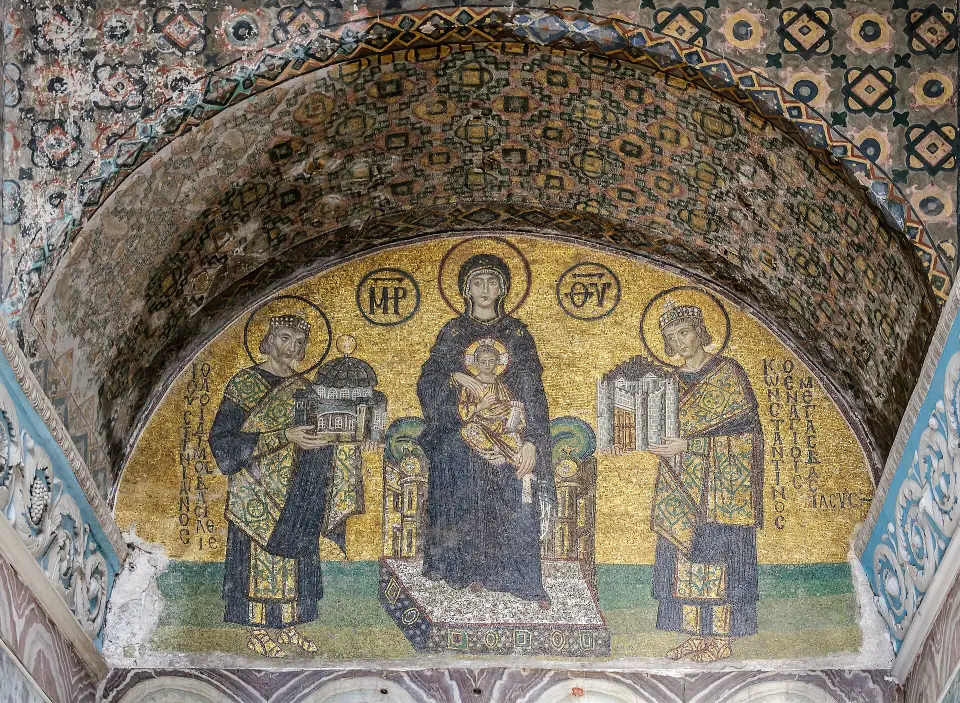
The Founding of Constantinople, the "New Rome"
In 324 Constantine defeated Licinius and became sole emperor of East and West. He decided to build a new capital on the site of Byzantium. The plan met resistance from the old pagan aristocracy and the Senate of Rome.
The city was consecrated in 330. It was adorned with statues and columns brought from across the empire. In Jerome's words, "they dressed it by stripping the whole empire." The courts and senate functioned without pagan rites, and settlers were given privileges.
For a thousand years Constantinople was the capital preserving the heritage of what was later called the Byzantine Empire. In the 4th century five sees – Rome, Alexandria, Antioch, Jerusalem, and Constantinople itself – contended for ecclesiastical primacy.
Key points
- Constantinople as the capital of a Christian empire
- Abandonment of pagan rites in the new capital
- Statues and columns brought from across the empire
- Rivalry among the five great sees
- Shelley: Constantine’s tomb among the apostles’ gave the title “equal of the apostles”; from 330 the center moved east and Constantinople expected leadership.
People
- Constantine the Great
- Licinius
- Jerome
Place
Constantinople (Byzantium)
Sources disagree
Not all books give the exact consecration date (330); North dates the founding to 330, others to the period after the victory over Licinius in 324.
Sources
- Stuart G. Hall – Doctrine and Practice in the Early Church (Russian edition), p. 80–81
- Justo L. González – The Story of Christianity, vol. I (Russian edition), Ch. 7, sec. 7.1
- Tony Lane – Christian Thinkers (Russian edition), p. 34–35
- J. North – A History of the Church (Russian edition), p. 65–67
- Bruce L. Shelley – Church History in Plain Language (Russian edition), Ch. 14, sec. «Империя отходит на Восток»; ch. 15, sec. «Воля Божья в обществе людей»
Data compiled: 2026-11-09