c. 1900–1914 · 19th century
The Azusa Street revival and the rise of Pentecostalism
In 1906 manifestations of the "gifts of the Spirit" – speaking in tongues, healings, prophecy – flared up with new force at the Azusa Street mission in Los Angeles.
The revival broke beyond the Wesleyan holiness tradition. It embraced both white and black believers and spread rapidly across the country. In 1914 the Assemblies of God emerged from the general gathering of "believers in the baptism of the Holy Spirit." Pentecostals worked successfully in cities and sent out many missionaries worldwide.
This was one of the most important events in twentieth-century Christian history. The movement almost became a new confessional family. But its influence – a renewed attention to pneumatology and eschatology – was felt across all confessions.
Key points
- Azusa Street, Los Angeles, 1906 – epicenter of the revival
- Broke beyond the Wesleyan holiness tradition; involved both white and black believers
- 1914 – formation of the Assemblies of God
- The movement's future theology – eschatology and pneumatology
- Methodists suffered the greatest losses from worldliness
- The Holiness movement (c. 1900) as a return to Wesley's teaching on sanctification
- Shelley: in the late 19th century many evangelicals turned to holiness conferences; ideas of perfection and a “second birth” came from Methodism. Holiness groups (the Church of the Nazarene) urged reliance on the Holy Spirit to attain a victorious Christian life, and attention to the last times and to the Christian life helped evangelicals keep faith in a culture they were losing control of. By 1900 Pentecostals absorbed 150 years of Holiness theology and added to conversion and holiness a third blessing, baptism in the Spirit, which empowered for ministry and came with speaking in tongues; prophecy meetings and “healing ministries” fed the expectation. Pentecostals took heart from revivals in India, Wales (Evan Roberts) and Korea, where the “Korean Pentecost” prepared dawn prayer meetings. At the origins stands Charles Parham, who laid hands on Agnes Ozman; she ‘spoke in tongues’ – Chinese, Parham thought – a gift for missions. Seymour studied under Parham apart from whites; his Los Angeles church rejected his teaching, but Edward Lee and seven others received Spirit baptism. Lee’s house soon could not hold the crowd – black and white together – and the “spark” of 20th-century Pentecostalism was a three-year revival that began in 1906 on Azusa Street in Los Angeles. Tongue-speaking had occurred before, but after Azusa Street the fire spread worldwide as Christians from many lands carried it home. Then came denominations – Assemblies of God, Church of God in Christ, Church of God, Pentecostal Holiness; the secular press noticed them only in 1960. From 1960 neo-Pentecostalism spread through Lutheran, Episcopal and Presbyterian congregations in America, and the Catholic Charismatic Renewal began in 1966–1967 at Duquesne University and became an international movement. Three ‘waves’ of the Spirit: Azusa Street; the 1960s – charismatics in the mainstream and Catholicism; from the 1980s – ‘signs and wonders’ (Wimber). Because categories blur, Pentecostals and charismatics are hard to count; modest estimates put them at a little over a quarter of Christians, and if researchers exaggerate in calling Christianity’s expansion essentially Pentecostal expansion, they do so only slightly.
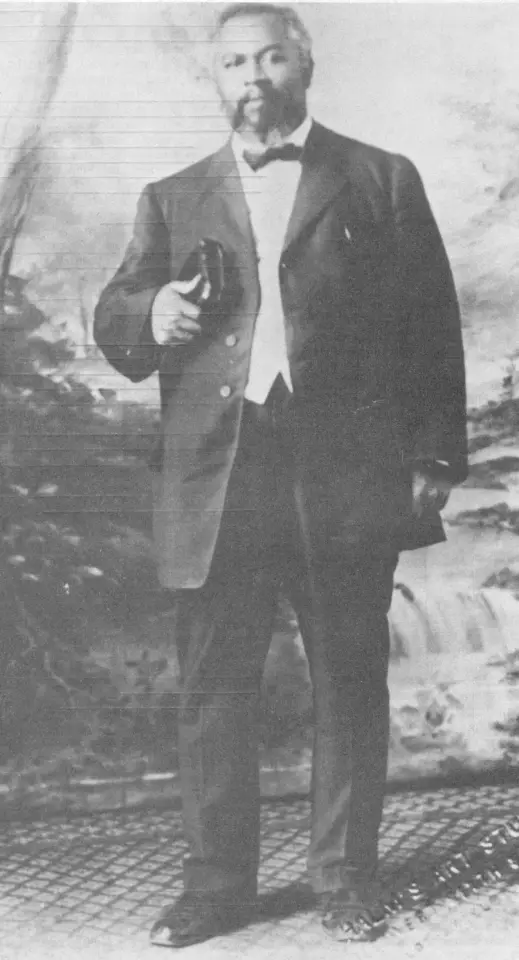
- Macchia: Pentecostalism began in Kansas and at the Azusa Street mission in Los Angeles under William J. Seymour, the son of former slaves. Its theology rested on Simpson’s ‘full gospel’ (Saviour, Sanctifier, Healer, coming King), to which Spirit baptism and tongues were added; the shared frame was the premillennial ‘latter rain’ of the Spirit before Christ’s return, and Seymour saw tongues as a sign uniting peoples. Pentecostals grew from evangelicalism’s shift to premillennialism; they accepted dispensationalism fully only later.
- Larsen: since the early 20th century Pentecostal and charismatic Christianity has strongly influenced global evangelicalism and raised pneumatology’s place.
- Kwiyani: by 2020 more than 600 million self-identifying Pentecostals (from zero in 1900) – one in four Christians (Johnson and Zurlo). South India from the 1860s (tongues), Wales 1904–06, India and Ramabai’s Mukti 1905, ‘Korean Pentecost’ 1907–08 – Azusa was one of many revivals; in West Africa, African Independent Churches grew alongside under prophets such as W. W. Harris, with ties to Western Pentecostals from the 1920s. Within two years of Azusa Pentecostal missionaries had reached many countries; by 1910 South Africa had more Pentecostals than the United States. The Assemblies of God held tongues to be the initial evidence of the second blessing, but by the late twentieth century they were losing confidence in it. Pentecostalism was marked from the start, as Vondey puts it, by ‘ad hoc doxology’ rather than systematic theology: first-generation Pentecostal theologians (Synan, Menzies, Hollenweger, Fee, Horton) wrote from the 1960s; Southern scholars emerged in the 1980s–90s.
People
- William J. Seymour
- Pandita Ramabai
- William Wade Harris
Place
Los Angeles; worldwide
Sources
- Justo L. González – A History of Christian Thought in One Volume (Abingdon, 2014), p. 429
- Justo L. González – The Story of Christianity, vol. II (Russian edition), Part 3, ch. 25, section «От Гражданской войны до Первой мировой войны»
- J. North – A History of the Church (Russian edition), p. 383
- Bruce L. Shelley – Church History in Plain Language (Russian edition), Ch. 43, sec. «Возвращение старой доброй религии»; Ch. 43, sec. «Возрождение евангельского христианства»; Ch. 45, sec. «Кризис идентичности»; Ch. 47, sec. «Глобальное христианство: пятидесятники или харизматы»; Ch. 47, sec. «Пятидесятники и харизматы»
- The Oxford Handbook of Eschatology, ed. Jerry L. Walls (2008), Ch. 15, sec. «Eschatology as the Integrating Theme of Pentecostal Theology; Christ as Spirit Baptizer»; Ch. 15, sec. «Christ the Coming King: The Otherworldly Kingdom; Christ as Spirit Baptizer»; Ch. 15, sec. «Eschatology as the Integrating Theme of Pentecostal Theology»
- The Cambridge Companion to Evangelical Theology, ed. Timothy Larsen and Daniel J. Treier (2007), p. 27
- The New Cambridge Companion to Christian Doctrine, ed. Michael Allen (2023), p. 297, 300, 299–300, 308, 307–308, 305, 306–307
More on the doctrine
- Pentecostalism and the Renewed Interest in the Doctrine of the Holy Spirit (20th – early 21st century)
Data compiled: 2026-11-09