1924–1947 · 20th century
Whitehead and Process Theology: The Dipolar, Suffering and Persuading God
Process theology rests on the "philosophy of organism" of Whitehead (at Harvard from 1924, died 1947) and Hartshorne: reality is not a static substance but a process of "actual entities," and God is one of them, not an exception to metaphysical principles. God is dipolar: the primordial nature contains the potentialities, the consequent nature takes the world into itself. Hence three postulates: God is interdependent with the world and immanent in it, acts by persuasion rather than coercion, and suffers with the world. This is "panentheism," or "neoclassical theism": the world is "God's body." Critics reproached the school for the loss of transcendence, for abandoning creation from nothing and for making God a "prisoner of time."
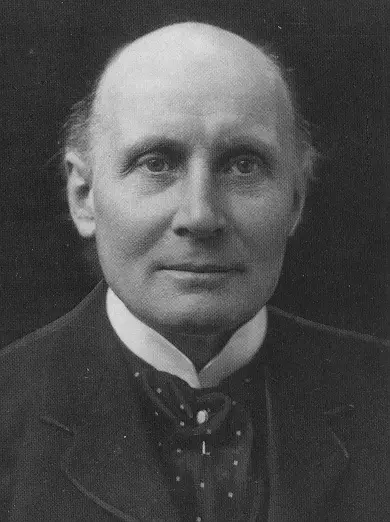
Positions
- Classical theism
- God is the almighty Ruler, the unchanging and impassible Absolute outside time
- Whitehead, Hartshorne, Cobb
- God is dipolar and changes with the world; "the Church gave unto God the attributes which belonged exclusively to Caesar"
- Critics (Pannenberg, Moltmann, Peters; Lane)
- A variety of dynamic monarchianism; abandoning creation from nothing leads to a "divinization of the world"; God, according to the Bible, knows the future and is independent of the world
Key points
- "God is an actual entity, and so is the most trivial puff of existence" (Whitehead)
- The school goes back to the dispute between Parmenides (being) and Heraclitus (becoming); two traditions – Teilhard de Chardin and Whitehead (Grenz and Olson)
- Cobb built a Christian natural theology of process: God is "the One Who Calls," Creative-Responsive Love
- Lane: most objections to classical theism are just, but process theology's philosophical starting point distorts the concept of God
Outcome
Process theology is very influential, especially in the United States (Lane); in Grenz and Olson's assessment, immanence in it eclipsed transcendence.
People
- Alfred North Whitehead
- Charles Hartshorne
- John Cobb
- Schubert Ogden
- Pierre Teilhard de Chardin
Terms
- actual entity
- The elementary unit of reality, a momentary "moment of experience" endowed with "feeling".
- primordial and consequent nature of God
- The timeless mental pole evaluating potentialities and the temporal physical pole that takes in the world.
- panentheism – pan-en-theos
- All is in God; the world is God's body.
Place
Harvard; Claremont; United States
Sources disagree
Grenz and Olson: Whitehead at Harvard from 1924 until his death in 1947, the school – mid-20th century, Cobb – 1965–1990; Lane: after the First World War until 1947.
Sources
- Tony Lane – Christian Thinkers (Russian edition), p. 280–282
- Stanley Grenz, Roger Olson – 20th-Century Theology: God and the World in a Transitional Age (Russian edition), p. 190–194, 199–208, 212–216
Related entries
- Rejects: The Impassibility and Immutability of God as a Common Axiom (3rd–5th centuries)
Data compiled: 2026-11-17