1951–1963 · 20th century
Tillich: The Method of Correlation and Apologetic Theology
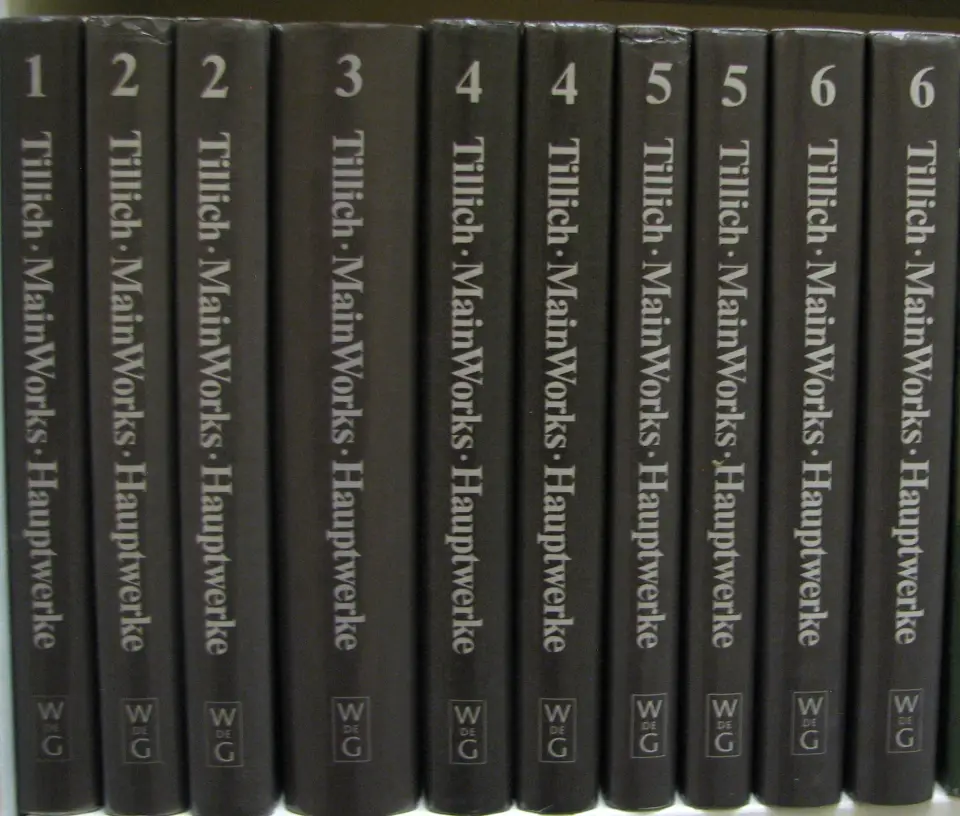
In his three-volume Systematic Theology (1951–1963) Tillich, unlike Barth, regarded the task of theology as primarily apologetic and based on philosophy. Theology moves between the eternal truth of the message and the temporal situation; the method of correlation "explains the contents of the Christian faith through existential questions and theological answers in mutual interdependence": human existence asks the questions, revelation gives the answers. Tillich set it against the supranaturalistic, naturalistic and dualistic methods. Critics reproached him for giving philosophy too much power and fitting faith to an ontology (a "Procrustean bed").
Positions
- Barth and his followers
- Theology is not apologetic and does not rest on philosophy
- Tillich
- Theology is apologetic; "the God of Abraham, Isaac and Jacob is also the God of the philosophers"
- The supranaturalistic, naturalistic and dualistic methods (according to Tillich)
- Fundamentalism and neo-orthodoxy ignore people's questions; liberalism finds the answers in man; Catholic natural theology derives the answer from the form of the question
- Critics (Hamilton, Thomas, Davis; Lane)
- The method is determined by a preselected ontology and by modern culture; eternal truth is sacrificed to the situation
Key points
- "Man cannot receive an answer to a question he has not asked"
- Orthodoxy "throws the message like a stone" at people in their situation
- The answer takes its form from the question and its content from revelation
- Volume 1 (1951): reason, revelation, God; volume 2 (1957): existence and Christ; volume 3 (1963): life, the Spirit, history
Outcome
The method of correlation is often regarded as Tillich's chief contribution and became the methodological basis of neo-liberal theology (Grenz and Olson); Tillich's influence declined rapidly after his death (1965).
People
- Paul Tillich
- Kenneth Hamilton
- George Thomas
- John Jefferson Davis
Terms
- method of correlation
- The interdependence of existential questions and theological answers.
- apologetic theology
- Answers the questions of the situation with the power of the eternal message.
- theonomy
- The grounding of being on its true ground, neither autonomous nor heteronomous.
Place
New York; Harvard; Chicago
Sources disagree
Grenz and Olson, Lane: Systematic Theology 1951–1963; González does not date the positions, giving Tillich's lifespan (1886–1965), with 1951 and 1957 in the notes.
Sources
- Justo L. González – A History of Christian Thought in One Volume (Abingdon, 2014), p. 421–422
- Justo L. González – A History of Christian Thought, vol. III: From the Protestant Reformation to the Twentieth Century (Abingdon, rev. ed. 1987), p. 467–468
- Tony Lane – Christian Thinkers (Russian edition), p. 277–278
- Stanley Grenz, Roger Olson – 20th-Century Theology: God and the World in a Transitional Age (Russian edition), p. 164–176
Related entries
- Developed in: Tillich: God as "Being-Itself" and the "God above God" (1951–1963)
- Rejects: Barth and Dialectical Theology: The Revolt against Immanence (1919–1932)
In church history
- Paul Tillich and the "method of correlation" (1914–1965)
Data compiled: 2026-11-17