19th – early 20th century · 19th century
Subjective and mystical theories of the 19th century: Schleiermacher, Ritschl, Bushnell, Campbell – and Forsyth's response
Schleiermacher completely rejected satisfaction through punishment: Christ is the prototype of man who communicates God-consciousness to others, and his sufferings revealed love; Berkhof calls this a mystical, thoroughly subjective theory. Ritschl, according to González, rejected Anselm's "objective" juridical theory in favor of a modernized version of Abelard's "subjective" theory: it is not God who needs to be reconciled to us but we to him, and reconciliation is corporate and directed toward the Kingdom of God. Horace Bushnell taught that God need not be propitiated (an expiation that "softens God" is a pagan idea, The Vicarious Sacrifice, part IV, ch. 2) – God himself suffered in Christ ("there is a cross in God before the wood is seen upon Calvary", part I, ch. 2) to win man's love; McLeod Campbell taught Christ's "vicarious repentance"; F. D. Maurice saw Christ as the archetype of humanity; Irving – the gradual purification of Christ's fallen human nature. Forsyth, converted from liberalism, objected: "The love of God is not more real than the wrath of God" (The Work of Christ, p. 242), and Christ voluntarily bore God's punishment for sin.
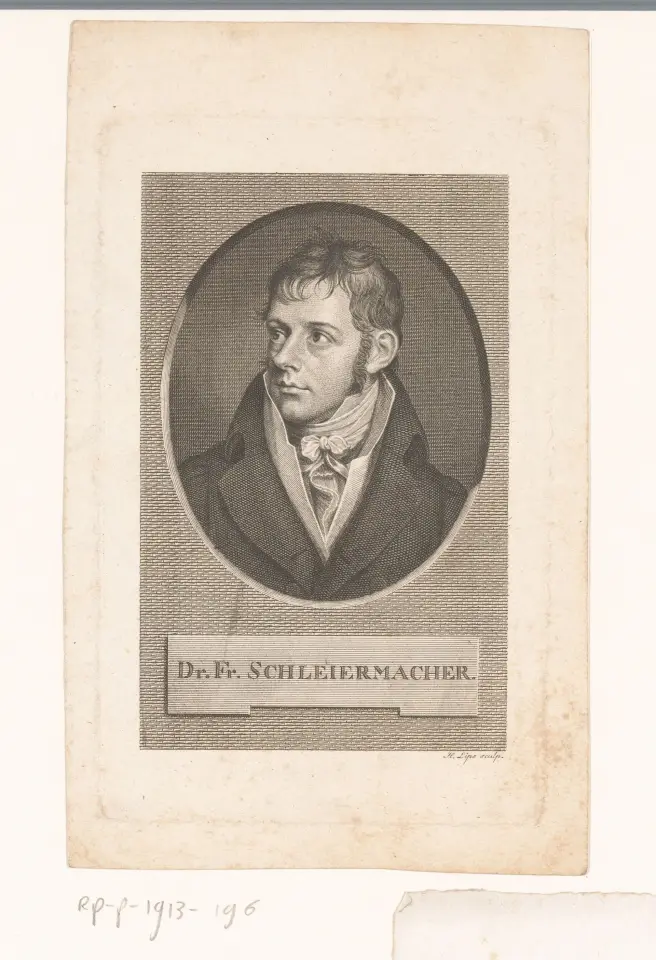
Positions
- Schleiermacher
- The incarnation is the central fact of redemption; the influence of spirit on spirit
- Ritschl
- We need reconciliation, not God; love is God's central attribute; Christ's death is not propitiation, but God forgives for the sake of the Kingdom
- Bushnell
- First – moral influence without propitiation of God; later – God's self-propitiation and self-sacrifice
- McLeod Campbell
- Christ, on behalf of humanity, offered God a perfect confession of sins
- Forsyth
- God's holiness and wrath against sin are real; Christ's sacrifice was a penal sacrifice
Key points
- Ritschl: Christianity is an ellipse with two foci, redemption and the Kingdom of God (The Christian Doctrine of Justification and Reconciliation, from 1870)
- Berkhof: with Bushnell’s idea of self-propitiation God is placed below a good man. Maurice taught that in Christ all people are redeemed regardless of faith; Campbell respected Owen and Edwards but considered their teaching too juridical
- Lane: Barth on Forsyth: "if Forsyth had not said what he said, I would have thought he was quoting me"
- Holmes: Romantic-tinged McLeod Campbell, Erskine of Linlathen and Irving fell foul of church establishments and rejected atonement as a ‘legal’ transaction; Irving insisted on the fallen human nature of Christ, Campbell contrasted a ‘filial’ account of the atonement with a ‘legal’ one. P. T. Forsyth, liberally trained, was converted in his thirties (from ‘a lover of love’ to ‘an object of grace’) yet kept respect for higher criticism; he stressed human sinfulness and Christ’s cross and was later rediscovered as a native, evangelical forerunner of Barth.
Outcome
Ritschl became the leading figure of German theology for a whole generation, and his emphasis on moral judgments led to Rauschenbusch's "social gospel" (González); Berkhof judges these theories as weakening the idea of an objective atonement, while Forsyth, according to Lane, anticipated neo-orthodoxy.
People
- Friedrich Schleiermacher
- Albrecht Ritschl
- Horace Bushnell
- McLeod Campbell
- Frederick Denison Maurice
- Edward Irving
- Peter Forsyth
- Walter Rauschenbusch
Terms
- vicarious repentance
- Campbell's theory: Christ confesses the sins of humanity.
- reconciliation
- In Ritschl – more than justification: a new life based on forgiveness.
Place
Germany, England, London (Hackney)
Sources disagree
Berkhof dates the theories only to the 19th century; Ritschl's Christian Doctrine of Justification and Reconciliation – from 1870, Ritschl died in 1889 (González); Forsyth – 1901–1921 (Lane). The starting year follows Schleiermacher's The Christian Faith (1821).
Sources
Primary sources
- Bushnell – The Vicarious Sacrifice, pt. I, ch. 2; pt. IV, ch. 2
- Forsyth – The Work of Christ, p. 242
Textbooks
- Louis Berkhof – History of Christian Doctrines (Russian edition), p. 142–146
- Justo L. González – A History of Christian Thought in One Volume (Abingdon, 2014), p. 393–394
- Justo L. González – A History of Christian Thought, vol. III: From the Protestant Reformation to the Twentieth Century (Abingdon, rev. ed. 1987), p. 381–384
- Tony Lane – Christian Thinkers (Russian edition), p. 240–242
- The Cambridge Companion to Evangelical Theology, ed. Timothy Larsen and Daniel J. Treier (2007), p. 258, 263
Related entries
- Develops: Abelard and Bernard of Clairvaux: the "moral influence theory" (12th century (synod of 1141))
- Leads to: New forms of millennialism: postmillennialism, premillenarianism, the Social Gospel (17th – early 20th century)
In church history
- Albrecht Ritschl and liberal Protestant theology (1822–1889)
Data compiled: 2026-11-17