2nd century (Irenaeus – c. 180) · 2nd century
Gnostic Dualism and Irenaeus's Response: The One Creator God and His "Two Hands"
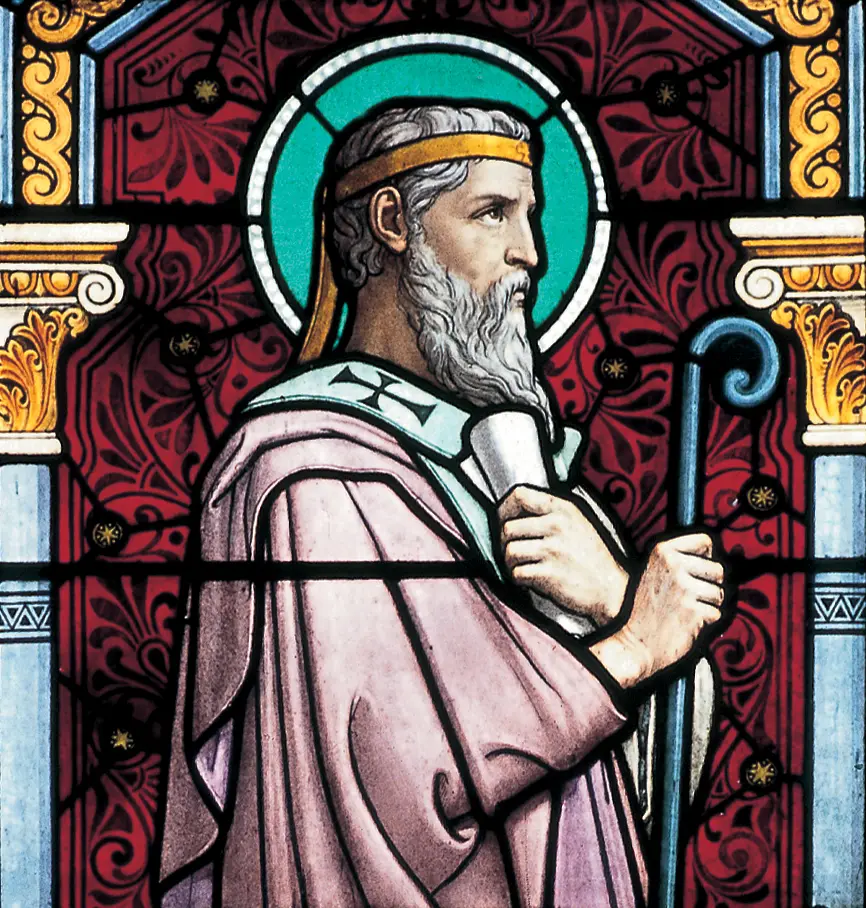
Gnostic systems distinguished a highest, good God – the Depth, the First Principle – from a lower demiurge-creator identified with the God of the Old Testament; between them were the aeons, emanations forming the pleroma (according to Ptolemy, thirty aeons: Irenaeus, Against Heresies 1.1.3). Matter and flesh are evil or inferior, and salvation is knowledge (gnosis) awakening the spiritual spark. The Fathers regarded the Gnostics' basic error as the separation of the true God and the Creator God. Irenaeus starts from the unity of God: the Creator is the one God, who creates and governs the world with two "hands" – the Son and the Spirit, the Word and Wisdom (Against Heresies 4.20.1; 5.6.1); even the devil was created by God. He rejected the apologists' reasoning about the Logos as "another god."
Positions
- The Gnostics (Ptolemy, Basilides, the Ophites)
- The highest God is distinct from the demiurge; for the Ophites the God of the Old Testament is malicious and the serpent is Eve's savior
- Irenaeus, Hippolytus, Tertullian
- One God, Creator and Redeemer, who gave the Law and revealed the Good News
- Justin, Theophilus – Irenaeus
- The apologists: the Word is an intermediate being, "another god" (Justin, Dialogue with Trypho 56: “another God and Lord subject to the Maker of all things”); Irenaeus: the Word and the Spirit are the "hands" of God himself, without whom he never exists (Against Heresies 4.20.1: “with Him were always present the Word and Wisdom, the Son and the Spirit”)
Key points
- Hall: Irenaeus compared the diverse Gnostic currents to the Hydra (Against Heresies 1.30.15: “like the Lernaean hydra, a many-headed beast has been generated from the school of Valentinus”); he regards God's inner being as unknowable and holds that speculation about the Logos leads to Marcion's ditheism. Origen succeeded in combining the best features of Gnosticism with the idea of one God and one Word
- Basilides, according to Hippolytus (Refutation of All Heresies 7.9): the “non-existent God made the world out of nonentities”, depositing one Seed that contained the germs of the world
- McGuckin: against Gnostic intermediaries Irenaeus insisted the Logos is the supreme, fully divine mediator, as is the Spirit; fatherhood, sonship and Spirit are eternal but manifest only in the economy – the principle of “economic Trinitarianism”
Outcome
The Gnostic division of God was rejected by the catholic Church; the unity of God was defended against ditheism.
People
- Irenaeus of Lyons
- Ptolemy
- Basilides
- Valentinus
- Hippolytus of Rome
- Tertullian
Terms
- pleroma – πλήρωμα
- "Fullness" – a term of Ephesians and Colossians; in Gnosticism, the fullness of divine reality formed by the Highest God and the aeons, to which the liberated soul returns.
- Demiurge
- The maker of the world, a lesser, subordinate, possibly hostile god; for Marcion, the God of the Old Testament.
- the two hands of God
- Irenaeus's image for the Son and the Holy Spirit, through whom God creates and directs history.
Place
Lyons; Rome; Egypt
Sources disagree
Berkhof and Hall: 2nd century; Pelikan: 2nd century (Valentinus, Marcion and Basilides "almost contemporaries"); Hall dates Irenaeus's work to c. 180, González his activity to c. 170–202.
Sources
Primary sources
- Irenaeus of Lyons – Against Heresies, bk. I, ch. 1, 30; bk. IV, ch. 20; bk. V, ch. 6
- Hippolytus of Rome – Refutation of All Heresies, bk. VII, ch. 9
- Justin Martyr – Dialogue with Trypho, ch. 56
Textbooks
- Stuart G. Hall – Doctrine and Practice in the Early Church (Russian edition), p. 30–33, 44, 48
- Jaroslav Pelikan – The Christian Tradition: A History of the Development of Doctrine, vol. 1 (Russian edition), p. 99–101
- Louis Berkhof – History of Christian Doctrines (Russian edition), p. 27–28, 41
- Justo L. González – A History of Christian Thought in One Volume (Abingdon, 2014), p. 66–67
- The Cambridge Companion to the Trinity, ed. Peter C. Phan (2011), p. 71–72
Related entries
- Rejects: The Apologists: the Logos as mediator and "another God", threefold worship and the first use of "Trinity" (2nd century)
In church history
Data compiled: 2026-11-17