448–449 · 5th century
Eutyches, the Tome of Leo the Great and the "Robber Synod" of 449
The aged Constantinopolitan monk Eutyches taught that before the union there were two natures, after it one; he refused to acknowledge Christ as "consubstantial with us". In 448 Flavian and the "Home Synod" condemned him, while Dioscorus of Alexandria, who had made the formula "after the union, one nature" central, supported Eutyches. Leo, bishop of Rome, in his letter to Flavian (the Tome) set out Western christology: the distinctive properties of each nature remain unimpaired and come together in one Person, and the distinction of natures is necessary even after the union; the Word does what befits the Word, the flesh endures what befits the flesh. Leo's christology is grounded in his understanding of salvation: the Mediator must be both human and divine, capable of suffering and impassible. The council at Ephesus in 449, presided over by Dioscorus, did not allow the Tome to be read, acquitted Eutyches and deposed Flavian, Theodoret and other Antiochenes; Leo called it the "Robber Synod".
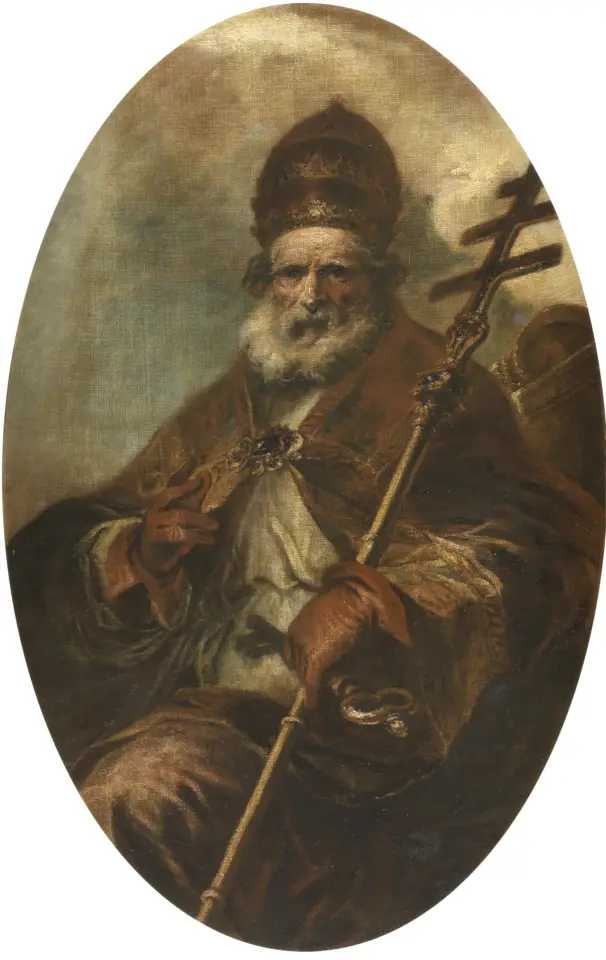
Positions
- Eutyches
- Two natures before the union, one after; Christ's flesh is consubstantial with God the Word, not with us (Hall)
- Leo I
- Two natures in one Person; each acts according to its own property; before the incarnation one nature, after it two
- Eutyches (according to Leo)
- Ascribed to Christ the "appearance of a man" but not the real substance of his mother's body
- Dioscorus
- Two natures before the union, one after; Flavian and Eusebius violated the canon of 431 on the Nicene Creed as the sole standard
Key points
- González: "As God is not changed by his compassion, so man is not swallowed up by the dignity". Leo was not an innovator – his formula is the same as Tertullian's; in it the Alexandrian, Antiochene and Western currents met
- Hall: Leo was surprised that Eutyches had not been condemned for "two natures before the incarnation, one after": according to Leo, it is the other way round
- Berkhof: on Theodoret's testimony, Eutyches asserted at times the dissolution of the human nature in the divine, at times the mixing of the two natures into a third
- Hilary of Rome cried "Contradictur" and left the council; Flavian died in exile
- Lebedev: the seed of Monophysitism was Cyril’s extreme admirers unhappy with the union of 433 (fusion of Word and flesh, heavenly body; Theodoret’s Eranistes). The council of 448 took as its standard of orthodoxy Cyril’s letter “Let the heavens rejoice” and the confession of John of Antioch, while the council of 449 openly professed Monophysitism: “If anyone says two, anathema”
Outcome
The decisions of the council of 449 were later annulled at Chalcedon; the Tome became the basis of the Chalcedonian Definition, and there the bishops exclaimed: "Peter speaks to us through Leo."
People
- Eutyches
- Leo the Great
- Flavian of Constantinople
- Dioscorus of Alexandria
- Eusebius of Dorylaeum
- Hilary of Rome
- Theodoret of Cyrrhus
- Theodosius II
- Marcian
Terms
- Tome – τόμος
- "Book": Leo's letter to Flavian.
- a third thing – tertium quid
- A mixture of divine and human, no longer God or man; Eutyches was accused of this (Lane).
- "Robber Synod" – Latrocinium
- Leo's name for the council of Ephesus in 449.
Place
Constantinople, Rome, Ephesus
Sources disagree
Hall: the "Home Synod" – November 448, the council in 449 (deposition of Ibas – 1 August 449); Berkhof and Lane: condemnation of Eutyches in 448; González does not date the Constantinople synod precisely. The Tome: 449 (González, Hall, Lane), between 448 and 451 (Berkhof). Lebedev: the Eranistes – 447; the council of 448 – 8–22 November; the first session of the council of 449 – 8 August, the second, at which Ibas, Theodoret and Domnus were condemned – 22 August 449 (according to the Syriac acts).
Sources
- Stuart G. Hall – Doctrine and Practice in the Early Church (Russian edition), p. 145, 147–150
- A. P. Lebedev – History of the Ecumenical Councils, part I, p. 165–198, 200–202, 205–206, 325
- A. P. Lebedev – History of the Ecumenical Councils, part II, p. 221–236, 239–257, 260–268, 287–289, 316–319
- Louis Berkhof – History of Christian Doctrines (Russian edition), p. 72
- Justo L. González – A History of Christian Thought in One Volume (Abingdon, 2014), p. 159–162
- Tony Lane – Christian Thinkers (Russian edition), p. 62–64
Related entries
- Developed in: Leo I and the "New Rome": the grounds of the Roman see's primacy (440–461)
- Develops: Tertullian: two substances in one person (c. 207)
- Developed in: The Chalcedonian Definition: one person in two natures (451)
In church history
- The condemnation of Eutyches and the "Robber Council" of Ephesus (449) (444–450 (council – 8 August 449))
Data compiled: 2026-11-17