440–461 · 5th century
Leo I and the "New Rome": the grounds of the Roman see's primacy
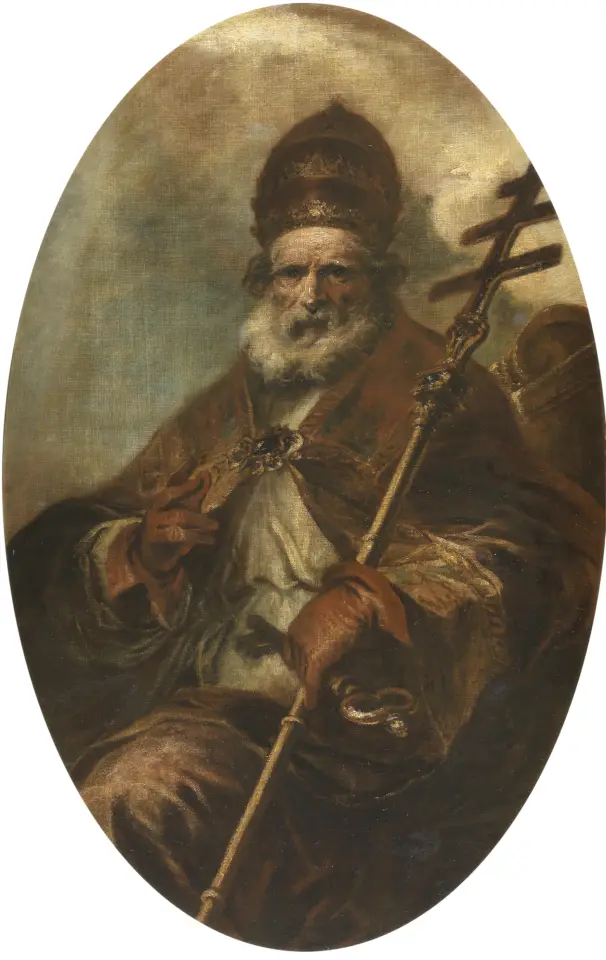
The third canon of the Council of Constantinople (381) gave the bishop of Constantinople the first place after the Roman bishop, "because Constantinople is the new Rome," and the 28th canon of Chalcedon (451) repeated this decision and extended Constantinople's rights. Leo I gathered the teachings of his predecessors into a coherent system: the pope is the "unworthy heir" of Peter, inheriting the full authority given to Peter (Matt. 16:18–19); through him Peter himself speaks, all bishops receive their authority from the pope, and his position is determined by law, not by personal holiness. Leo rejected the 28th canon: according to Hall, he could not tolerate the argument that the authority of the papacy derived from Rome's position as capital rather than from Peter. Pelikan stresses that the dispute between Old and New Rome was doctrinal: whether primacy rests on Peter or on the status of the capital.
Positions
- Constantinople, the Council of Chalcedon
- Constantinople as the New Rome has equal rights because it takes part in the affairs of the Empire
- Leo I
- The pope has the same supreme authority over bishops as Peter had over the apostles; the 28th canon diminishes the sees of Peter
- Alexandria
- Defended its status as the second see after Rome and did not accept the third canon
- Byzantine apologists (Nilus Doxopatres)
- Rome has primacy because imperial power was there, not from Peter
Key points
- Hall: per Valentinian III’s Constitutio, Rome’s authority rests on Peter’s merits, the city’s position and a synod’s decision; the bishops of Gaul were forbidden to make important decisions without the pope. The five original patriarchates were Rome, Alexandria, Antioch, Constantinople and Jerusalem (the title patriarch was hardly used before the 6th c.); he names the split between the Greek-speaking Eastern and Latin Western church as one consequence of dividing the Empire
- Chalcedon proclaimed Leo a “pillar of orthodoxy”: “Peter speaks through Leo”
- Pelikan: recognition of Roman Christology became a support for Western claims to primacy
- Lane: Leo's claims differ little from those of modern popes; in the East they were never accepted
- Lebedev: Rome and Alexandria long refused to accept the canons of 381 because of the elevation of Constantinople; the protest of the legates and Leo against Chalcedon’s equalizing the patriarchs of Constantinople and Rome remained unsuccessful. Refusing to remove Dioscorus for convening a council without the pope’s permission was a refusal to admit that councils need the pope’s will
- Shelley: Damasus (366–384) joined Rome’s civic pride to Christianity; Roman bishops relied on Peter’s primacy, and Leo cited three Gospel passages. Leo’s case for Peter’s primacy is flawed (Mt 16:23, the denial) yet timely, when the court at Ravenna sought any authority to hold the West.
Outcome
The theory of papal supremacy received coherent expression but was not accepted in the East; the question of the origin of Roman primacy remained disputed (Pelikan).
People
- Leo the Great
- Valentinian III
- Hilary of Arles
- Anatolius of Constantinople
- Nilus Doxopatres
Terms
- unworthy heir of Peter
- The pope's position is determined by the law of inheritance, not by personal holiness.
- exarch
- A chief bishop over several provinces.
Place
Rome, Constantinople, Chalcedon
Sources disagree
Hall and Lane: Leo's episcopate 440–461; the Council of Chalcedon 8 October – 10 November 451 (Hall); the canon on the New Rome in 381.
Sources
- Stuart G. Hall – Doctrine and Practice in the Early Church (Russian edition), p. 109–110, 146, 150–151
- A. P. Lebedev – History of the Ecumenical Councils, part I, p. 128, 243–244, 339
- Jaroslav Pelikan – The Christian Tradition, vol. 2: The Spirit of Eastern Christendom (600–1700) (Russian edition), p. 269–271, 285–288
- Tony Lane – Christian Thinkers (Russian edition), p. 47, 64–65
- Bruce L. Shelley – Church History in Plain Language (Russian edition), Ch. 14, sec. «Империя отходит на Восток», «Лев I. Аргументы о первенстве»; Ch. 14, sec. «Лев I. Аргументы о первенстве»
Related entries
- Develops: Eutyches, the Tome of Leo the Great and the "Robber Synod" of 449 (448–449)
- Developed in: Gregory the Great: the primacy of Peter and the rejection of the title "universal" (590–604)
In church history
Data compiled: 2026-11-17