c. 100 · 1st century
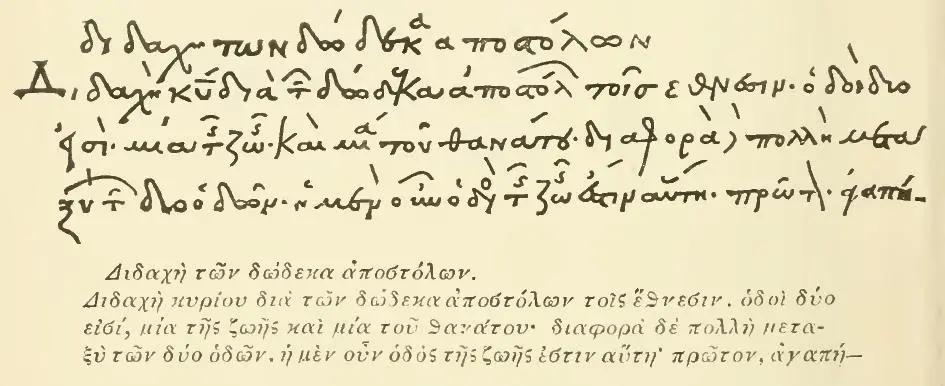
The Didache: from apostles and prophets to bishops and deacons
The Didache shows a transitional state between the original charismatic system and an emerging hierarchy. The most honored are still the traveling apostles and prophets – bearers of the gifts of the Spirit – but the problem of discerning genuine gifts had become acute: a false prophet is recognized by his conduct (Didache 11: he stays more than two days, asks for money, eats from the meal he ordered "in the Spirit"). In chapter 15 the document directs the community to elect bishops and deacons, "meek and not lovers of money," who will serve "in the place of the prophets and teachers." Berkhof notes that among the Apostolic Fathers charismatic gifts are still alive, but respect for church offices is growing.
Key points
- Hall: true prophets speak in the Spirit and receive the "first fruits," "for they are your high priests" (Didache 13); teachers preserve the tradition. Bishops and deacons are elected by the community – for seemly conduct rather than special gifts (so also González). In the New Testament "presbyter" and "bishop" are interchangeable; later the bishop's assistants came to be called presbyters. The bishop inspected the offerings and thus decided who was admitted to the Eucharist; this gave him power to admit to and expel from the community
Outcome
The ministry of traveling apostles and prophets lost its significance and disappeared; the church came to be led by a hierarchy, and the bishop's office, according to Hall, acquired practically unlimited authority over the community.
Terms
- apostle – apostolos
- Most likely "envoy".
- bishop – episkopos
- "overseer," "inspector".
- presbyter – presbyteros
- "elder".
Sources disagree
Berkhof: c. 100; González: late 1st – early 2nd century, dating uncertain; Hall gives no date and calls the Didache a collection of texts from different times.
Sources
Primary sources
- Didache (The Teaching of the Twelve Apostles), ch. 11–13, 15
Textbooks
- Stuart G. Hall – Doctrine and Practice in the Early Church (Russian edition), p. 24–26
- Louis Berkhof – History of Christian Doctrines (Russian edition), p. 20, 22
- Justo L. González – A History of Christian Thought in One Volume (Abingdon, 2014), p. 30–31
In church history
- The Didache (the Teaching of the Twelve Apostles) (the late 1st – early 2nd century)
- The discovery of the Didache in Istanbul (1875)
Data compiled: 2026-11-17