367 – c. 405 · 4th century
The Canon in the Fourth Century: Athanasius's Festal Letter, the African Councils and Jerome's "Hebraica Veritas"
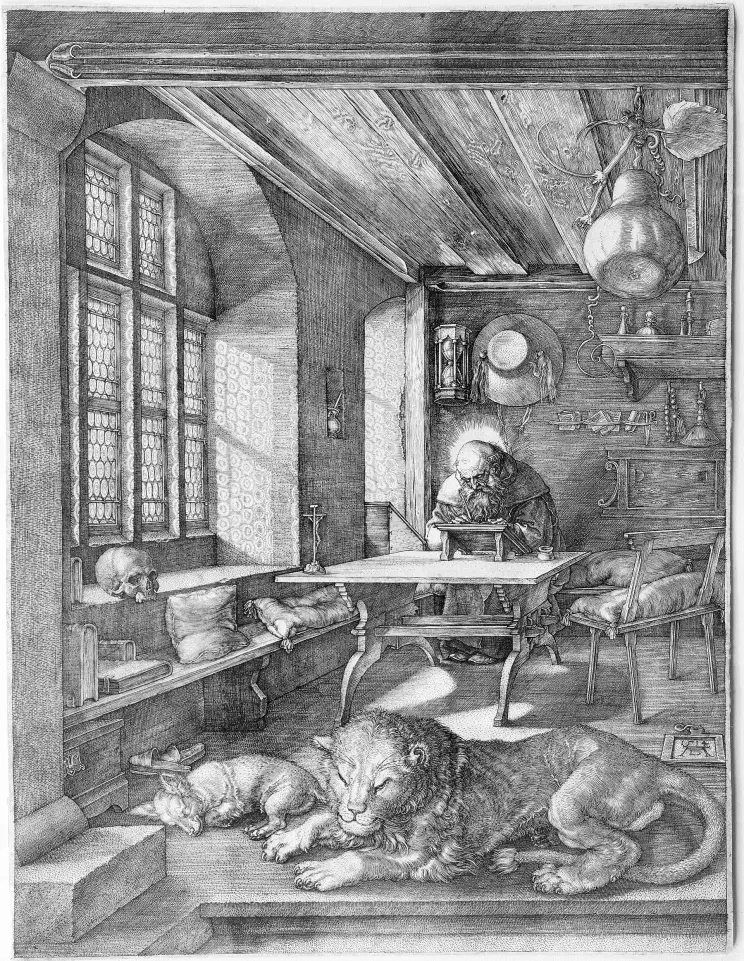
In his Festal Letter of 367, Athanasius for the first time lists the New Testament canon in the form in which it is held today. For the Old Testament the question remained disputed: the Eastern fathers usually used the long list but, from Athanasius on, distinguished strictly canonical from secondary books, while the Western fathers, under the influence of Augustine and the councils of Hippo (393) and Carthage (397), revered all of Scripture as equally sacred. Jerome translated the Old Testament for the Vulgate not from the Septuagint but from the Hebrew original, regarding only the Jewish books as canonical. His principle of "truth in the Hebrew" shook the unanimity of the Latins and introduced the division into canonical and non-canonical books.
Positions
- Athanasius and the Eastern fathers
- Distinguished strictly canonical from secondary books (Festal Letters, 39)
- John Chrysostom and Theodoret
- Never divided the sacred texts by importance
- Augustine, the councils of Hippo (393) and Carthage (397)
- All of Scripture is equally sacred; the Septuagint is the tradition of the fathers
- Jerome
- Only the Jewish books can be canonical: the Old Testament was given to the Jews (Rom. 3:2; 9:4), and the church has no right to add anything to it
Key points
- Lane: every year Athanasius wrote Easter letters to the Egyptian churches; the significance of the letter of 367 lies in the first list of New Testament books in their present composition
- Hall: Jerome's disregard for the Septuagint puzzled his contemporaries, including Augustine, who saw in it an abandonment of the tradition of the fathers. The Vulgate became the official Bible of the Catholic Church, while the Protestants adopted the principle of hebraica veritas; Jerome's division later led to the Protestants' complete rejection of the apocrypha
- Shelley: the first complete, still unchanged list of books is in Athanasius’s Easter letter (367), then at the councils of Hippo and Carthage. Per Ferguson, Christians in part created the canon and in part recognized writings with felt authority; the faith was universal because apostolic
Outcome
The New Testament canon was fixed in its present composition, while the status of the deuterocanonical Old Testament books remained a cause of disagreement.
People
- Athanasius the Great
- Augustine
- Jerome
- John Chrysostom
- Theodoret of Cyrrhus
Terms
- canon
- A limited list of the sacred books of Scripture.
- truth in the Hebrew – hebraica veritas
- The principle of translating the Old Testament from the Hebrew original.
- Vulgate
- The common, generally accessible Latin translation of the Bible; the old Latin edition of Scripture recognized by the council.
Place
Alexandria, Hippo, Carthage, Bethlehem
Sources disagree
The Festal Letter – 367 (Lane); the councils – 393 and 397 (Hall). The books do not date the Vulgate precisely: Hall – c. 390–405, Lane – the period of Jerome's life in Bethlehem (386–420).
Sources
- Stuart G. Hall – Doctrine and Practice in the Early Church (Russian edition), p. 23, 121–122
- Tony Lane – Christian Thinkers (Russian edition), p. 39, 52
- Bruce L. Shelley – Church History in Plain Language (Russian edition), Ch. 6, sec. «Перечень христианских книг», «Логика канона»
In church history
- Jerome and the Latin Translation of the Bible (the Vulgate) (347–420)
- The Councils of Hippo and Carthage: the Confirmation of the New Testament Canon (393 and 397)
Data compiled: 2026-11-17