140–180 · 2nd century
The Second-Century Apologists: Christianity as the True Philosophy and Justin's Doctrine of the Logos
Apologies were open letters to emperors or to fictitious addressees in defense of Christians (Justin, Athenagoras, Aristides, Melito, Theophilus, Tatian). The apologists' task was defensive, offensive and constructive; seeking to present the faith intelligibly to pagans, they became, in González's assessment, the first systematic theologians. Justin considered Christianity the only true philosophy: all knowledge is the fruit of the Logos, and the Logos is the preexistent Christ, so the sages of antiquity knew the Word "in part," while Christians know it "in full" (2 Apol. 10: lawgivers and philosophers found “some part of the Word” but “did not know the whole of the Word, which is Christ”). Against the charge of novelty the apologists argued that Moses and the prophets were older than the Greeks (Justin, 1 Apol. 44: “Moses is more ancient than all the Greek writers”). Berkhof notes that they did not sufficiently distinguish general and special revelation.
Positions
- Justin, Athenagoras, Theophilus
- There is a spark of truth in pagan philosophy, attributed to the Logos
- Tatian, Hermias
- There is little or nothing good in Greek philosophy; between Christianity and Hellenism there is only war
- Harnack, Loofs
- The apologists Hellenized the gospel and turned faith into doctrine
- Berkhof
- This assessment is one-sided: the apologists wrote apologies, not theological works, although they presented Christianity in the terms of philosophy
Key points
- "Christianity is philosophy and revelation" (Harnack on the thesis of every apologist, from Aristides to Minucius Felix)
- For Justin philosophy is the imperfect, Christ the perfect
- The argument from antiquity: Moses is older than Homer; Ambrose later: what matters is antiquity of morals, not of years
- González: the concept of God stressing immutability, borrowed from Hellenistic philosophy, long burdened theology
- Pelikan: apologetics is the most important – and for Justin the only surviving – key to second-century doctrine
- McGuckin: Justin joined Stoic “seeds of the word” (2 Apol. 8, 13) with Platonic “recognition”: before the incarnation only partial “seeds” of truth; now the Church gathers them. In the Dialogue with Trypho he calls the Logos distinct from the Father “in name and number” (128–129) yet true Son, “begotten” from the Father’s womb
Outcome
The apologies preserved the theology and argumentation of the second century; according to Berkhof, church theology began with them, although it was squeezed into a philosophical framework.
People
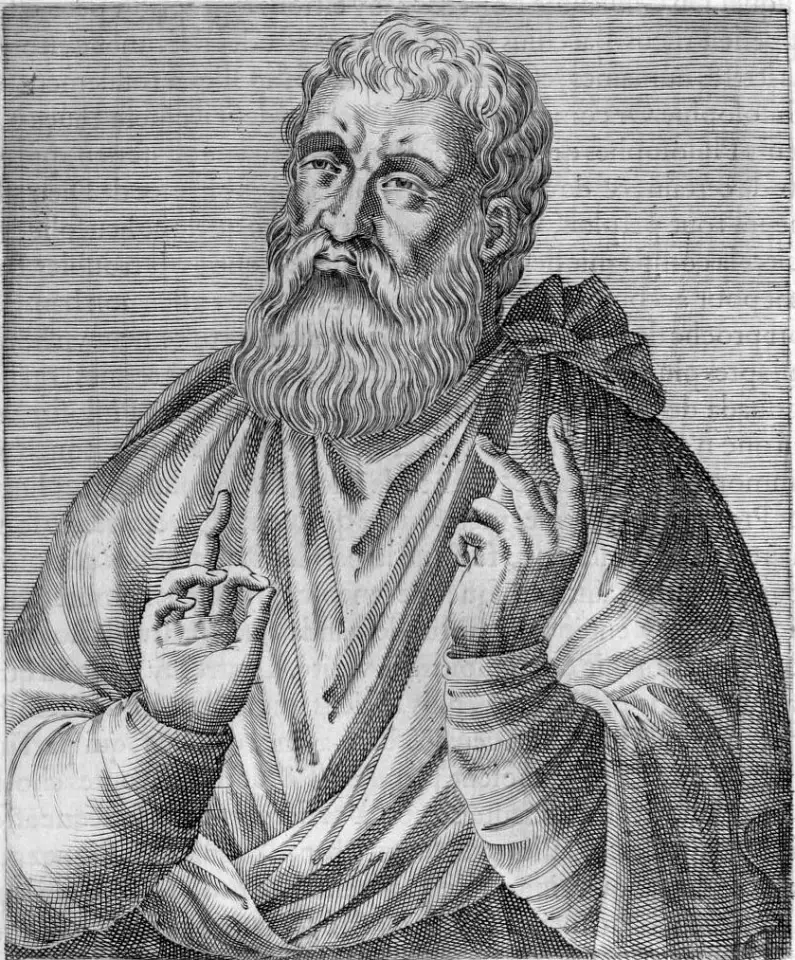
- Justin Martyr
- Athenagoras
- Aristides
- Melito of Sardis
- Theophilus of Antioch
- Tatian
- Hermias
- Celsus
Terms
- logos
- The divine reason inherent in God, to which God gave a separate existence; the rational principle of the universe and at the same time the preexistent Christ of the Fourth Gospel. In Philo, the Word created by God before the world, the instrument of creation.
Place
Rome
Sources disagree
Hall: Aristides c. 140, Justin 140–163, Athenagoras 170, Melito 175, Theophilus and Tatian c. 180; González: mid to late 2nd century; Berkhof and Pelikan: 2nd century.
Sources
Primary sources
- Justin Martyr – First and Second Apology, pt. 1, ch. 44; pt. 2, ch. 8, 10, 13
- Justin Martyr – Dialogue with Trypho, ch. 128–129
Textbooks
- Stuart G. Hall – Doctrine and Practice in the Early Church (Russian edition), p. 35–36
- Jaroslav Pelikan – The Christian Tradition: A History of the Development of Doctrine, vol. 1 (Russian edition), p. 16–18, 42–44
- Louis Berkhof – History of Christian Doctrines (Russian edition), p. 35–38
- Justo L. González – A History of Christian Thought in One Volume (Abingdon, 2014), p. 41–43, 49
- Tony Lane – Christian Thinkers (Russian edition), p. 16–18
- The Cambridge Companion to the Trinity, ed. Peter C. Phan (2011), p. 69–70
Related entries
- Rejected in: Tertullian: "What Has Athens to Do with Jerusalem?" (c. 197–220)
- Developed in: Clement of Alexandria: Philosophy as a "Covenant with the Greeks," Faith and Knowledge (c. 200–215)
In church history
- Justin Martyr – apologist and teacher of the Logos (early 2nd c. – 165)
Data compiled: 2026-11-17