c. 33 AD · 1st century
Josephus's testimony about Jesus (the Testimonium Flavianum)
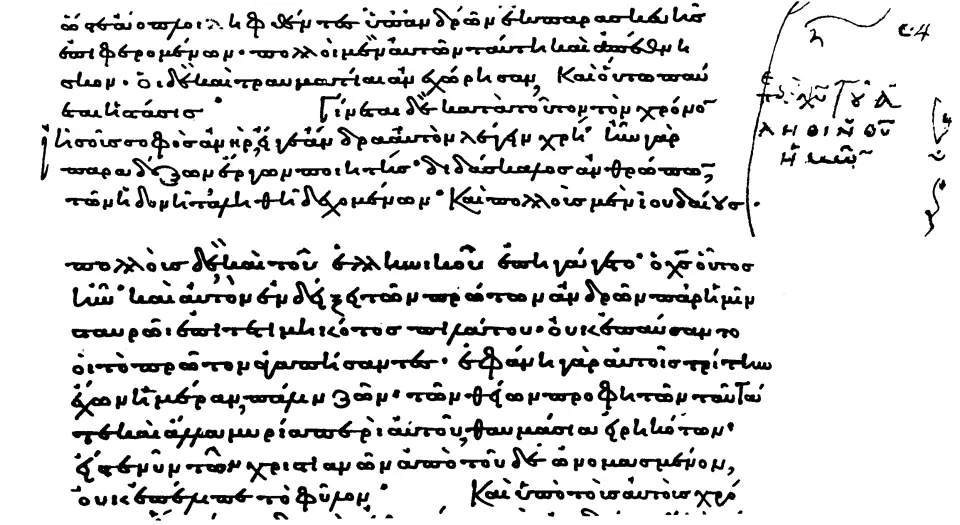
In Book XVIII of the Jewish Antiquities (18.3.3) Josephus briefly describes Jesus. He presents him as a wise man who was “a doer of wonderful works, a teacher of such men as receive the truth with pleasure”, and drew over to him “both many of the Jews and many of the Gentiles”. He calls him the Christ.
At the urging of the leading Jews, Pilate condemned Jesus to crucifixion. But, according to the text, “those that loved him at the first did not forsake him; for he appeared to them alive again the third day”, as the prophets had foretold. The text notes that “the tribe of Christians, so named from him, are not extinct at this day”.
Key points
- Jesus is described as a wise man who performed astonishing deeds
- He drew to himself many Jews and Greeks and is called the Christ
- At the suggestion of the principal men among the Jews, Pilate condemned him to crucifixion
- The text reports Jesus appearing alive to his disciples on the third day
- The existence of Christians named after him is noted
People
- Jesus
- Pontius Pilate
Place
Judea
Sources disagree
Josephus gives no exact date; the passage is placed in the text right after the aqueduct episode, during Pilate's governorship.
Sources
Primary sources
- Flavius Josephus – Jewish Antiquities; The Jewish War (Russian edition), Antiquities, bk. XVIII, ch. 3, para. 3
Data compiled: 2026-11-09