the 1st century · 1st century
Simon Magus and the origins of Gnostic teaching
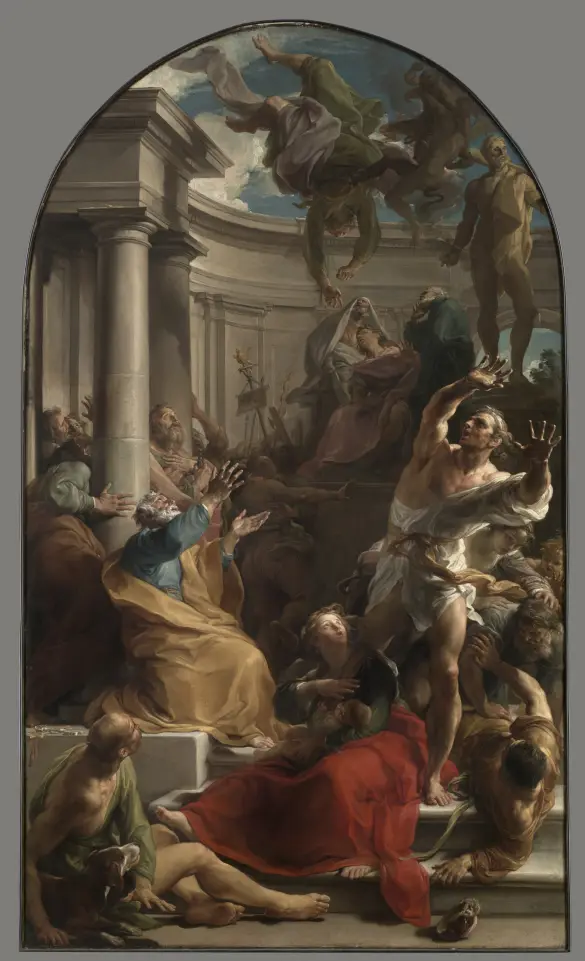
According to Justin, Irenaeus, Hegesippus, Eusebius and Cyril of Jerusalem, all heresies trace back to Simon the Samaritan, who is identified with the Simon of Acts 8. His followers revered Simon as the "first god" and his companion Helena as his "first thought."
Simonian gnosis grew out of Jewish-Samaritan sectarianism and influenced Christian Gnosticism – a syncretic movement teaching salvation through secret knowledge.
Cerinthus in Ephesus, active at the end of the first century, was apparently the first to reinterpret the Gospel in a Gnostic way. The further development of the movement belongs to the second century: the Carpocratians and Basilides in Alexandria, and the most influential, Valentinus.
Key points
- The main source on Simon is Justin, himself a native of Samaria
- His followers revered Simon as the "first god" and Helena as his "first thought"
- Simonian gnosis influenced Christian Gnosticism
- Cerinthus (late first century, Ephesus) was apparently the first Gnostic interpreter of the Gospel
People
- Simon Magus
- Justin Martyr
- Hegesippus
- Eusebius of Caesarea
- Cerinthus
Place
Samaria; Ephesus
Sources disagree
Cerinthus is dated to the end of the 1st century, which justifies including this event in this period; the later Gnostics (Basilides, active 120–140 AD, and Valentinus) belong to the following period (ante-Nicene) and are mentioned here only as the movement's continuation.
Sources
- Jaroslav Pelikan – The Christian Tradition: A History of the Development of Doctrine, vol. 1 (Russian edition), p. 30–31
- Justo L. González – A History of Christian Thought in One Volume (Abingdon, 2014), p. 53–57
More on the doctrine
- Dualism against the Good Creator: Gnostics, Manichees, Paulicians, Bogomils, Cathars – and the Doctrine of Creation out of Nothing (2nd–13th centuries)
Data compiled: 2026-11-09