107 or 115 · 2nd century
The martyrdom of Ignatius of Antioch and his letters
Ignatius, bishop of Antioch, was condemned to death and sent under guard to Rome to be thrown to the beasts. On the way through Asia Minor, by Smyrna and Troas, he wrote seven letters. They went to churches of Asia Minor, to Rome, and to Polycarp of Smyrna. In them he asked that nothing hinder his martyrdom.
Ignatius was the first to clearly present the threefold ministry: bishop, presbyters, deacons. He insisted that without the bishop there is neither Eucharist nor baptism. This pattern became known as the monarchical episcopate.
He argued sharply against docetism, insisting Christ was truly born, suffered and rose. He called the Eucharist "the flesh of Christ" and "the medicine of immortality." In his letter to the Romans, however, he does not mention a single bishop. In the West this system had not yet taken hold.
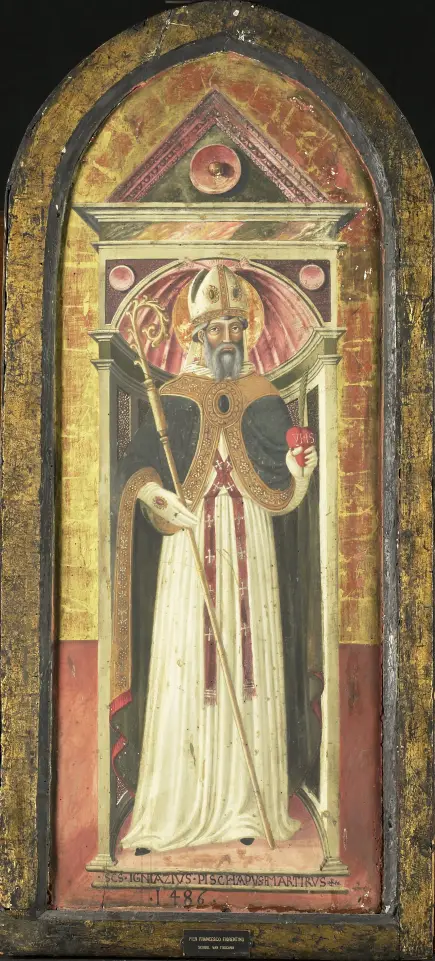
Key points
- The seven letters were written en route to execution (Smyrna, Troas)
- First clear description of the "bishop–presbyters–deacons" system
- Polemic against docetism: the reality of Christ's birth, suffering and resurrection
- The Eucharist called "the flesh of Christ" and "the medicine of immortality"
- His letter to Rome does not mention a single bishop – the system had not yet taken hold in the West
People
- Ignatius of Antioch
- Polycarp of Smyrna
- Onesimus of Ephesus
Place
Antioch – Smyrna – Troas – Rome
Sources disagree
The year of martyrdom is disputed: some books give 107, others 115.
Sources
- Justo L. González – A History of Christian Thought in One Volume (Abingdon, 2014), p. 31–34
- Tony Lane – Christian Thinkers (Russian edition), p. 15
- Jaroslav Pelikan – The Christian Tradition: A History of the Development of Doctrine, vol. 1 (Russian edition), p. 24, 104–105
- J. North – A History of the Church (Russian edition), p. 37–39, 41, 46–47
- Justo L. González – The Story of Christianity, vol. I (Russian edition), sec. «Игнатий Антиохийский, Богоносец»
- Stuart G. Hall – Doctrine and Practice in the Early Church (Russian edition), p. 26–27
- Louis Berkhof – History of Christian Doctrines (Russian edition), p. 166
More on the doctrine
- Ignatius of Antioch: the monarchical episcopate and the "catholic church" (early 2nd century (no later than 115))
- Docetism, the Gnostic Christ and the response of Ignatius (2nd century)
Data compiled: 2026-11-09