1886–1900 · 19th century
Adolf von Harnack and liberal theology ("What is Christianity?")
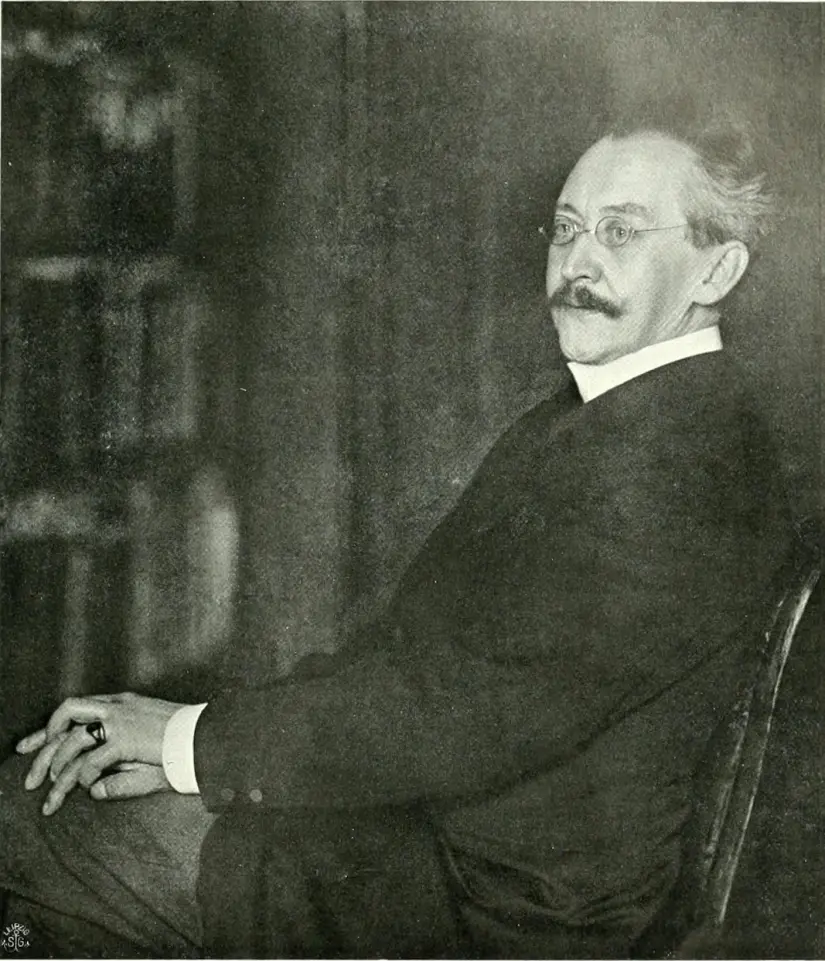
Adolf von Harnack, an ardent follower of Ritschl, taught church history at the University of Berlin from 1888 to 1921. His three-volume History of Dogma (1886–1889) presented the history of Christian thought as a growing "Hellenization."
In the winter of 1899/1900 Harnack gave lectures at the University of Berlin which, the translator's preface says, one of his listeners took down in shorthand. They formed the basis of the book The Essence of Christianity ("What Is Christianity?", 1901), in which he called Protestants to return to the original teaching of Jesus. Harnack was the last major representative of 19th-century liberal Protestantism; his former student Karl Barth became his critic.
Key points
- History of Dogma (1886–1889)
- Lectures of winter 1899/1900 and the book What Is Christianity? (published 1901)
- Taught in Berlin from 1888 to 1921
- Critic: his former student Karl Barth
- Ziegler: in their 1923 exchange of letters Harnack faulted Barth as irresponsible: the Christ of faith cannot be known other than as a historical person. For Harnack historical science flows from Christianity; the historian separates kernel from husk in testimonies of miracles and myths
- Shelley: Adolf von Harnack (1851–1930) is “a fine example of a follower of liberalism,” a pioneer in New Testament study, ethics and historical theology. Per Harnack, Christ was misunderstood and misrepresented in most Christian sources, including the Gospels; the true Jesus' message can be found by removing layers of corrupted tradition and “stripping the husk from the eternally valuable kernel”. Jesus taught that the Kingdom of Heaven is not a coming supernatural cataclysm but an ethical kingdom; that God relates to us as a father, people are brothers and sisters, and every soul is infinitely valuable; and called for a great righteousness exceeding the Pharisees', rooted in God's command to love
- Gunton: for Harnack, the early centuries turned the plain gospel into a philosophy of religion in which a dogmatic Christ obscures the historical Jesus.
- Lyman: after Ritschl, Harnack sought the essence of Christianity in history, not metaphysics, separating later cultural additions
People
- Adolf von Harnack
- Albrecht Ritschl
- Karl Barth
- Wilhelm II
Place
Berlin, Germany
Sources
Primary sources
- Harnack – What Is Christianity?, preface; p. 51
Textbooks
- Justo L. González – A History of Christian Thought, vol. III: From the Protestant Reformation to the Twentieth Century (Abingdon, rev. ed. 1987), p. 387–388
- Tony Lane – Christian Thinkers (Russian edition), p. 239–241
- Stanley Grenz, Roger Olson – 20th-Century Theology: God and the World in a Transitional Age (Russian edition), p. 80–82, 90
- The Oxford Handbook of Christology, ed. Francesca Aran Murphy (2015), p. 407–408
- Bruce L. Shelley – Church History in Plain Language (Russian edition), Ch. 40, sec. «Богословский либерализм»
- The Cambridge Companion to Christian Doctrine, ed. Colin E. Gunton (1997), p. 26
- The Oxford Handbook of Systematic Theology, ed. John Webster, Kathryn Tanner, Iain Torrance (2007), p. 514
More on the doctrine
- Protestant Liberalism: Ritschl's Value Judgments and Harnack's Thesis of "Hellenization" (1870–1900)
Data compiled: 2026-11-09