909–1122 · 10th century
The Cluniac and Gregorian Reform: the Investiture Controversy from Canossa to the Concordat of Worms
In 909/910 Duke William of Aquitaine founded the monastery of Cluny, shielded from interference by bishops and lords. A succession of its abbots inspired a reform of the whole Church. The reform was against simony and for clerical celibacy and obedience to the pope.
In the 9th–10th centuries the papacy was in deep moral decline: the "pornocracy," the trial of the corpse of Pope Formosus in 897. Against this background the reform, backed by Emperor Henry III, led to the papacy of Leo IX (1049–1054). In 1059 the right to elect the pope passed to the college of cardinals.
The reform peaked under Gregory VII (Hildebrand, 1073–1085). He fought simony and clerical marriage, and then imperial investiture of bishops. He issued the "Dictatus Papae" on papal supremacy.
Conflict with Emperor Henry IV led to the emperor's excommunication. In January 1077 came his penitential "walk to Canossa." A second excommunication followed later, and Gregory VII was expelled from Rome. He died in 1085.
The dispute ended in compromise: the Concordat of London (1107) and the Concordat of Worms (1122). They divided bishops' spiritual and temporal investiture between church and ruler.
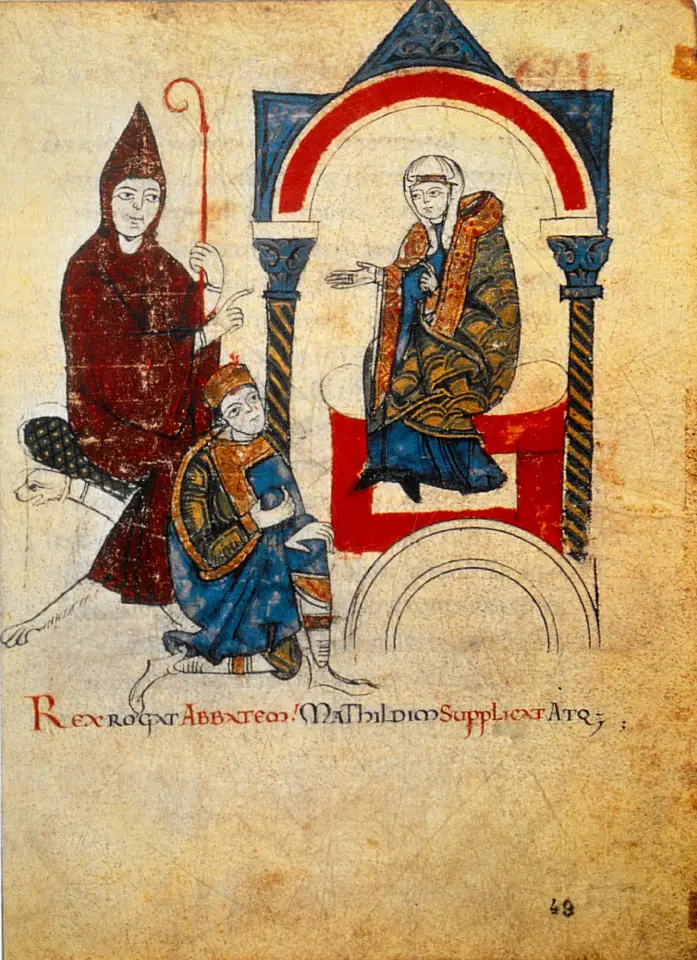
Key points
- The founding of Cluny (909/910) and the Cluniac reform movement
- The reform of papal elections: the right of the cardinals (1059)
- The 'walk to Canossa' (January 1077) and the excommunication of Henry IV
- The 1122 Concordat of Worms ending the Investiture Controversy in compromise
- Shelley: the revival began at Cluny abbey (910, Burgundy); monastic reform grew into demands for clerical celibacy and a ban on simony. Reformers sought to free the Church from secular power: some 300 houses were exempted from lay control; in 1059 the College of Cardinals was created. Gregory VII banned lay investiture (1075), excommunicated Henry IV, who appeared before the pope at Canossa in 1077. The Concordat of Worms (1122) left the Church to choose its heads in the emperor’s presence, a step toward freeing it from lay control.
People
- William of Aquitaine
- Berno
- Odo
- Odilo
- Hugh of Cluny
- Leo IX
- Nicholas II
- Gregory VII
- Henry IV
- Callixtus II
- Henry V
Place
Cluny; Rome; Canossa; Worms
Sources
- Justo L. González – The Story of Christianity, vol. I (Russian edition), Ch. 22, sec. 22.4; ch. 23, sec. 23.2–23.3
- J. North – A History of the Church (Russian edition), p. 143–153
- Justo L. González – A History of Christian Thought in One Volume (Abingdon, 2014), p. 213, 216, 225–226
- Louis Berkhof – History of Christian Doctrines (Russian edition), p. 170
- Tony Lane – Christian Thinkers (Russian edition), p. 101
- Bruce L. Shelley – Church History in Plain Language (Russian edition), Ch. 18, sec. «Порядок в доме Божьем»
More on the doctrine
Data compiled: 2026-11-09