c. 1265–1308 · 13th century
John Duns Scotus – the 'Subtle Doctor'
The Scottish Franciscan John Duns Scotus studied and taught at Oxford and Paris and commented on Peter Lombard's "Sentences". In 1307 he moved to Cologne, where he died the following year. Unlike Thomas Aquinas, he placed will above reason; he was also the first to systematically defend the Immaculate Conception of Mary.
For some historians Scotus is the destroyer of the medieval theological synthesis and a herald of the split between faith and reason. For others, he is the peak of the Franciscan tradition.
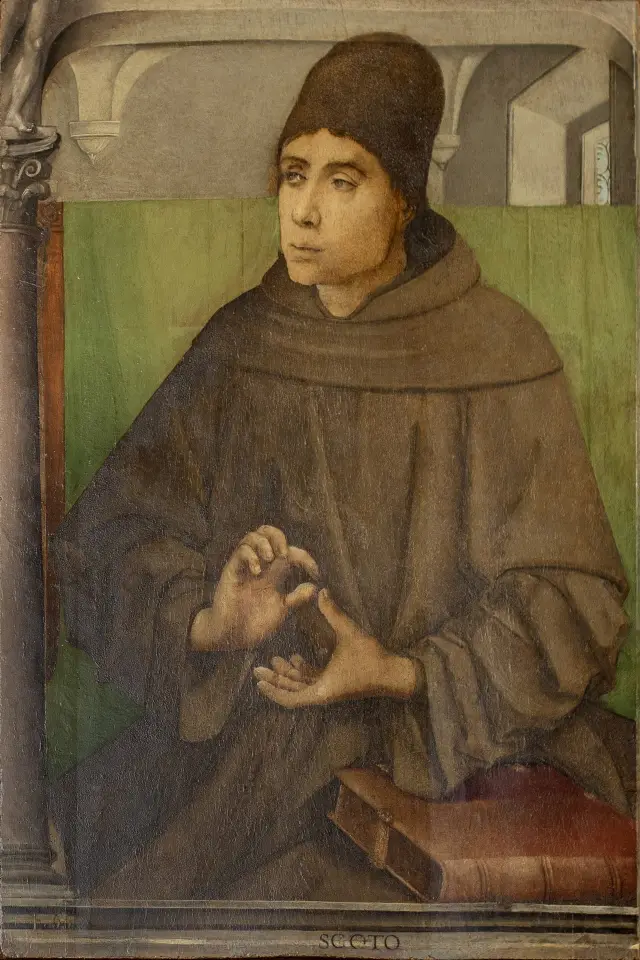
Key points
- Study and teaching at Oxford and Paris, death in Cologne (1308)
- A disagreement with Thomas Aquinas over the primacy of will over reason
- The first systematic defense of the Immaculate Conception of Mary
- Opposing assessments by historians
- Van Nieuwenhove: Scotus wrote after the 1277 Condemnations, which deepened the faith–reason split and voluntarism; known for defending the immaculate conception, he argued the incarnation and Jesus’s predestination would have occurred even without sin
People
- John Duns Scotus
Place
Oxford; Paris; Cologne
Sources
- Tony Lane – Christian Thinkers (Russian edition), p. 90, 130–132
- Justo L. González – A History of Christian Thought in One Volume (Abingdon, 2014), p. 259, 261–262
- Louis Berkhof – History of Christian Doctrines (Russian edition), p. 130–131
- The Oxford Handbook of Christology, ed. Francesca Aran Murphy (2015), p. 318–319
More on the doctrine
- Duns Scotus and the Nominalists: The Primacy of the Will, God's Absolute and Ordained Power (14th–15th centuries)
- Duns Scotus, Ockham and Nominalism: The Breakdown of the Medieval Synthesis of Faith and Reason (14th–15th centuries)
- The Scholastics on the atonement: Lombard, Bonaventure, Aquinas and Duns Scotus's "acceptation" (Middle Ages)
Data compiled: 2026-11-09