358–381 · 4th century
The Cappadocian Fathers and the Formula "One Ousia, Three Hypostases"
Basil of Caesarea was converted under the influence of his sister Macrina. Around 358 he founded a monastery in Pontus and later became bishop of Caesarea in Cappadocia. There he contended with Arianism under Emperor Valens and with the Pneumatomachians.
Together with his brother Gregory of Nyssa and his friend Gregory of Nazianzus (the Theologian), he upheld the formula "one ousia, three hypostases" (a dispute about the Trinity). Answering charges of tritheism, Gregory of Nyssa wrote the treatise "That There Are Not Three Gods" (to Ablabius: Peter, James and John, being in one human nature, are called three men – why then not speak of three Gods?), while against Apollinaris the Fathers defended the full humanity of Christ. Their theology formed the basis for the decisions of the Council of Constantinople in 381.
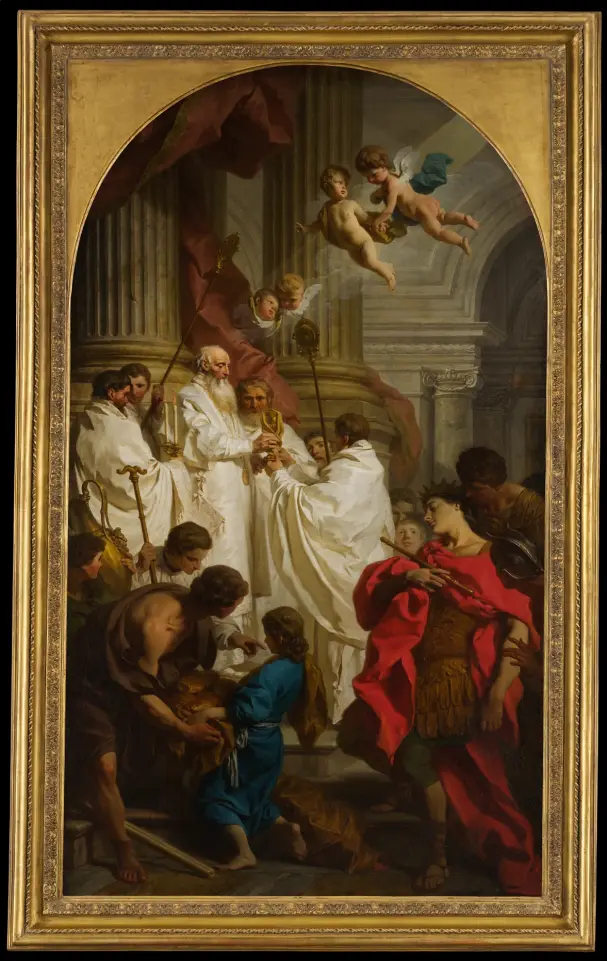
Key points
- Basil – bishop of Caesarea, opponent of Arianism under Valens; monastery in Pontus (c. 358)
- The joint work of Basil, Gregory of Nyssa and Gregory of Nazianzus
- Gregory of Nyssa answered the charges of tritheism with "That There Are Not Three Gods"
- Their theology became the basis for the decisions of the 381 council
- McGinn: Gregory of Nyssa built a rigorous apophatic theology of divine infinity; the goal is an endless “stretching forth” (epektasis) of the soul
People
- Basil the Great
- Gregory of Nyssa
- Gregory Nazianzen (the Theologian)
- Macrina
- Eunomius
- Apollinaris of Laodicea
Place
Cappadocia
Sources disagree
Books give the Cappadocians' dates differently, often with a question mark (e.g. Basil 300?–379 in González (Christian Thought)); the formula "one ousia, three hypostases" belongs to the latter half of the 4th century.
Sources
Primary sources
- Gregory of Nyssa – On "Not Three Gods" (To Ablabius), introduction
Textbooks
- Stuart G. Hall – Doctrine and Practice in the Early Church (Russian edition), p. 103–105
- Tony Lane – Christian Thinkers (Russian edition), p. 42–45
- Justo L. González – A History of Christian Thought in One Volume (Abingdon, 2014), p. 126–127, 134–143
- Louis Berkhof – History of Christian Doctrines (Russian edition), p. 60–61, 69
- Jaroslav Pelikan – The Christian Tradition: A History of the Development of Doctrine, vol. 1 (Russian edition), p. 232–238
- A. P. Lebedev – History of the Ecumenical Councils, part I, p. 83–94
- Justo L. González – The Story of Christianity, vol. I (Russian edition), Ch. 13
- J. North – A History of the Church (Russian edition), p. 85–86
- The Oxford Handbook of Mystical Theology, ed. Edward Howells, Mark A. McIntosh (2020), Ch. 4, sec. «Eastern Christian Mysticism»
More on the doctrine
- The Cappadocians: "one ousia and three hypostases" and the charge of tritheism (second half of the 4th century)
- Apollinaris and the Cappadocian response: "What is not assumed is not healed" (c. 360–381)
Data compiled: 2026-11-09