c. 207 · 3rd century
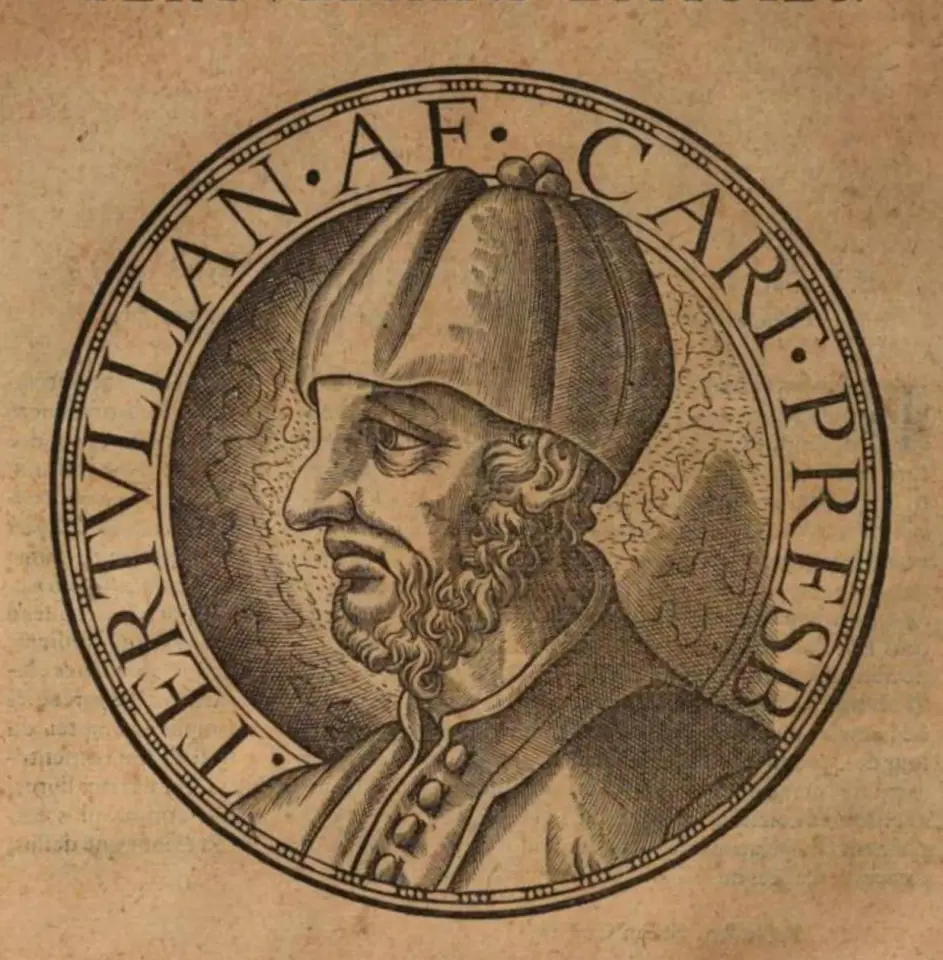
Tertullian: two substances in one person
Tertullian's christology, according to González, is above all anti-docetic: the truth of Christ's body is the foundation of all soteriology. He rejected the idea of the Word being transformed into flesh and of a fusion of divine and human like an alloy of gold and silver: the Word (Spirit) and the flesh were united but not mixed. As in God there are three persons and one substance, so in Christ there are two substances (or natures) in one person; the properties of each are preserved: the Spirit worked miracles, the flesh hungered, thirsted and wept (Against Praxeas 27). Augustine, according to González, restored the term persona in christology and brought the West back to this formula.
Key points
- Berkhof: Tertullian is a representative of the school of Asia Minor, clearly distinguishing the two natures with their qualities
- González: the solution recognizes the necessity of the divinity of the Word and of the full humanity of Jesus, including a rational soul, and surpasses many proposals of the 4th–5th centuries; when agreement was reached, Tertullian's formula served as a link between different theories
- The majority in the West followed the teaching on "two natures" but not the reference to "one person", until Augustine brought it back
- Barnes: the argument “works indicate power” is common in Latin theology: for Tertullian (Against Praxeas 27) in Jesus the Spirit did powers and signs, the flesh its passions; the same appears in Novatian, Lactantius, Phoebadius and Niceta. One logic serves both the Son’s divinity and Christ’s real humanity
Outcome
The model of two unmixed substances in one person was formulated; Hall points to the enormous influence of this conclusion on later theology.
People
- Tertullian
- Augustine
Terms
- two substances (natures)
- Divinity ("spirit") and humanity ("flesh") in one person.
- status
- Two qualities (divine and human) in the one Person of Christ (Hall).
- person – persona
- A distinct Person of the Trinity (in González, a legal person who possesses a substance); the term of Tertullian's formula, brought back into christology by Augustine.
Place
the West
Sources disagree
González: after c. 207 (by the dating of Against Praxeas); Hall: early 3rd century; Berkhof: 2nd–3rd centuries.
Sources
Primary sources
- Tertullian – Against Praxeas, ch. 27
Textbooks
- Stuart G. Hall – Doctrine and Practice in the Early Church (Russian edition), p. 49–50
- Louis Berkhof – History of Christian Doctrines (Russian edition), p. 43
- Justo L. González – A History of Christian Thought in One Volume (Abingdon, 2014), p. 76, 149
- The Cambridge Companion to the Trinity, ed. Peter C. Phan (2011), p. 86–87
Related entries
- Develops: Tertullian's Against Praxeas and Novatian's On the Trinity: one substance in three Persons (early 3rd century – c. 250)
- Developed in: Eutyches, the Tome of Leo the Great and the "Robber Synod" of 449 (448–449)
In church history
Data compiled: 2026-11-17