9th–11th centuries · 8th century
The Filioque in the East: Photius, On the Mystagogy of the Holy Spirit, and the Break of 1054
Photius called the Latins' teaching on the Spirit not the least of their blasphemies, deserving a thousand anathemas, and in his treatise On the Mystagogy of the Holy Spirit he asked: "Which of our fathers said that the Spirit proceeds from the Son?" He regarded the Lord's words about procession from the Father and the ecumenical councils as the highest authority, and proposed that Ambrose and Augustine be acknowledged as fathers, but as inferior to the "fathers of the fathers." The Greeks also raised a procedural objection: a creed formulated by a council could be expanded only by a general council of East and West. They saw the cause of the Filioque in confusing the Spirit's "sending" in the world (economy) with his eternal "procession" (theology). According to Lane, in the 11th century Rome too added the filioque, which hastened the break between Rome and Constantinople in 1054.
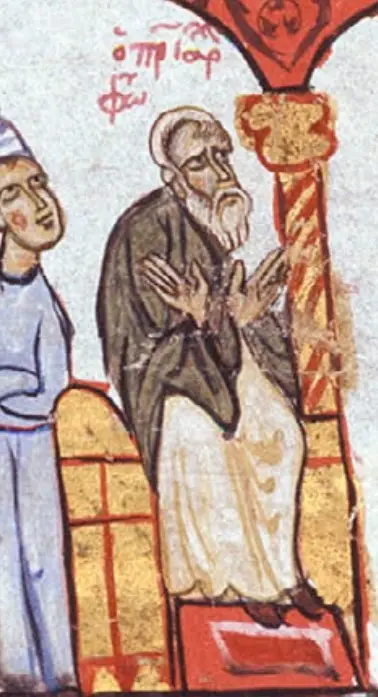
Positions
- Photius
- The Filioque is not attested by the fathers; patristic authority is hierarchical, and above it stand the Lord's words and the councils; a later pope who teaches the Filioque betrays Rome's heritage
- The Greeks
- Procession is from the Father within the Godhead; the giving and sending of the Spirit take place in the world, through the Son; the creed can be changed only by a council
- The West (Paulinus of Aquileia; Gregory I, Ratramnus)
- The words "from the Father" do not exclude "and from the Son"; the addition is like the expansion of the Nicene phrase at Constantinople; the sending of the Spirit is his very procession
- Peter of Antioch
- Allowed compromise in the disputes over fasting and beards, but called the Filioque "the most impious of all impious things"
Key points
- Pelikan: according to Photius, the dogma of the Spirit was defined by the second council, repeated by the third and confirmed by the following ones up to the seventh; some Greeks supposed that the Latins had lost the acts of Nicaea during the Vandal invasion. Greek theologians acknowledged that the Filioque in the sense of sending had a broad patristic background. Even Russian treatises against the Latins dealing with rites mentioned the doctrinal difference over the Filioque, and some Eastern theologians held that this difference alone was enough to divide the Churches
- Lane: the small difference of words hides a difference in approach to the doctrine of the Trinity
Outcome
In the East the Filioque was recognized as an irreconcilable difference; the dispute over the procedure of the addition merged with the theological dispute over the substance of the doctrine, and the difference hastened the break of 1054.
People
- Photius
- Michael Cerularius
- Peter III of Antioch
- Paulinus of Aquileia
- Ratramnus of Corbie
- Gregory the Great
Terms
- procession – ekporevestai
- The Spirit's eternal property from the Father (according to the Greeks).
- bestowal – horegeistai
- The giving of the Spirit in the economy.
Place
Constantinople, Antioch, Rome
Sources disagree
Pelikan: Photius's treatise – 9th century, Cerularius and Peter of Antioch – 11th century; the procedural dispute – 9th–12th centuries (Anselm of Havelberg – 1135). Lane: Rome adopted the filioque in the 11th century, the break – 1054.
Sources
- Jaroslav Pelikan – The Christian Tradition, vol. 2: The Spirit of Eastern Christendom (600–1700) (Russian edition), p. 313–314, 320–324
- Tony Lane – Christian Thinkers (Russian edition), p. 46–47
Related entries
- Response to: The Filioque in the West: Toledo (589), Friuli (796), Aachen (809) and Pope Leo III (589–816)
- Leads to: The East–West schism as a dispute over the nature of the Church and the primacy of Peter (9th–11th centuries (1054))
In church history
- The Photian Schism (858–880)
Data compiled: 2026-11-17