380 · 4th century
Theodosius's Edict "Cunctos populos" and the Emperor's Baptism
In 380 at Thessalonica, Theodosius fell gravely ill and was baptized upon his recovery. He issued the edict "Cunctos populos," wishing all peoples of the empire to remain in the religion "which the divine Apostle Peter handed over to the Romans". It was the faith followed by Damasus of Rome and Peter of Alexandria. That is, it was faith in "the single Godhead of the Father and the Son and the Holy Spirit, under equal majesty and under pious Trinity". All others were declared mad heretics, and their meeting places were not recognized as churches.
Demophilus, the Homoian bishop of Constantinople, refused to comply and was deposed. A group of bishops led by Peter of Alexandria secretly ordained the philosopher Maximus the Cynic bishop of the capital, bypassing Gregory of Nazianzus. This episode became the background to canons 2–4 of the 381 council.
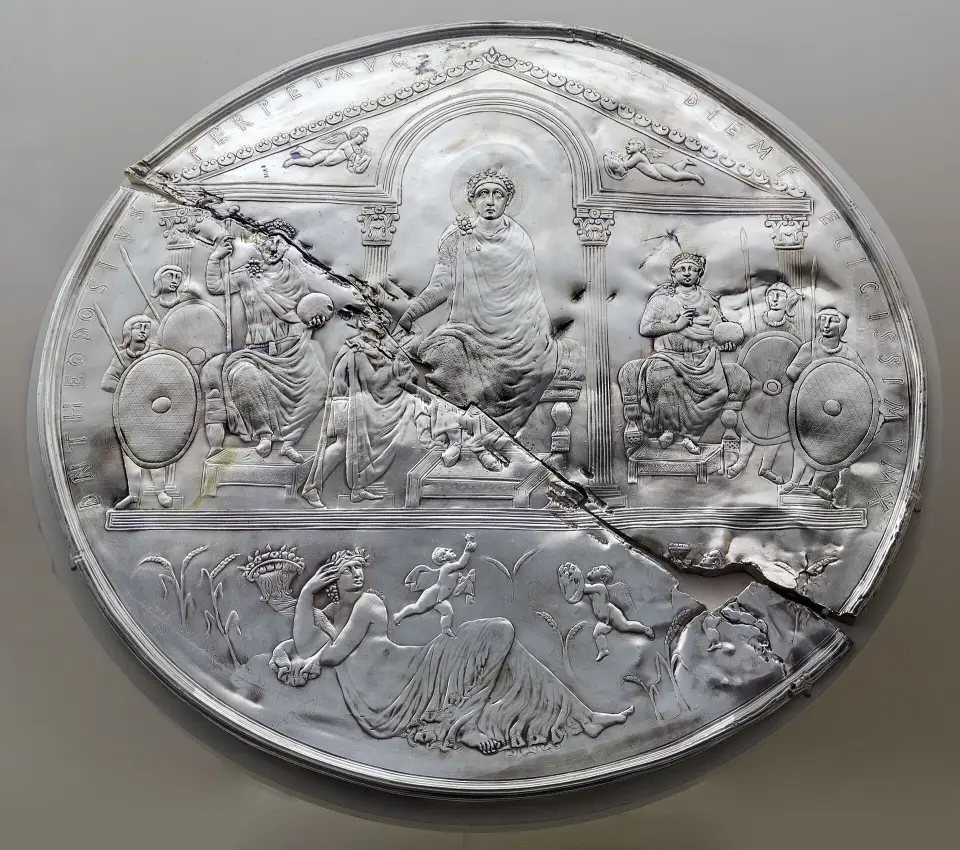
Key points
- The edict defines orthodoxy as the "Nicene alliance" of Damasus and Peter of Alexandria
- All other confessions declared heretical
- Deposition of the Homoian bishop Demophilus
- The secret ordination of Maximus the Cynic, backed by Peter of Alexandria
- Shelley: in 380 Theodosius ordered all peoples to hold the Nicene faith and the name Catholic Christians, declaring the rest insane. Here appears an assumed bond of the emperor’s will and God’s, reflected in Byzantine churches and mosaics
People
- Theodosius I
- Damasus of Rome
- Peter of Alexandria
- Demophilus of Constantinople
- Maximus the Cynic
- Gregory of Nazianzus
Place
Thessalonica, Constantinople
Sources
- Stuart G. Hall – Doctrine and Practice in the Early Church (Russian edition), p. 106–109, 113
- Bruce L. Shelley – Church History in Plain Language (Russian edition), Ch. 9, sec. «Церковь обретает власть»
Data compiled: 2026-11-09