1675–1699 · 17th century
Quietism: Molinos, Madame Guyon, and the Fénelon–Bossuet Dispute
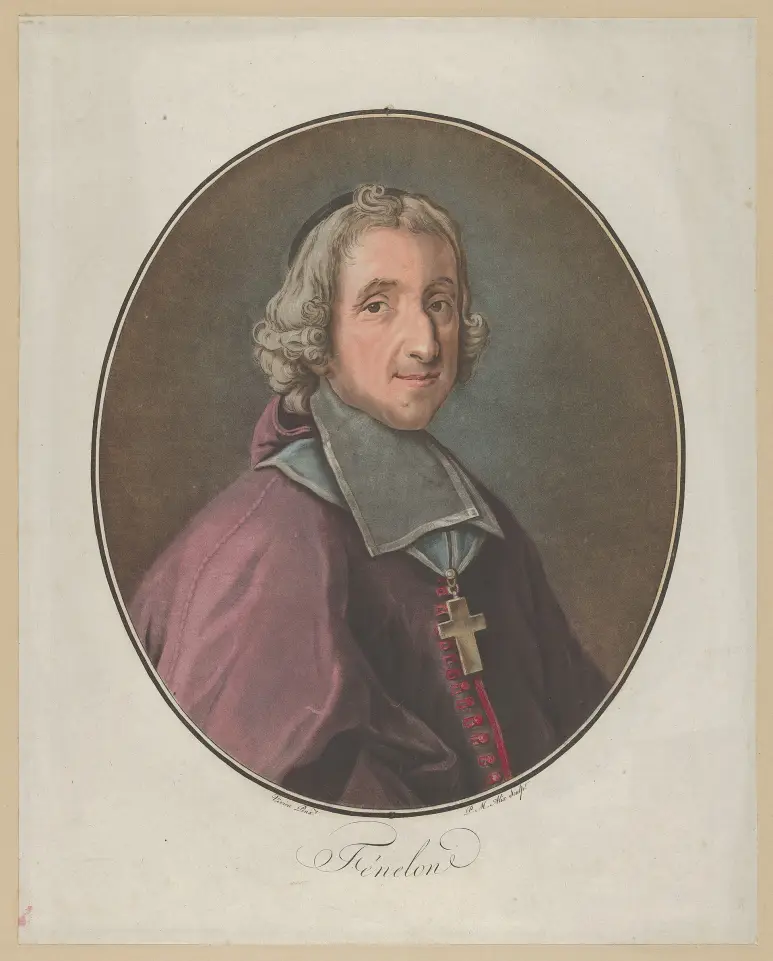
The Quietist current entered France through the Spaniard Miguel de Molinos. His Spiritual Guide appeared in 1675, and in 1685 Molinos was arrested and spent the rest of his life imprisoned. In France the idea was developed by Madame Guyon and Father Lacombe. They were supported by François Fénelon, Archbishop of Cambrai, who entered a bitter dispute with Jacques-Bénigne Bossuet.
Under pressure from Louis XIV, Pope Innocent XII condemned a number of Fénelon's propositions in 1699. Fénelon submitted humbly, though quietist sentiments persisted in France afterward.
Key points
- Molinos's Spiritual Guide (1675) and his arrest (1685)
- Quietism's development in France – Madame Guyon and Fénelon
- The Fénelon–Bossuet dispute
- Rome's condemnation of Fénelon's theses (1699)
- McGinn: “Quietists” were accused of placing enlightenment above external religion, excusing practices by the prayer of quiet, and ignoring salvation out of pure love. Molinos confessed in 1687 and got life imprisonment; Innocent XI condemned 68 propositions, few found in the Spiritual Guide. Guyon and Fénelon signed 34 articles; in 1699 Innocent XII mildly condemned 23 articles of Fénelon’s Maxims of the Saints (1697); Guyon stayed under arrest. The Quietist Controversy was a crisis from which Western mystical theology has only begun to recover in the past century; those suspected lost influence and freedom
People
- Miguel de Molinos
- Jeanne-Marie Guyon
- Father Lacombe
- François Fénelon
- Jacques-Bénigne Bossuet
- Innocent XII
Place
Rome; Paris; Cambrai
Sources disagree
Both books agree on the date of Fénelon's condemnation (1699); Molinos's arrest is dated to 1685.
Sources
- Justo L. González – The Story of Christianity, vol. II (Russian edition), Part 2, ch. 18
- Justo L. González – A History of Christian Thought, vol. III: From the Protestant Reformation to the Twentieth Century (Abingdon, rev. ed. 1987), p. 411
- The Oxford Handbook of Mystical Theology, ed. Edward Howells, Mark A. McIntosh (2020), Ch. 4, sec. «Reformed Catholic Mysticism»
Data compiled: 2026-11-09