1079–1142 · 11th century
Peter Abelard: 'Sic et Non' and His Condemnation
Abelard was born in Brittany in 1079. He made enemies by criticizing his teachers, the nominalist Roscelin and the realist William of Champeaux, and became a celebrated Paris teacher. After falling in love with his pupil Héloïse he was castrated on her uncle's orders and became a monk; he later recounted this in "The Story of My Calamities" (chs. 6–8). In "Sic et Non" (1122) he assembled 158 contradictory authoritative opinions from the Bible and the Fathers, laying down the scholastic method.
At the Council of Soissons (1121) his tract on the unity and trinity of God was condemned and he was made to burn it; according to "The Story of My Calamities" (chs. 9–10), the council was instigated by his rivals Alberic and Lotulphe. Bernard of Clairvaux accused him of creating a "fifth gospel" and secured the condemnation of Abelard himself at the Council of Sens (1140/1141). His appeal to Rome was rejected. Abelard died in 1142, reconciled with the church.
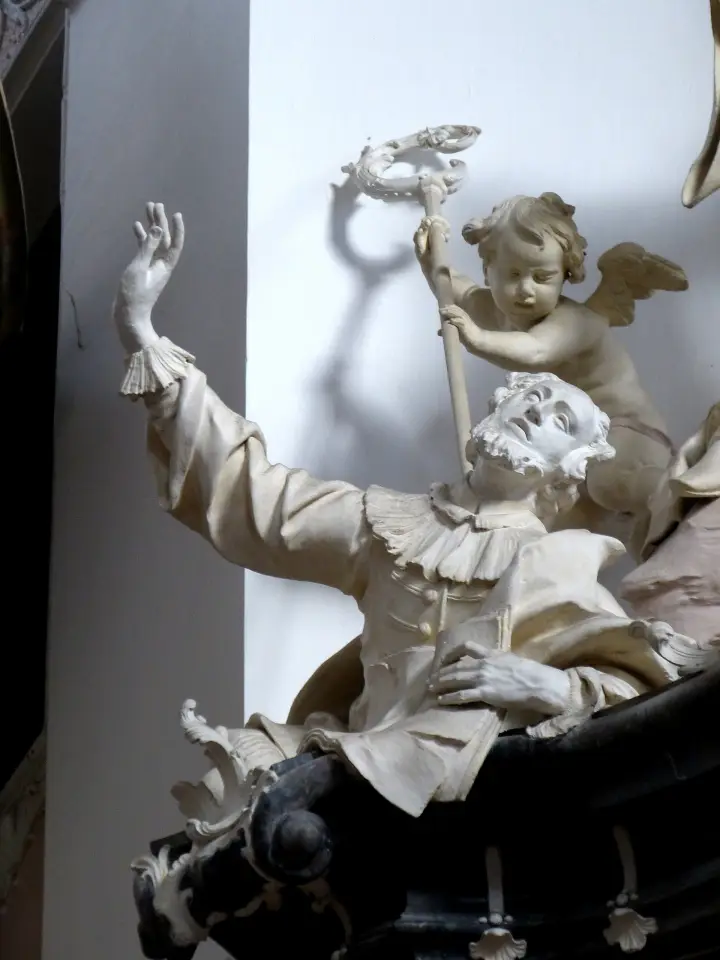
Key points
- Paris teacher; castration and entry into monastic life after the affair with Héloïse
- "Sic et Non" (1122): 158 contradictory opinions, the basis of the scholastic method
- Disagreement with Anselm over the understanding of the atonement
- Condemnations at Soissons (1121; instigated by Alberic and Lotulphe, Story of My Calamities 9) and at Sens (1140/1141) at the insistence of Bernard of Clairvaux
- Shelley: Abelard (1079–1142), yielding his inheritance for learning, wandered France and drew huge crowds of students in Paris. In Sic et Non he posed 158 problems: “by doubting we come to inquiry; by inquiring we reach truth”. Abelard was condemned at Soissons (1121; by Abelard's account, instigated by Alberic and Lotulphe) and at Sens (1140) at Bernard’s urging, yet his seeds grew into universities: in under a century they flourished at Paris, Orleans, Montpellier, Oxford, Cambridge, Padua and Bologna
People
- Peter Abelard
- Héloïse
- Bernard of Clairvaux
- Roscelin
- William of Champeaux
- Peter Lombard
Place
Paris; Soissons; Sens; Cluny
Sources disagree
Lane dates the condemnation at Sens to 1140, González (Story of Christianity, vol. I) to 1141.
Sources
Primary sources
- Peter Abelard – The Story of My Misfortunes (Historia calamitatum), ch. 6–10, 12
Textbooks
- Justo L. González – The Story of Christianity, vol. I (Russian edition), Ch. 25, sec. 25.3
- Justo L. González – A History of Christian Thought in One Volume (Abingdon, 2014), p. 219–222
- Tony Lane – Christian Thinkers (Russian edition), p. 111–114
- Louis Berkhof – History of Christian Doctrines (Russian edition), p. 64, 126–127
- Bruce L. Shelley – Church History in Plain Language (Russian edition), Ch. 20, sec. «Магнетизм достойного учителя»
More on the doctrine
- Abelard: Sic et Non, the Controversy over Universals and His Condemnation (1122)
- Abelard and Bernard of Clairvaux: the "moral influence theory" (12th century (synod of 1141))
Data compiled: 2026-11-09