1648 · 17th century
The Peace of Westphalia
After prolonged negotiations, the Peace of Westphalia (1648) ended the Thirty Years' War. France expanded to the Rhine, and Sweden gained territories on the Baltic and North Sea. The German princes gained strength at the emperor's expense.
Freedom of worship was extended to Catholics, Lutherans and the Reformed alike. Property was restored to its 1624 owners. Toleration arose more from exhaustion than from love, planting the seed of the idea of the secular state.
The peace ended devastating interconfessional wars and undermined confidence in doctrinal disputes. Twentieth-century theologians see it as a likely social and political precondition for the later Enlightenment.
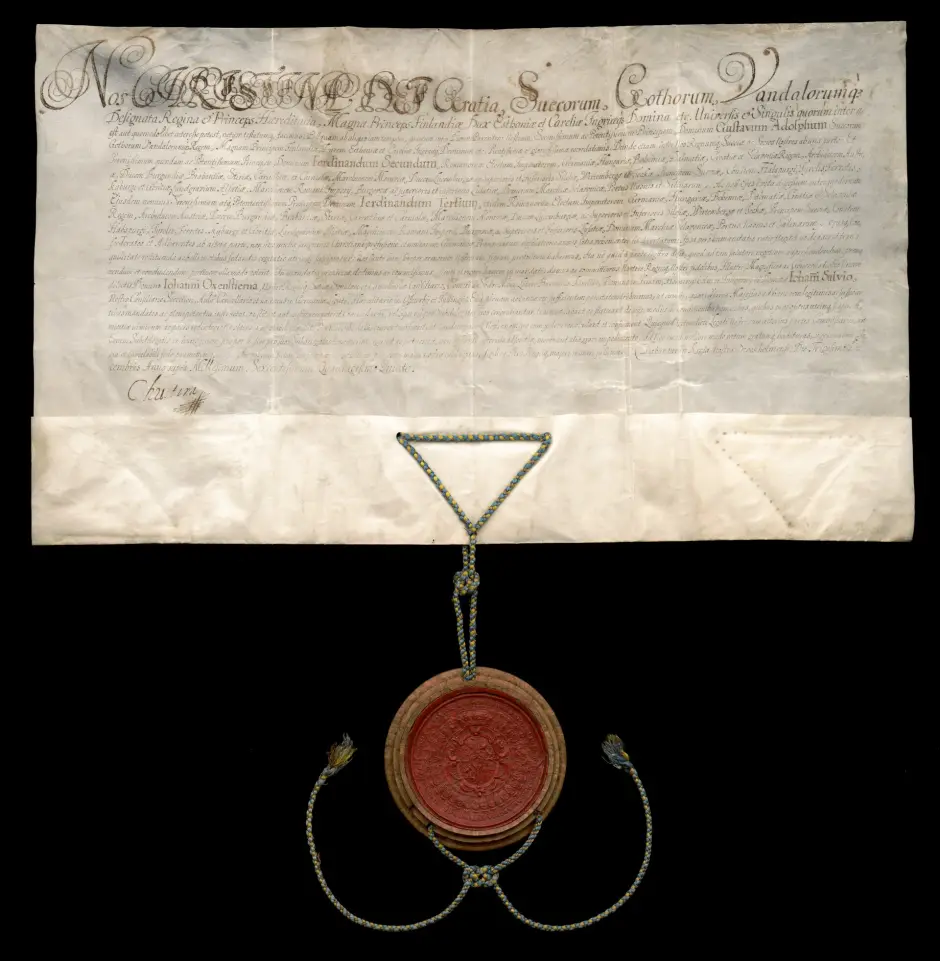
Key points
- Territorial changes: France to the Rhine, Sweden gains Baltic/North Sea lands
- Freedom of worship extended to the Reformed as well
- Toleration born of exhaustion – the seed of the secular state
- Later seen as a precondition of the Enlightenment
- Shelley: the Peace of Westphalia (1648) recognized Calvinism alongside Lutheranism and Catholicism; the pope took no part in Germany’s religious affairs. Innocent X condemned the peace, but both sides ignored his protests – for the first time in a thousand years the state acted as if there were no pope. The true victors of the Thirty Years’ War were nation-states, and Western Christians now lived under civil governments of various denominations; in time states demanded citizens affirm a universal vision of God, while denominational beliefs and rites became a strictly private matter
People
- Ferdinand III
Place
Westphalia (Germany)
Sources disagree
Both books agree on 1648.
Sources
- Justo L. González – The Story of Christianity, vol. II (Russian edition), Part 2, ch. 15
- Stanley Grenz, Roger Olson – 20th-Century Theology: God and the World in a Transitional Age (Russian edition), p. 15, 17
- Bruce L. Shelley – Church History in Plain Language (Russian edition), Ch. 31, sec. «Тридцатилетняя война»
Data compiled: 2026-11-09