334–323 BC · 4th century BC
The conquests of Alexander the Great and the Hellenization of the Mediterranean
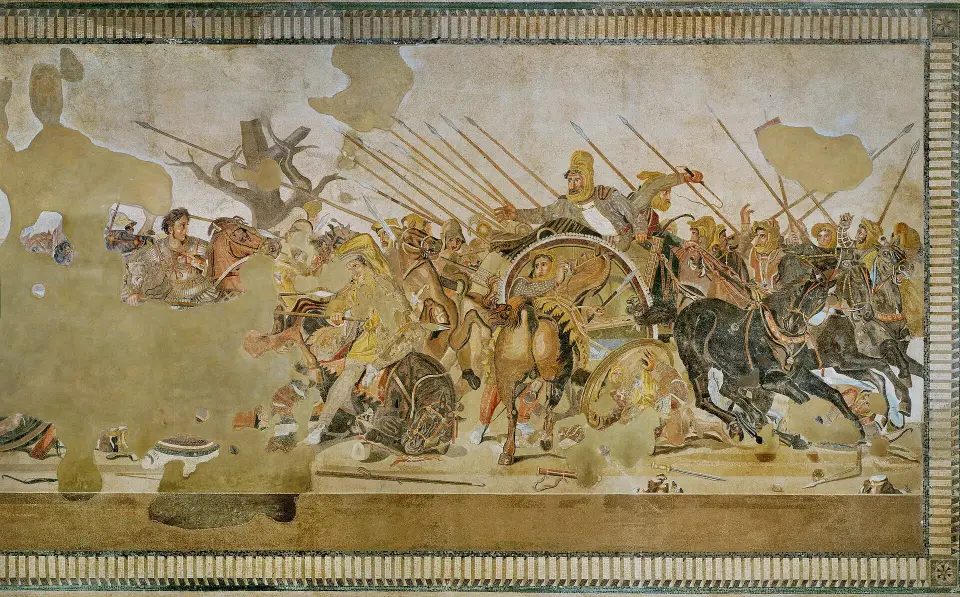
The campaigns of Alexander the Great in 334–323 BC spread Greek thought and culture across the Near East. They created a cultural unity of the Mediterranean that Rome later consolidated. After Alexander's death Palestine long remained a prize fought over by his successors.
Hellenistic culture became the milieu in which Christianity was born. The cosmopolitanism of the age gave rise to individualism and a search for personal salvation.
Of the era's philosophical schools, Platonism, Aristotelianism and Stoicism most influenced the early Christian writers. Ideas of a dispassionate God, a mediating Logos, and an immortal soul set the later Church Fathers a task: reconciling the faith with the Greek heritage. In the end Greek thought became Christian, though not without losses.
Key points
- Greek culture eclipsed for centuries the cultures of Egypt, Syria, Persia and Mesopotamia
- The era's cosmopolitanism produced individualism and a search for personal salvation
- Platonism, Aristotelianism and Stoicism most influenced early Christianity
- The concepts of the Logos and of a dispassionate God entered Christian thought
People
- Alexander the Great
- Socrates
- Plato
- Aristotle
- Zeno
Place
The Near East, the Mediterranean, Greece
Sources disagree
Lane gives the philosophers' death dates (Socrates 399, Plato 347, Aristotle 322, Zeno 263 BC); the main date follows Alexander's conquests (González).
Sources
- Justo L. González – A History of Christian Thought in One Volume (Abingdon, 2014), p. 16, 22–24
- Tony Lane – Christian Thinkers (Russian edition), p. 12–14
Data compiled: 2026-11-09