1054 · 11th century
The Great Schism of 1054
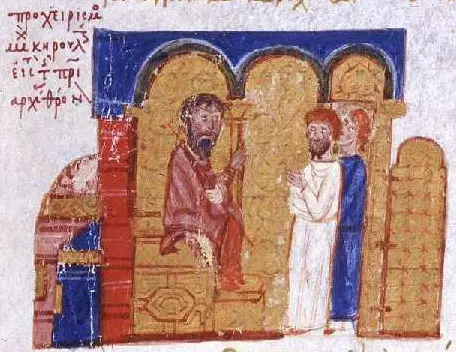
Patriarch Michael Cerularius of Constantinople was a firm opponent of Latin practice. In 1053 he closed the Latin churches and monasteries in the city. He circulated documents accusing the West of doctrinal and ritual errors. These included using unleavened bread, Saturday fasting, forbidding "Alleluia" in Lent, the Filioque, and clerical celibacy.
Pope Leo IX sent Cardinal Humbert as legate. Humbert knew no Greek and saw married clergy and imperial power over the church as enemies of reform. An exchange of insults followed. On 16 July 1054 the legate laid a bull of excommunication against Cerularius on the altar of Hagia Sophia. It was now issued in the name of the already-dead Pope Leo IX.
Cerularius responded by convening a council that condemned the West. Earlier breaks had been temporary, but this schism between Eastern Orthodoxy and Roman Catholicism proved final.
Reconciliation attempts continued into the 14th–15th centuries, at the Second Council of Lyon (1274) and the Council of Ferrara-Florence (1439). But they failed.
Key points
- Cerularius's closure of the Latin churches in Constantinople (1053)
- The excommunication laid on the altar of Hagia Sophia on 16 July 1054
- The disputes over unleavened bread, the Filioque, and clerical celibacy as occasions for the schism
- The failed reunion attempts at the Councils of Lyon (1274) and Ferrara-Florence (1439)
- Shelley: in 1054 Cardinal Humbert laid the bull of excommunication on the altar of Hagia Sophia; Bruce sees it as the end of a long process of divergence.
People
- Michael Cerularius
- Humbert
- Leo IX
- Leo of Ohrid
Place
Constantinople (Hagia Sophia)
Sources disagree
González (Story of Christianity, vol. I) gives '16 June 1054'; the other books (North, González (Christian Thought), Pelikan (vol. 2)) give 16 July 1054 – a discrepancy in the day of the month.
Sources
- J. North – A History of the Church (Russian edition), p. 165–167
- Justo L. González – The Story of Christianity, vol. I (Russian edition), Ch. 21, sec. 21.4; ch. 23, sec. 23.2
- Justo L. González – A History of Christian Thought in One Volume (Abingdon, 2014), p. 233–234
- Jaroslav Pelikan – The Christian Tradition, vol. 2: The Spirit of Eastern Christendom (600–1700) (Russian edition), p. 267, 279, 296, 300, 304–306, 329, 419, 425–429
- Tony Lane – Christian Thinkers (Russian edition), p. 47, 71, 125–126
- Bruce L. Shelley – Church History in Plain Language (Russian edition), Ch. 15, introduction и sec. «Восток против Запада»
More on the doctrine
- The East–West schism as a dispute over the nature of the Church and the primacy of Peter (9th–11th centuries (1054))
- East and West: azymes, epiclesis and liturgical differences (9th–15th centuries)
Data compiled: 2026-11-09