1933–1934 · 20th century
The "German Christians," the Barmen Declaration, and the Confessing Church
After the Nazis came to power, the "German Christians" movement sought to fuse Nazi ideology with Protestantism. It won the 1933 church elections and introduced an "Aryan paragraph." The paragraph barred pastors of "non-Aryan" descent from ministry.
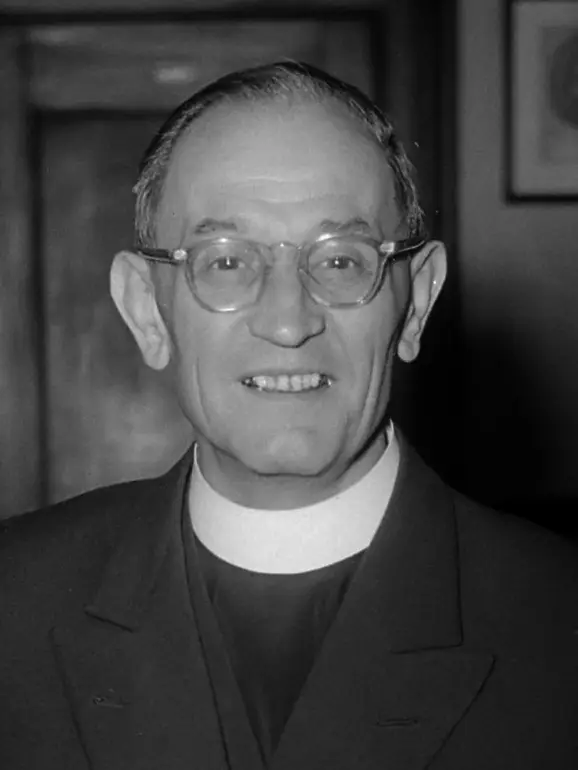
In response, Pastor Martin Niemöller founded the "Pastors' Emergency League." It grew into the Confessing Church.
In May 1934 the first synod of the Confessing Church at Barmen adopted a declaration, drafted chiefly by Karl Barth. It proclaimed Jesus Christ as the sole source of revelation. It condemned the church's submission to state ideology, the "Führer principle," and the church's transformation into an organ of the Nazi regime.
The Confessing Church's resistance proved politically ineffective. Niemöller spent eight years in a concentration camp, and Barth was forced back to Switzerland. But the Barmen Declaration retained lasting theological significance.
Key points
- The German Christians' "Aryan paragraph" and Niemöller's founding of the Pastors' Emergency League
- May 1934 – the Barmen Declaration, drafted chiefly by Barth
- Six theses: revelation solely in Christ, rejection of the "Führer principle" in the church
- Niemöller – eight years in a concentration camp; Barth forced to leave Germany
- Shelley: among Protestants the “German Christians” movement arose, seeking closer ties with the Nazis: it wanted to unite 28 regional Protestant bodies under one bishop and chose the ardent Nazi Ludwig Müller for the post. They introduced the Führer principle into church government and adopted the “Aryan paragraph” dismissing people of Jewish descent from church posts. In 1933 there were 17,000 Protestant pastors in the country, three thousand belonged to the “German Christians”. In opposition Martin Niemöller and others formed the “Pastors’ Emergency League” and an alternative church government – the Confessing Church; at its height it had about as many members as the “German Christians”. Between them stood a timid majority of pastors who in the end submitted to Hitler without open protest. The Confessing Church did not plan a campaign of resistance to Nazism: it opposed above all the heretical distortions of the “German Christians”; its leaders more than once expressed loyalty to the state and congratulated Hitler on political successes. Lutherans traditionally supported the ruling power, and it wished only to defend the true faith against innovations. Hounded by the Gestapo and rejected by most Protestant leaders, it led a dangerous existence: in 1935 at least seven hundred of its pastors were arrested; its witness to Christ’s lordship over the world indirectly challenged totalitarianism. When Müller failed to unite the churches, Hitler turned to anti-Christian Nazis; in 1935 a church-affairs ministry was created under Hanns Kerrl, who proclaimed: “National Socialism is the fulfilment of God’s will! God’s will will reveal itself in German blood!” In the Second World War Christians on both sides fought, but with less enthusiasm than in the First; German church officials did not oppose the Nazi state but could do nothing to relieve Christians’ suffering. Bormann, Himmler and Heydrich, Hitler’s closest advisers, worked systematically on a “final settlement” of the church question: the churches were to submit to the new order, the clergy lost privileges, and Christianity could only suffer and await a “natural death” (Hitler). In occupied Eastern Europe priests, pastors and devout laypeople were treated like criminals; thousands were executed or sent to camps. Only the demands of war and the need for popular support kept the Nazis from eradicating religion in Germany itself. The resistance of the German churches was strikingly weak: they cared only for personal faith, traditional submission to the state and conservatism
People
- Karl Barth
- Martin Niemöller
- Ludwig Müller
- Adolf Hitler
Place
Barmen; Germany
Sources
- Tony Lane – Christian Thinkers (Russian edition), p. 257, 260–261, 265–266
- Justo L. González – The Story of Christianity, vol. II (Russian edition), Part 4, ch. 34, section «Новые конфликты»
- J. North – A History of the Church (Russian edition), p. 397
- Stanley Grenz, Roger Olson – 20th-Century Theology: God and the World in a Transitional Age (Russian edition), p. 94, 103
- Justo L. González – A History of Christian Thought in One Volume (Abingdon, 2014), p. 414, 422
- Justo L. González – A History of Christian Thought, vol. III: From the Protestant Reformation to the Twentieth Century (Abingdon, rev. ed. 1987), p. 446–449
- Alister McGrath – Reformation Thought (Russian edition: «Theological Thought of the Reformation»), p. 296, 487
- Bruce L. Shelley – Church History in Plain Language (Russian edition), Ch. 42, sec. «Христиане в дни власти Гитлера»; Ch. 42, sec. «Влияние Второй мировой войны»
More on the doctrine
Data compiled: 2026-11-09